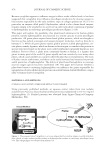
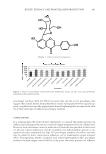
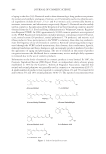
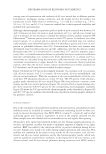
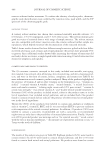
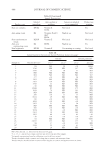
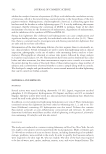
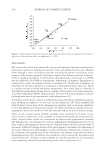
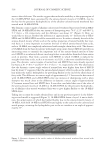
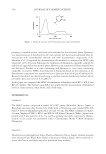
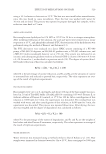
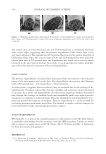
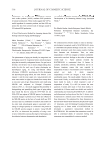
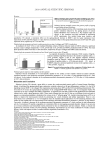
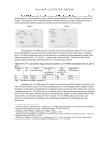
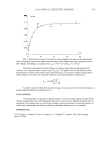
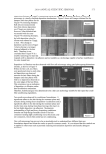
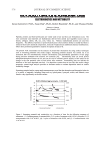
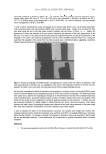
JOURNAL OF COSMETIC SCIENCE 520 property, is unstable to heat, and tends to be adsorbed on the stationary phase. Quantita- tive determinations of hinokitiol by GC and capillary GC have been performed after de- rivatization with trimethylsilyl chloride and with diazomethane, respectively (1,4). Hanafusa et al. (5) reported the determination of hinokitiol in cosmetics by HPLC with ultraviolet (UV) detection following the formation of hinokitiol-copper(II) complex by addition of copper(II) to the mobile phase. However, the sensitivity of these methods was not discussed. Further, it is time-consuming and laborious to treat waste containing copper(II). A sensitive HPLC determination of hinokitiol based on the formation of di- fl uoroborane compounds was reported to have a detection limit of 40 pg of hinokitiol (6). Recently, hinokitiol was determined using a capillary zone electrophoresis method, which provided a detection limit of 0.21 μM (7). In this paper, we compared the HPLC determination of hinokitiol with RP-4, RP-8, and RP-18 columns. The method using RP-4 was applied for the measurement of hinokitiol levels in a hair restorer, a skin lotion, and a body soap. EXPERIMENTAL APPARATUS The HPLC system comprised a model LC-10AT pump (Shimadzu, Kyoto, Japan), a Rheodyne injection valve (Cotati, CA, USA) with a 200-μl loop, and a model SPD-10A dual UV detector (Shimadzu) operated at 240 and 345 nm. The HPLC columns (150 mm × 4.6 mm, Mightysil® RP-4, RP-8, and RP-18 GP, Kanto Chemical, Tokyo, Japan) were packed with 5-μm particles of C4, C8, and C18 packing materials, respectively. Quanti- fi cation of the peaks was performed with a Chromatopac Model C-R8A integrator (Shimadzu). REAGENTS Hinokitiol was obtained from Tokyo Chemical Industry (Tokyo, Japan). General reagents were obtained from Wako Pure Chemical Industries (Osaka, Japan). The tested hair re- storer, skin lotion, and body soap were purchased from markets. Figure 1. Chemical structure and UV absorption spectrum of hinokitiol.

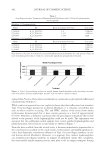
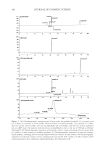
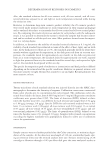
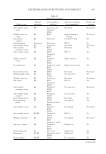
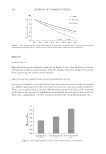
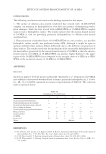
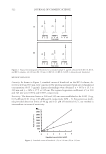
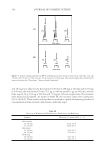
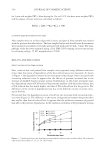
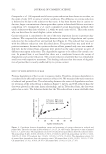
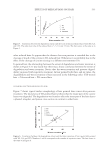
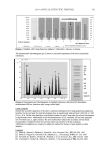
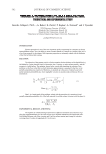
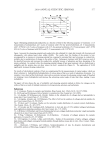
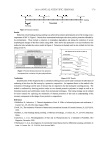
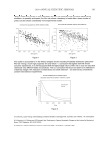
MEASUREMENT OF HINOKITIOL BY HPLC 521 UV ABSORPTION SPECTRUM The UV absorption spectrum of hinokitiol was obtained with a UV-1200 spectropho- tometer (Shimadzu). Hinokitiol (5 μg/ml) was dissolved in the mobile phase for HPLC analysis using RP-4 as described below, and the spectrum was determined in the range of 200 to 400 nm. PROCEDURES RP-HPLC procedure. The mobile phases for HPLC analysis using RP-4, RP-8, and RP-18 con- sisted of acetonitrile:water:trifl uoroacetic acid (300:700:0.5, 450:550:0.5, and 500:500:0.5, respectively, v/v/v). The samples were eluted from the column at a fl ow rate of 1.0 ml/min at room temperature. Preparation of standard solutions. A stock solution of hinokitiol (160 μg/ml) in 50% ethanol was prepared and diluted with water as required. It was stored in a dark glass bottle at 4°C. The working concentrations of hinokitiol were set at 0, 0.05, 0.1, 0.2, 0.5, 1, 2, and 5 μg/ml. Aliquots of 200 μl were injected into the HPLC column. Sample preparation. The tested hair restorer (0.50 ml), skin lotion (10 ml), and body soap (0.10 g) were each diluted to 100 ml with water, and aliquots (200 μl) were directly in- jected into the column. Recovery. The known amounts of hinokitiol (0.250 mg, 80.0 μg, and 16.0 μg) were added to the hair restorer (0.50 ml), skin lotion (10 ml), and body soap (0.10 g), respec- tively, and were diluted as the same manner. Aliquots (200 μl) were analyzed and hi- nokitiol levels were determined in each sample. The recovery value was calculated as follows. RESULTS AND DISCUSSION UV ABSORPTION SPECTRUM The UV absorption spectrum of hinokitiol (Figure 1) showed absorption maxima at around 240 and 345 nm. Therefore, hinokitiol was monitored at 240 and 345 nm to maximize the sensitivity. CHROMATOGRAMS Figure 2 shows typical chromatograms of hinokitiol (1 μg/ml) using RP-18, RP-8, and RP-4 columns. The retention times were 5.0, 6.2, and 7.1 min, respectively, at both wavelengths. The symmetry coeffi cients at 240 nm and 345 nm were 3.1 and 3.7 for RP-18, 1.9 and 1.7 for RP-8, and 1.3 and 1.3 for RP-4, respectively. Recovery value = (Measured amount after addition) (Known ammount) - (Measured amount before addition) ´ 100
Purchased for the exclusive use of nofirst nolast (unknown)
From: SCC Media Library & Resource Center (library.scconline.org)