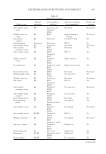
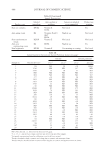
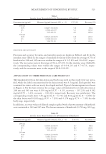
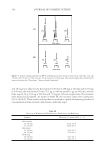
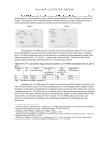
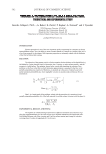
JOURNAL OF COSMETIC SCIENCE 528 In this study we examine the protease degradability of hair samples reduced with differ- ent mercaptans. The following mercaptans were used: thioglycolic acid (TG), cysteamine (CA), and cystein (CYS). After reduction the hair samples were either blocked with iodo- acetate or oxidized to reform broken disulfi de bonds. EXPERIMENTAL MATERIALS Fifty percent ammonium thioglycolate, 50% cysteamine hydrochloride, and l-cystein were employed as mercaptans, which consisted of thioglycolic acid (TG), cysteamine (CA), and cystein (CYS), respectively. The mercaptans, 28% ammonium hydroxide, and so- dium bromate were of cosmetic grade, and a special reagent grade sodium dodecyl sulfate (SDS) was used without further purifi cation. Pronase E was supplied by Sigma (St. Louis, MO) for Streptomyces griseus, 12.4 U/mg. All other chemicals used were of reagent grade. The untreated hair (71 μm average diameter) used was from Chinese women in their 20s who had never had chemical hair treatments. The hair samples were soaked in 1 wt% SDS aqueous solution for 10 min at 25°C, washed with water for 30 min, and air dried. PREPARATION OF REDUCED HAIR AND PERMED HAIR Reduced hair. Reduced hair samples were prepared by reduction and subsequent blocking steps (12). About 1.0 g of untreated hair was soaked for various lengths of time in 0.50 M mercaptan aqueous solution, as shown in Table I, using a 10:1 solution-to-hair ratio at 25°C. The hair was then removed and immediately soaked for 5 min in 1 wt% ice-cold iodoacetic acid aqueous solution, using a 100:1 solution-to-hair ratio. The hair was then treated for 45 min in 1 wt% iodoacetic acid aqueous solution (adjusted to pH 8.4 with sodium hydroxide), using a 100:1 solution-to-hair ratio at 80°C, to effect blocking of the SH groups. The hair was then washed with water for 30 min and air dried. Permed hair. Permed hair samples were prepared by reduction and subsequent oxidation steps (10). About 1.0 g of untreated hair was soaked for various lengths of time in mer- captan aqueous solutions, as shown in Table I, using a 10:1 solution-to-hair ratio at 25°C. The hair was immediately soaked for 15 min in an oxidizing agent, as shown in Table I, Table I Permanent Waving Solutions Mercaptan solutions Oxidizing agent TG CA CYS Ammonium thioglycolate 0.50 M — — — Cysteamine hydrochloride — 0.50 M — — L-Cystein — — 0.50 M — Ammonium hydroxide pH 8.6 pH 8.6 pH 8.6 — Sodium bromate — — — 0.4 M Phosphoric acid — — — pH 4.0 Deionized water to 1000 ml to 1000 ml to 1000 ml to 1000 ml

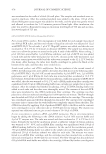
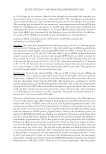
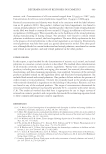
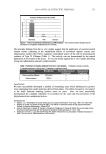
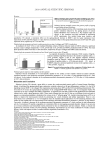
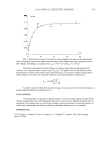
EFFECTS OF MERCAPTANS ON HAIR 529 using a 10:1 solution-to-hair ratio at 25°C. The hair was not rinsed before neutralization, since this was found to cause reoxidation. Then the hair was washed with water for 30 min and air dried. This process was repeated to prepare damaged hair samples, with a reduction time fi xed at 15 min. AMINO ACID ANALYSIS Hair samples were hydrolyzed in 6 N HCl at 105°C for 24 hr in a nitrogen atmosphere. After membrane fi ltration of the solution, the acid and water were removed on a rotary evaporator at 45°C, and phenylthiocarbamyl (PTC) derivatization of the hydrolysates was performed using the method of Bennett and Solomon (13). The PTC derivatives were analyzed on a Jasco HPLC system consisting of a PU-980 pump, a DG-980-50 degasser, an LG-980-02 gradient unit, a CO-965 column oven, and a MD-910 multi-wavelength detector set at 230 nm. The system was delivered in an isocratic and subsequent gradient mode to an Inertsil ODS-2 column (100 mm × 4.6 mm i.d., GL Science Inc.), as described in a previous article (14). The degree of cystine (disul- fi de bonds) reduction of hair was calculated as follows: R R R R 1 (%) [( )/ ] = - ´ 0 1 100 where R is the percentage of cystine reduction, and R1 and R0 are the amounts of cystine in untreated hair and reduced or permed hair, respectively. The value represents an aver- age of the result of triplicate experiments. PROTEASE TREATMENT Hair samples were cut to 2.0-cm length, and about 100 mg of the hair sample was incu- bated in 2.0 ml of Tris-HCl buffer (20 mM, pH 8.0) containing 0.05 wt% Pronase E, or without addition of Pronase E (control), at 37°C for 100 hr. After centrifugation of this solution at 9,000 rpm for 5 min, the supernatant was discarded. The residual hair was washed with water, and after centrifugation of this solution, at 9,000 rpm for 5 min, the supernatant was discarded. This process was repeated three times. After drying, the resi- due was weighed and the degree of degradation was calculated as follows: P P P P (%) [( )/ ] = - ´ 1 0 1 100 where P is the percentage of the extent of degradation, and P1 and P0 are the weights of hair before and after Pronase E treatment, respectively. The value represents an average of the result of triplicate experiments. WATER RETENTION Water retention was measured using a method similar to that of Kohara et al. (15). Hair samples were immersed in deionized water for 4 hr at 25°C, then centriguged at 3000 rpm
Purchased for the exclusive use of nofirst nolast (unknown)
From: SCC Media Library & Resource Center (library.scconline.org)