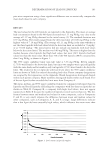
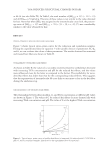
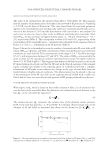
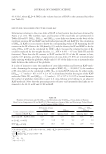
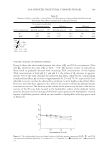
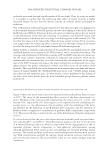
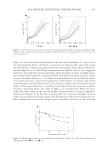
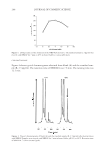
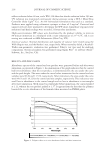
JOURNAL OF COSMETIC SCIENCE 200 20 minutes, the peroxidase reaction was stopped by adding 50 μl of a 2N H2SO4 solu- tion. The colorimetric signal was analyzed (two wavelengths of reading: 450 and 550 nm) by using an appropriate spectrophotometry plate reader (Victor V, Perkin Elmer, Waltham, MA). For calculations, the signal obtained at 550 nm was subtracted from those obtained at 450 nm. MELANIN ASSAY Melanin determination was performed in cell lysates by measuring their optical absor- bance at 405 nm. PROTEIN ASSAY A protein assay was performed in cell lysates following the method of Bradford (7). STATISTICS Data are expressed as means ± S.E. of experiments realized, at least, in triplicate (n = 3). The statistical signifi cance was assessed by Student’s t-tests (* p 0.05 ** p 0.01). RESULTS AND DISCUSSION Pmel 17 ELISA ASSAY DEVELOPMENT In the fi rst part of our study we developed a “classical” ELISA assay to quantify Pmel 17 (see Materials and Methods). In order to get reproducible and accurate results, we chose to test two dilutions for the primary and the secondary antibodies. As shown in Figure 1, in all the conditions tested, the ELISA assay developed permitted us to detect from 10 to 1000 ng/ml (near 150 pmol/l to 15 nmol/l) of Pmel 17. It can also be noted that the better experimental conditions implied a dilution of 1 μg/ml for the primary antibody and of 1/10000 for the secondary one. This specifi c (data not shown, available from the antibody provider) and sensitive ELISA assay appears to be a good tool with which to follow up our investigation concerning the possibility of assessing melanosome transfer by quantifying the Pmel 17 released in the extracellular medium of melanocyte–keratinocyte co-cultures. MELANOSOME TRANSFER ASSESSMENT To test the hypothesis that it could be possible to assess melanosome transfer by quantify- ing the soluble Pmel 17 released in the extracellular medium after proteolytic ectodo- main shedding (3,4), we used melanocyte–keratinocyte co-cultures treated or not treated with a well-known inhibitor of this transfer, i.e., niacinamide.

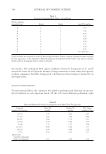
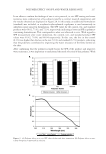
MELANOSOME TRANSFER EVALUATION 201 As shown in Figure 2, signifi cant quantities of Pmel 17 were released in the incubation media of our co-cultures. When cells were incubated in the presence of niacinamide (5 mM), the quantities of Pmel 17 found in the culture medium were signifi cantly re- duced by 28.1% ( p 0.01). The data published by Taubman et al. in 1974 (8) concerning the assessment of collagen synthesis by the quantifi cation of the procollagen type I carboxy-terminal peptide (PIP) was the inspiration for our idea to assess melanosome transfer by quantifi ying the Pmel 17 released in the extracellular medium consecutively to a proteolytic ectodomain shed- ding. Indeed, several types of collagens are synthesized as precursor molecules, called procollagens, which contain additional peptide sequences, usually called “propeptides.” When collagens are secreted, the propeptides are cleaved off from the collagen triple helix Figure 1. Typical standard curves of the Pmel 17 ELISA assay. Figure 2. Quantitative ELISA assay of extracellular Pmel 17: Effect of niacinamide and of an Alaria escu- lenta extract.
Purchased for the exclusive use of nofirst nolast (unknown)
From: SCC Media Library & Resource Center (library.scconline.org)