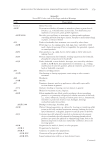
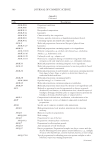
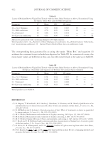
JOURNAL OF COSMETIC SCIENCE 376 19/00 (skin care preparations) and A61Q 17/00 (see Appendix). This result reinforces the suggestion of a trend toward multifunctional skin care cosmetics. In other words, a single skin care product should be designed not only to treat the skin (hydrating, cleansing, bleaching, renewing, etc.) but also to protect it from the harmful effects of sunlight. CONCLUSIONS This work proposed new discussions about the role of patent information in the cosmetic industry and presented some directions. We verifi ed that patents are relevant sources of information for technological forecasting and for the development of cosmetics. We also showed that patent surveys may help both researchers from academia and industry with the development of innovative cosmetics and raw materials, either because they allow us to identify unexplored technological fi elds or because they allow us to identify available technologies and turn them into whole new concepts. Besides, patent statistics available in the literature may provide inputs for laboratorial data banks of patented products and technologies. Further, we indicated that life cycle curves and technological cross impacts are useful tools for determining technological trends in the cosmetic industry. In terms of innovation, identifying a trend fi rst, means being one step closer to the new blockbuster or breakthrough. Several opportunities for product innovation were highlighted and illustrated through- out this paper however, some limitations must be considered. First, the short sampling period (fi ve years) does not allow us to develop a solid technological life cycle, although we managed to analyze individual patents more deeply, in order to obtain specifi c infor- mation. Second, the IPC system has some intrinsic limitations, such as: (a) it does not offer classes exactly corresponding to a particular product-related technology and (b) it allows patent examiners to classify their patents based on their own assumptions of the IPC system. In order to avoid misleading interpretation of the results, we read and ana- lyzed each patent in our sample. However, this work would be considerably exhausting for larger samples. In that case, it is possible to turn to patent analysis software or web search tools, such as Derwent database. This work also raised opportunities for future studies. First, patent surveys considering more specifi c samples, such as the use of siloxane derivatives in cosmetics, could be con- ducted. Second, different technological classifi cation systems should be proposed in order to avoid previous limitations and to aid in patent analysis. Finally, patent studies may accomplish different purposes other than the one employed in this paper. ACKOWLEDGMENTS The authors would like to thank for the scholarship granted by MCT/CNPq (Ministry of Science, Technology and Innovation/National Council for Scientifi c and Technological Development), a Brazilian public agency that promotes scientifi c and technological de- velopment. The authors would also like to acknowledge Jadir Nunes, PhD, counselor at the Brazilian Association of Cosmetology and Patrícia Maia Campos, PhD, professor at Faculty of Pharmaceutical Sciences of Ribeirão Preto, for their valuable comments. Fi- nally, the authors would like to thank the reviewers’ remarks.

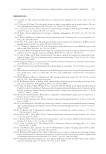
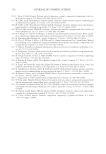
HOW COULD TECHNOLOGICAL FORECASTING HELP COSMETIC CHEMISTS 377 REFERENCES (1) T. Cifelli, Jr., The need for scientifi c data in a cosmetic patent program, J. Soc. Cosmet. Chem., 4, 75–83 (1953). (2) Y. Chen and K. Chang, The relationship between a fi rm’s patent quality and its market value—The case of US pharmaceutical industry, Technol. Forecast. Soc. Change, 77, 20–33 (2010). (3) C. Curran and J. Leker, Patent indicators for monitoring convergence—Examples from NFF and ICT, Technol. Forecast. Soc. Change, 78, 256–273 (2011). (4) H. Ernst, Patent information for strategic technology management, World Pat. Inf., 25, 233–242 (2003). (5) R. Haupt, M. Kloyer, and M. Lange, Patent indicators for the technology life cycle development, Res. Policy, 36, 387–398 (2007). (6) H. Seol, S. Lee, and C. Kim, Identifying new business areas using patent information: A DEA and text mining approach, Expert Syst. Appl., 38, 2933–2941 (2011). (7) V. J. Thomas, S. Sharma, and S. K. Jain, Using patents and publications to assess R&D effi ciency in the states of the USA, World Pat. Inf., 33, 4–10 (2011). (8) H. J. Dou, Benchmarking R&D and companies through patent analysis using free databases and special software: A tool to improve innovative thinking, World Pat. Inf., 26, 297–309 (2004). (9) C. Choi, S. Kim, and Y. Park, A patent-based cross impact analysis for quantitative estimation of tech- nological impact: The case of information and communication technology, Technol. Forecast. Soc. Change, 74, 1296–1314 (2007). (10) M. Bregonje, Patents: A unique source for scientifi c technical information in chemistry related indus- try?, World Pat. Inf., 27, 309–315 (2005). (11) United States Patent and Trademark Offi ce Home Page, accessed July 18, 2011, http://www.uspto. gov. (12) World Intellectual Property Organization, Strasbourg agreement concerning the International Pat- ent Classifi cation, (1971), accessed July 18, 2011, http://www.wipo.int/treaties/en/ classifi cation/ strasbourg. (13) World Intellectual Property Organization, IPC internet publication version 2011.01, (2011), accessed July 18, 2011, http://www.wipo.int/ipcpub. (14) R. W. Blanning and B. A. Reinig, Cross-impact analysis using group decision support systems: an ap- plication to the future of Hong Kong, Futures, 31, 39–56 (1999). (15) Y. Song, N. Kang, S. Park, W. Cho, Y. Lee, J. Lim, H. Min, M. Chang, and S. Kang (LG Household & Health Care Ltd., South Korea), Fusion peptide of human parathyroid hormone derived peptide and tat peptide, preparation thereof, and skin slimming cosmetic composition comprising the same, U.S. Patent 7,060,673, June 13 (2006). (16) M. Sanchez (L’Oréal, France), Body surface cooling device and method for application of cosmetics, U.S. Patent 7,832,225, Nov 11 (2010). (17) R. A. T. da Silva (Conopco Inc., EUA), Cosmetic dispenser housing and method, U.S. Patent 7,618,209, Nov 17 (2009). (18) D. S. Son (Darin Ltd., South Korea), Airless type cosmetic container with quantifi ed contents discharg- ing, contents leakage preventing and contents deterioration preventing functions, U.S. Patent 7,578,417, Aug 25 (2008). (19) R. D. Kessler and P. Abbatepaolo (Augros, France), Container for cosmetic products, U.S. Patent 7,249,906, July 31 (2007). (20) B. Herve and C. Jacob (ELC, EUA), Cosmetic applicators containing heating elements, U.S. Patent 7,753,609, July 13 (2010). (21) G. Bocola (Italy), Vessel for paste and cream products, such as cosmetic, pharmaceutical products and the like, U.S. Patent 7,467,734, Dec 23 (2008). (22) K. Liste, O. Rhode, and J. Treu (Beiersdorf AG, Germany), Cosmetic cleaning product, U.S. Patent 7,458,944, Dec 2 (2008). (23) K. Golz-Berner and L. Zastrow (Coty B. V., Netherlands), Cosmetic bronzing agent based on dihy- droxyacetone, U.S. Patent 7,829,068, Nov 9 (2010). (24) H. Richard and B. Luppi (L’Oréal, France), Photoprotective cosmetic compositions containing aromatic amide, sulphonamide or carbamate derivatives of acrylonitrile and novel aromatic amide, sulphonamide or carbamate derivatives of acrylonitrile, U.S. Patent 7,390,916, June 24 (2008). (25) T. Nakanishi (Shin Etsu Chemical Co. Ltd., Japan), Polyhydric alcohol-modifi ed silicone and cosmetic material containing same, U.S. Patent 7,001,971, Feb 21 (2006).
Purchased for the exclusive use of nofirst nolast (unknown)
From: SCC Media Library & Resource Center (library.scconline.org)