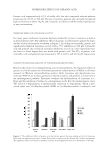
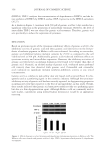
J. Cosmet. Sci., 63, 385–395 (November/December 2012) 385 Physiological effect of a probiotic on skin NEELAM MUIZZUDDIN, WANDA MAHER, MICHAEL SULLIVAN, STEVEN SCHNITTGER, and THOMAS MAMMONE, Estee Lauder Companies, New York, NY 10153. Accepted for publication April 13, 2012. Synopsis Introduction and objective: Normal human skin can produce a range of antimicrobial chemicals that play an important part in eliminating potential cutaneous pathogens. Lactobacillus plantarum is a gram-positive bac- teria that produces antimicrobial peptides, which when applied to the skin can act like an anti-infl ammatory as well as enhance the antimicrobial properties of the skin. Clinical studies were conducted to determine the effect of lactobacillus extract on improvement of skin barrier and reduction of erythema from chemical irri- tant, skin microfl ora, and acne. Results show that lactobacillus extract was effective in reducing skin ery- thema, repairing skin barrier, and reducing skin microfl ora, thereby exhibiting an effective reduction in acne lesion size and erythema at 5%, but not at 1%.Conclusion: Based on the results of these studies, lactobacillus extract (5%) can be used to treat mild acne lesions. INTRODUCTION The concept of probiotics likely dates back to 1908, when Nobel Prize winner Eli Metchnikoff suggested that the long life of Bulgarian peasants resulted from their con- sumption of fermented milk products (1). The term “probiotic” was fi rst used in 1965 by Lilly and Stillwell for describing the substances secreted by one organism, which stimu- late the growth of another (2). Marteau et al. in 2002 (3) defi ned them as “microbial preparations or components of microbial cells that have a benefi cial effect on health and well being” (2,3). Probiotics from Lactobacillus cultures are well recognized as possessing certain health benefi ts, such as antimicrobial and immune-stimulating properties. A recent study (4) showed that prenatal administration of Lactobacillus GG reduced the risk of children de- veloping eczema. Lactobacillus cultures have also been reported to possess antimicrobial activity against pathogenic bacteria such as Staphylococcus aureus (5). Normal human skin is remarkably resistant to infection from a myriad of microorganisms that routinely colonize its surface. In addition to the role of skin as a mechanical barrier, Address all correspondence to Neelam Muizzuddin at nmuizzud@estee.com.
Purchased for the exclusive use of nofirst nolast (unknown)
From: SCC Media Library & Resource Center (library.scconline.org)