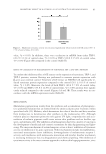
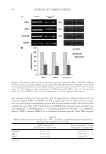
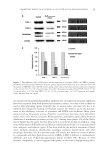
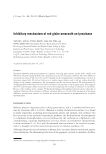
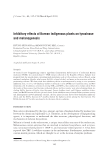
J. Cosmet. Sci., 64, 89–98 (March/April 2013) 89 Address all correspondence to Youn-Jung Kim at yj129@khu.ac.kr. and Mu-Hyoung Lee at mhlee@khmc. or.kr. Inhibitory effect of Gastrodia elata extract on melanogenesis in HM3KO melanoma cells HAK-JU KIM, JONG-HO LEE, MIN-KYUNG SHIN, KANG HYUN LEEM, YOUN-JUNG KIM, and MU-HYOUNG LEE, Department of Dermatology, College of Medicine, Kyung Hee University, Seoul 130-701 (H.-J.K., J.-H.L., M.-K.S., M.-H.L.), College of Oriental Medicine, Semyung University, Jecheon 390-711 (K.H.L.), and College of Nursing Science, Kyung Hee University, Seoul 130-701 (Y.-J.K.), Republic of Korea. Accepted for publication June 19, 2012. Synopsis Effective and safe antimelanogenic agents derived from natural products get interest continuously for both medical and cosmetic purposes. Melanin synthesis is regulated by melanogenic enzymes such as tyrosinase, tyrosinase-related protein 1 (TRP-1), and tyrosinase-related protein 2 (TRP-2) in mammals. Gastrodia elata (GE) has been shown to have multiple therapeutic actions related to antioxidation in many diseases. In this study, we investigate whether water extraction of GE has inhibitory effects on melanogenesis in vitro and on the expression of mRNA and protein of tyrosinase, TRP-1, and TRP-2 in HM3KO melanoma cells. To examine the inhibitory effect of GE on melanogenesis, mushroom tyrosinase inhibition assay reverse tran- scription polymerase chain reaction and western blotting of tyrosinase, TRP-1, and TRP-2 were performed using HM3KO melanoma cells. In this study, the GE extract was found to signifi cantly inhibit mushroom tyrosinase activity (69.3 ± 7.2% of the control, p 0.05), and the expression of mRNA and protein of tyrosinase, TRP-1, and TRP-2 was reduced signifi cantly. These results suggest that the antimelanogenic effect of GE extract is mainly due to the decreased expression of mRNA and protein of tyrosinase, TRP-1, and TRP-2 in the process of melanin synthesis. INTRODUCTION Melanin, synthesized in the melanosome of melanocytes in mammals, is transferred to neighboring keratinocytes. The role of melanin is to protect the skin from ultraviolet (UV) damage by absorbing UV sunlight and removing reactive oxygen species (1). The color of skin and hair is determined by a number of factors, but most important is thede- gree and distribution of melanin pigmentation. However, its excessive accumulation
Purchased for the exclusive use of nofirst nolast (unknown)
From: SCC Media Library & Resource Center (library.scconline.org)