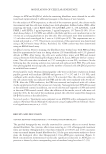
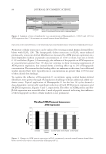
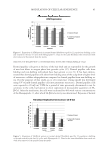
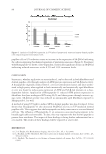
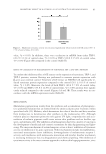
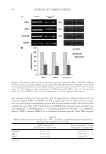
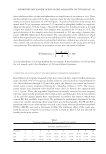
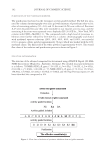
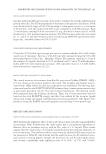
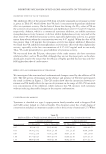
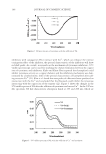
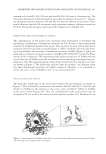
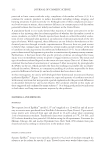
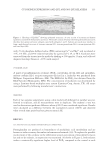
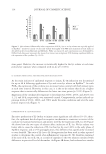
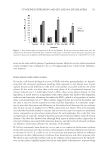
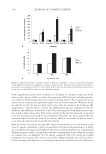
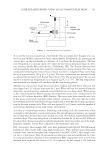
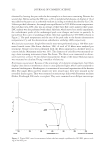
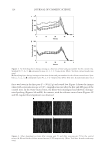
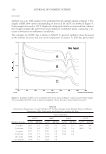
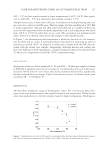
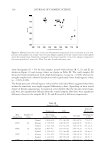
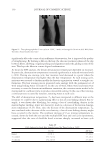
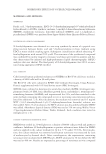
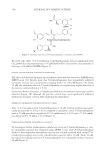
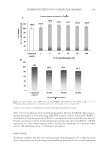
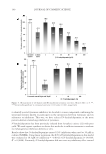
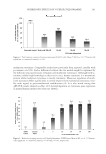
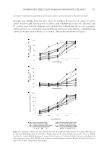
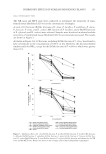
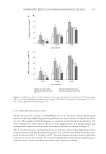
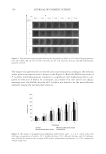
JOURNAL OF COSMETIC SCIENCE 124 force was lower in the fi rst pass (F = 90 ± 2 g) and stayed low. Figure 4 shows the images taken with a stereomicroscope at 0.67× magnifi cation just after the fi rst and fi fth pass of the control tress. In the water-treated tress, the fi bers were misaligned and showed a disorga- nized packing (Figures 4A and B). In contrast, with the silicone-treated tress (Figures 4C and D), regular fi ber alignment was observed. Figure 3. A) Stretching force during ironing as a function of time and pass number for the control tress. Symbols , , , , correspond to pass #1, 2, 3, 4, 5 respectively. {Note: Test data. Actual results may vary.} B) Stretching force during ironing as a function of time and pass number for the silicone treated tress. Sym- bols , , , , correspond to pass #1, 2, 3, 4, 5 respectively. {Note: Test data. Actual results may vary.} Figure 4. Fiber alignment pictures after ironing pass #1 and after ironing pass #5 for the control tresses (A, B) and for the silicone treated tresses (C, D) respectively. {Note: Test data. Actual results may vary.}

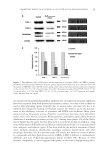
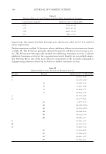
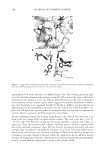
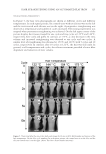
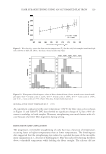
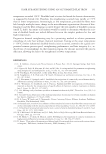
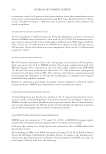
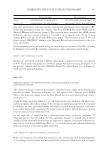
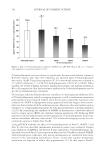
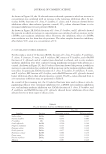
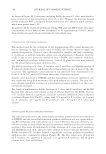
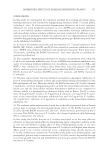
HAIR STRAIGHTENING USING AN AUTOMATED FLAT IRON 125 STRAIGHTENING PERMANENCY In Figure 5, the hair tress photographs are shown at different cycles and different temperatures. In each square picture, the control tress with no silicone was on the left and the tress treated with silicone was on the right. A progressive straightening was observed as temperature and number of cycles increased. The ironing experiment was stopped when permanent straightening was achieved. On the left upper corner of the picture display, hair tresses treated for one cycle and two cycles at 122°C and 144°C, respectively, were curly and puffy. In contrast, at 175°C, a clear decrease in the tress volume and increased straightening was observed at one cycle and two cycles. A similar level of straightening was obtained at 154°C and 144°C with 5 cycles and 10 cycles, respectively. In contrast, after 10 cycles at 122°C, the hair was still curly. In general, at all temperatures and cycles, the silicone treatment provided a better fi ber alignment and reduction of tress volume. Figure 5. Tress visual after the iron cycles, wash, and storage for 30 min in 90% RH chamber as a function of the hair temperature. On the left, cycle numbers. In each square picture, the control tress is on the left, and the silicone treated tress is on the right. {Note: Test data. Actual results may vary.}
Purchased for the exclusive use of nofirst nolast (unknown)
From: SCC Media Library & Resource Center (library.scconline.org)