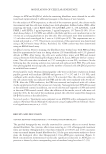
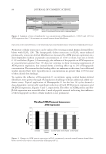
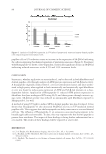
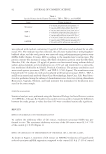
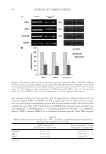
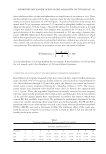
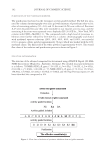
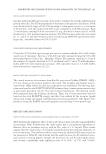
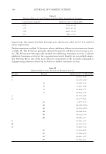
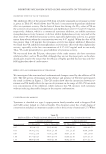
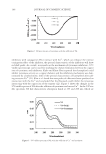
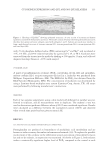
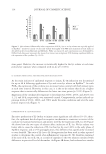
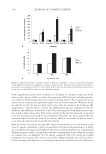
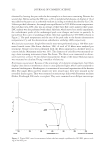
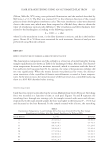
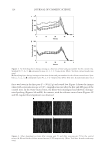
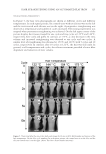
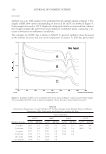
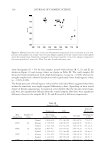
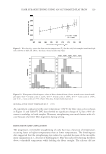
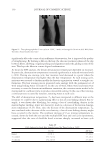
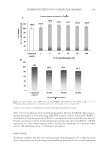
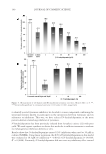
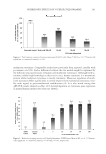
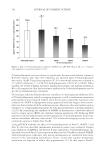
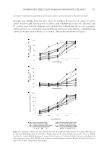
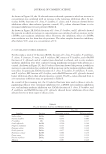
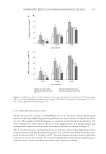
JOURNAL OF COSMETIC SCIENCE 128 value histograms (N = 50) for hair samples treated with silicone (B, C, D, and E) are shown in Figure 10 and average values are shown in Table III. The curly samples (E) showed a broader distribution with a high birefringence average (μ ~ 0.008), whereas the straight samples had a skewed distribution with signifi cantly lower birefringence values (μ = 0.005–0.006). The broad spectrum of birefringence values within individual fi bers suggested that fi bers within the same hair tress might respond differently to heat, depending on their initial degree of keratin organization. A statistical t-test showed that the silicone-treated sam- ples were not signifi cantly different from the control samples. But there were signifi cant differences between the samples (B, C, D, and E) treated at different temperatures. Figure 8. Multiple heat/cool cycles in hair iron: Denaturation temperature (Td) as a function of cycle tem- perature (each symbol is an average value of 3 pans). Empty symbols are for the control tresses, bold symbols are for the treated tresses. Diamonds correspond tot he tresses treated for 2 iron cycles. Squares correspond to the tresses treated for 5 iron cycles. {Note: Test data. Actual results may vary.} Table III Summary Table Hair temperature Number of cycles Tensile test DSC Polarized Microscopy Wet Young modulus (/109 Pa) Td (oC) ΔH (J/g) Birefringence (×103) 122°C 10 Control 1.80 ± 0.29 174.4 ± 0.28 2.81 ± 0.51 7.7± 2.4 Silicone 1.73 ± 0.35 174.0 ± 0.15 4.26 ± 0.51 7.9 ± 2.2 144°C 10 Control 1.42 ± 0.25 172.9 ± 0.30 3.58 ± 0.16 6.4 ± 1.8 Silicone 1.40 ± 0.2 172.0 ± 0.31 3.65 ± 0.15 7.1 ± 1.9 154°C 5 Control 1.31 ± 0.23 173.1 ± 0.60 2.84 ± 0.50 5.9 ± 2.0 Silicone 1.21 ± 0.33 172.8 ± 0.83 2.59 ± 0.34 5.4 ± 2.1 175°C 2 Control 1.11 ± 0.31 169.9 ± 0.38 4.81 ± 0.11 5.8 ± 1.7 Silicone 0.95 ± 0.37 168.0 ± 0.71 2.02 ± 0.11 5.4 ± 1.8

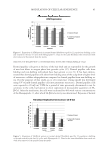
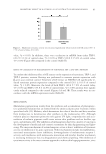
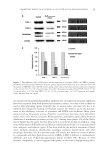
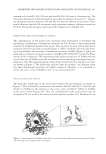
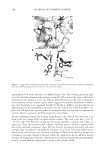
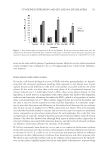
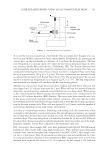
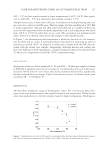
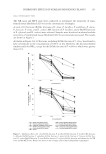
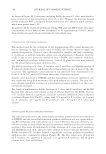
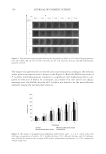
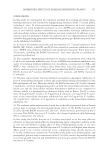
HAIR STRAIGHTENING USING AN AUTOMATED FLAT IRON 129 IRONING AT THE ONSET TEMPERATURE (T = 154°C) An experiment conducted at the onset temperature (154°C) for three iron cycles is shown in Figure 11 and Table IV. DSC data showed no signifi cant change of Td but a 40% de- crease in enthalpy in both samples. However, straightening was much better with sili- cone because of a better fi ber alignment during setting. DISCUSSION AND CONCLUSION The progressive, irreversible straightening of curly hair was a function of temperature, occurring faster at higher temperatures than at lower temperatures. The birefringence data suggested that the straightening was related to a gradual decrease of the microfi la- ment organization (i.e., decrease of birefringence). This was induced by heating the fi bers above a threshold temperature while holding the fi bers straight. The silicone did not Figure 9. Wet elasticity versus the denaturation temperature (Td) for the curly hair samples ironed multiple times shown in Table III. {Note: Test data. Actual results may vary.} Figure 10. Histograms of birefringence values of fi bers obtained from silicone treated tresses ironed multi- ple times. Y-20 = 10 iron cycles at 122°C, Y-30 = 10 iron cycles at 144°C, Y-35 = 5 iron cycles at 154°C, and Y-40 = 2 iron cycles at 175°C. {Note: Test data. Actual results may vary.}
Purchased for the exclusive use of nofirst nolast (unknown)
From: SCC Media Library & Resource Center (library.scconline.org)