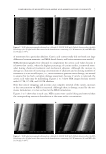
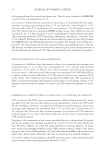
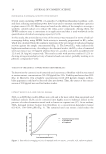
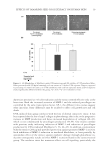
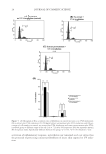
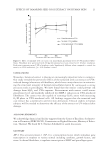
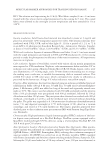
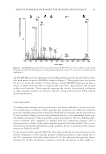
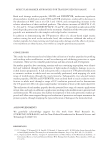
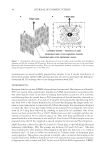
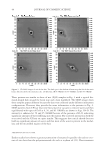
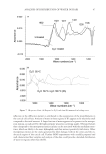
JOURNAL OF COSMETIC SCIENCE 44 These patterns are similar to those of wet (D2O) samples in Fig. 4 with a typical dia- mond-shaped halo around the beam stop and a faint dumbbell. The SANS images from these samples appear different because the data were collected under different instrument confi gurations. However, they provide the same information as the patterns in Fig. 4. SANS patterns from CF hair that were fi rst placed in vacuum to remove water and then equilibrated with vapor of D2O at 6, 50, and 95 %RHDs are shown in Figs. 5B–D. The intensity is enhanced at 50 and 95 %RHD because of the presence of D2O, indicating signifi cant amounts of water diffusing into the matrix. The scattered intensity in both the as-received and the CF hair are quite similar. This suggests that cuticle sheath does not hold any signifi cant amount of water, and that most of the water is present in the medul- lary and the microfi bril regions of the hair. ABSORPTION OF OIL IN HAIR Earlier studies have shown a greater permeation of saturated vegetable oils such as coco- nut oil into hair than the polyunsaturated oils such as soybean oil (23). Heat treatment Figure 5. 2D SANS images of cuticle-free hair. The dark spot is the shadow of beam stop that blocks the main beam. Side bar shows the intensity scale. (A) Dry hair, (B) 6 %RHD, (C) 50 %RHD, and (D) 95 %RHD.

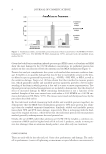
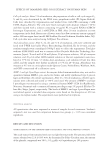
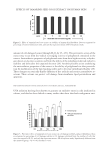
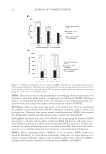
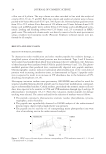
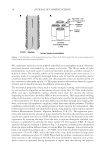
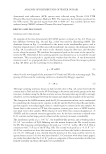
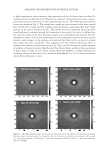
ANALYSIS OF DISTRIBUTION OF WATER IN HAIR 45 at high temperature often promotes the penetration of the oil deeper into the fi ber. To understand the mechanism of oil diffusion into the hair’s hierarchical structure, we pre- pared four tresses as mentioned in the experimental section. The SANS patterns of these tresses are shown in Fig. 6. The interference peaks are more intense in the heat-treated hair in both the coconut and the soybean oil-treated hairs, suggesting that more water present in the spaces between the IFs. This shows that heat treatment opens up addi- tional pathways, perhaps through the formation of new pores, for water to diffuse into the cortical regions of the hair. Detailed analysis (to be published) also showed that the interference peaks, both in the sample kept at room temperature and in the heat-treated sample, were stronger in the soybean oil-saturated hair than in the coconut oil-treated hair under the same conditions. This suggests that this diffusion-blocking effect is weaker with soybean oil than with coconut oil. This could be because of smaller amount of soybean oil penetrates into the fi ber and thus blocks fewer pathways for penetration of water than coconut oil (24). These results show that SANS is a useful technique for studying substrates that have been rendered hydrophobic by oil or other treatments, which block diffusion of water. Figure 6. 2D SANS images of hair treated with oil. The dark spot is the shadow of beam stop that blocks the main beam. Side bar shows the intensity scale. (A) Coconut oil—before heat treatment, (B) coconut oil—after heat treatment, (C) soybean oil—before heat treatment, and (D) soybean oil—after heat treatment. All at 90 %RHD.
Purchased for the exclusive use of nofirst nolast (unknown)
From: SCC Media Library & Resource Center (library.scconline.org)