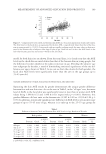
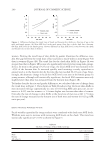
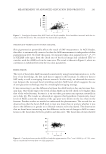
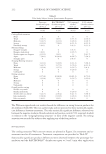
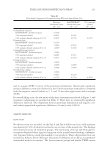
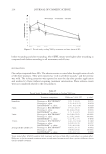
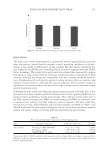
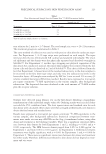
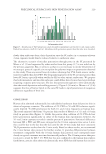
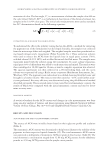
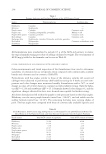
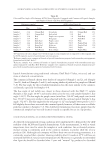
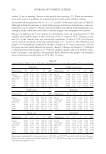
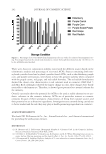
JOURNAL OF COSMETIC SCIENCE 228 Human skin treated for either 2 or 10 min also yielded a statistically signifi cant difference between SDS and SDS + PEO, although the magnitude of inhibition by the polymer was smaller than in porcine skin. The third treatment, 50 mM SLS + 2% PVA, yielded a sta- tistically signifi cant reduction in penetration versus SLS for porcine skin, but not for human skin. The reason for this difference is not known. However, the interaction of PVA with anionic surfactants is generally considered to be weaker than that of PEO this belief is encoded in an affi nity sequence PVA PEO MeC PVAc PPO ~ PVP originally at- tributed to Breuer and Robb (17) and republished frequently since that time, e.g., (6,18). One might anticipate from this sequence that PVA would have less impact on surfactant penetration into skin than PEO at comparable concentrations, as it binds the surfactant less tightly. The tensiometry data in Figure 4 support this hypothesis. In the present study, the PVA test material was not fully hydrolyzed, potentially pushing it closer to polyvinyl acetate (PVAc) in the surfactant affi nity sequence. Furthermore, the surface activity of the PVA material was higher than that of PEO. Positioning the effectiveness of this material to inhibit surfactant penetration was an objective of the test. Statistical differences between PEO and the control were stronger for the 10-min exposure time than for the 2-min exposure. This could be due to the fact that the skin used for the 10-min study had more consistent 3 H2O permeation results than that used for the 2-min study. This difference in consistency is highlighted in Table II the SD was lower for the 10-min exposure than for the 2-min exposure. Despite this difference, both experiments revealed a similar pattern of surfactant skin penetration. Figure 5 displays the distribu- tion of the 3 H2O permeation values for the membranes used in both experiments, which further emphasizes the difference in 3 H2O permeation. Unlike porcine skin, the treatment with 2% PVA did not statistically reduce 14 C-SDS skin penetration in either human skin experiment. This could be due to the fact that porcine skin does not contain eccrine sweat glands, which is an additional route of entry for excipi- ents, or to differences in pore structure that excluded SLS/PVA complexes from pig skin but not from human skin. However, it could simply result from chance. We are not convinced that the pore structure of the substrate is the major determinate of surfactant penetration and offer the following thoughts on this subject, without claiming to know the answer. The “penetration” process can be thought of as deposition and binding of surfactant onto surface keratins, leading to swelling and opening of the keratin structure, followed by more facile diffusion of unbound surfactant into underlying lipid and protein layers. In this scenario, penetration of both monomeric and micellar SLS into the outer SC is rapid because of the loss of barrier lipids in the desquamating layers. Bulky structures such as surfactant/polymer complexes diffuse from applied formulations to the skin surface more Table II Median, Mean, and SD Values for 3 H2O Permeation 10-min Expt. 1 2-min Expt. 2 Median 1.23 1.22 Mean 1.22 1.22 SD 0.34 0.68 Values refl ect pooled data from 3 or 4 donors.

PRECLINICAL SURFACTANT SKIN PENETRATION ASSAY 229 slowly than surfactant alone their deposition onto the SC surface in a consumer-relevant 2-min exposure would thus be reduced relative to surfactant alone. The alternative scenario of micellar penetration through pores in the SC presented by Moore et al. (1) and supported by other articles from this group (3,7) is not ruled out by the previous argument. But, it seems to us that it is not necessary to invoke the presence of microscopic pores of a specifi c size to explain the polymer impact on penetration observed in this study. There are several lines of evidence showing that PVA binds anionic surfac- tants less tightly than does PEO. The desquamating layers of the SC are more porous than lower SC layers, especially when swollen by SLS or other anionic surfactants. We propose that both monomeric and micellar surfactant could diffuse directly into these layers without requiring a separate pore structure. The fact that penetration appears to slow substantially after the initial deposition and swelling process (cf. Figure 2 (10 min) vs. Moore et al. (5 h)) suggests that loss of barrier lipids in the outer SC leads to rapid penetration of exogenous substances regardless of their size. CONCLUSION Human skin admitted substantially less radiolabeled surfactant than did porcine skin in identical exposure scenarios. The addition of 2% PEO to 50 mM SLS solution signifi - cantly lowered 14 C-SDS penetration for both 10- and 2-min exposures on human skin. This result mirrored that from 5-h porcine skin studies of Moore et al. (1) and a 10-min study in porcine skin (Figure 1). Unlike the porcine skin, addition of 2% PVA did not lower penetration signifi cantly in either of the human skin experiments however, the 10- and 2-min exposures revealed a similar pattern of penetration. Statistical differences between SLS + PEO and SLS were stronger for the 10-min exposure time versus 2-min this could be due to the fact that the skin used for the 10-min study had more consistent 3 H2O permeation results than the 2-min study. Based on these results, we recommend the 2-min human skin protocol for further studies. It provides differentiation between treatments comparable with the 10-min human skin protocol and corresponds more closely to typical consumer use time for rinse-off products. The 10-min porcine skin pro- tocol gave a result for SLS + 2% PVA that was not confi rmed in the human skin studies furthermore, porcine skin admitted substantially more SDS than did human skin in iden- Figure 5. Distribution of 3 H2O permeation values obtained for membranes used in the 10- and 2-min studies. Dashed line indicates cutoff of 2.0 μl/cm2. Membranes with permeation greater than this value were discarded.
Purchased for the exclusive use of nofirst nolast (unknown)
From: SCC Media Library & Resource Center (library.scconline.org)