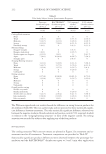
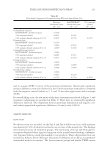
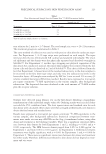
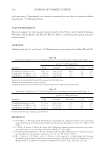
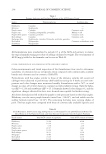
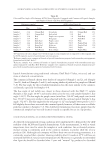
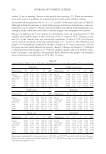
JOURNAL OF COSMETIC SCIENCE 230 tical exposures. Consequently, we cannot recommend porcine skin for routine mildness screening by 14 C-SDS penetration. ACKNOWLEDGMENTS Financial support for this research was provided by the Procter and Gamble Company. We thank Tiffany Brooks and Keun Il Kim for help in conducting the human skin pen- etration assays. APPENDIX Tabular results for 10- and 2-min 14 C-SDS penetration into human skin (Tables III and IV). REFERENCES (1) P. N. Moore, S. Puvvada, and D. Blankschtein, Challenging the surfactant monomer skin penetration model: Penetration of sodium dodecyl sulfate micelles into the epidermis, J. Cosmet. Sci., 54(1), 29–46 (2003). (2) C. Froebe, F. Simion, L. Rhein, R. Cagan, and A. Kligman, Stratum corneum lipid removal by surfac- tants: Relation to in vivo irritation, Dermatology, 181(4), 277–283 (1990). (3) S. Ghosh and D. Blankschtein, The role of sodium dodecyl sulfate (SDS) micelles in inducing skin bar- rier perturbation in the presence of glycerol, J. Cosmet. Sci., 58, 109–133 (2007). (4) M. J. Fevola, R. M. Walters, and J. J. LBrizzi, A new approach to formulating mild cleansers: Hydrophobically-modified polymers for irritation mitigation, in Polymeric Delivery of Therapeutics, S. E. Morgan and R. Y. Lochhead, eds. (American Chemical Society, New York, 2010), pp. 221–242. Table IV Treatments, Sample Sizes, and 14 C-SDS Disposition for 2-min Exposure on Human Skin (Expt. 2) Treatment μg/cm2 14 C-SDS equivalents Wipe Receptor Penetration (+) SE (-) SE 50 mM SLS (control) (n = 20) 3.2 ± 0.6 0.06 ± 0.04 7.3 1.2 1.0 50 mM SLS + 2% PEO (n = 21) 3.1 ± 1.5 0.07 ± 0.05 3.5 0.5 0.5 50 mM SLS + 2% PVA (n = 21) 3.2 ± 0.4 0.11 ± 0.07 5.3 0.8 0.7 Columns have the same meaning as in Table III. Table III Treatments, Sample Sizes, and 14 C-SDS Disposition for 10-min Exposure on Human Skin (Expt. 1) Treatment μg/cm2 14 C-SDS equivalents Wipea Receptorb Penetrationc (+) SE (-) SE 50 mM SLS (control) (n = 14) 8.0 ± 1.9 0.03 ± 0.01 16.0 2.3 2.0 50 mM SLS + 2% PEO (n = 15) 2.8 ± 0.6 0.05 ± 0.03 6.5 0.8 0.7 50 mM SLS + 2% PVA (n = 14) 12.9 ± 7.0 0.09 ± 0.05 11.3 1.5 1.3 a Radioactivity removed with wetted fi lter papers after the wash step. b Radioactivity measured in receptor solution. c Geometric mean of the total radioactivity found in all layers of skin + receptor solution.

PRECLINICAL SURFACTANT SKIN PENETRATION ASSAY 231 (5) R. Y. Lochhead and L. R. Huisinga, A brief review of polymer/surfactant interaction, Cosmet. Toilet., 119, 37–45 (2004). (6) E. D. Goddard, Polymer/surfactant interaction: Manifestations, methods, and mechanisms, in Principles of Polymer Science and Technology in Cosmetics and Personal Care, E. D. Goddard and J. V. Gruber. Eds. (Marcel Dekker, New York, 1999), pp. 128–195 (online version). (7) P. N. Moore, S. Puvvada, and D. Blankschtein, Role of the surfactantpolar head structure in protein- surfactant complexation: Zein protein solubilization by SDS and by SDS/C12E surfactant solutions, Langmuir, 19(4), 1009–1016 (2003). (8) G. B. Kasting, T. G. Filloon, W. R. Francis, and M. P. Meredith, Improving the sensitivity of in vitro skin penetration experiments, Pharmaceut. Res., 11(12), 1747–1754 (1994). (9) T. Tadros, Polymeric surfactants: Stabilization of emulsions and dispersions, in Principles of Polymer Science and Technology in Cosmetics and Personal Care, E. D. Goddard and J. V. Gruber, Eds. (Marcel Dekker, New York, 1999), pp. 88–127 (online). (10) E. W. Merritt and E. R. Cooper, Diffusion apparatus for skin penetration, J. Contr. Release, 1, 161–162 (1984). (11) B. Cabane, Structure of some polymer-detergent aggregates in water, J. Phys. Chem., 81(17), 1639–1645 (1977). (12) M. J. Fevola, R. M. Walters, and J. J. LBrizzi, A new approach to formulating mild cleansers: Hydrophobically-modifi ed polymers for irritation mitigation, in Poymeric Delivery of Therapeutics, ACS Symposium Series, S. Morgan, Ed. (American Chemical Society, Washington, DC, 2010), pp. 221–242. (13) C. Ade-Browne, S. Qian, M. Weaver, and H. Kumari, Investigating the effect of surfactant and surfactant-polymer micellar nanoassemblies on skin penetration, unpublished data. (14) K. Holmberg, B. Jonsson, B. Kronberg, and B. Lindman, Surfactants and Polymers in Aqueous Solution, 2nd Ed. (Wiley, West Sussex, England, 2002). (15) P. H. Elworthy and K. J. Mysels, The surface tension of SDS solutions and the phase separation model of micelles, J. Coll. Interface Sci., 21, 331–347 (1966). (16) L. Rhein, C. Robbins, and K. Fernee, Surfactant structure effects on swelling of isolated human, J. Soc. Cosmet. Chem., 37, 125–139 (1986). (17) M. M. Breuer and I. D. Robb, Interactions between macromolecules and detergents, Chem. Ind. (London), 13, 530 (1972). (18) E. D. Goddard, Polymer-surfactant interaction Part I. Uncharged water-soluble polymers and charged surfactants, Colloid Surf., 19(2–3), 255–300 (1986).
Purchased for the exclusive use of nofirst nolast (unknown)
From: SCC Media Library & Resource Center (library.scconline.org)