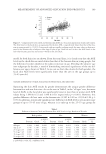
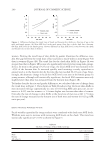
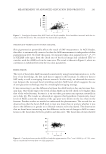
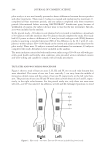
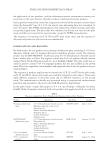
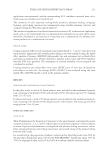
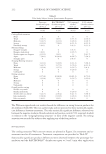
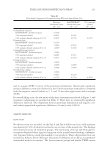
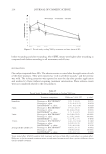
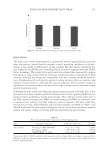
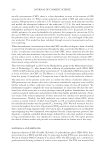
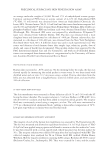
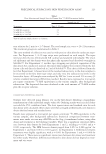
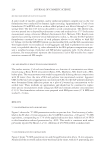
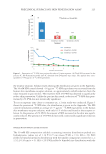
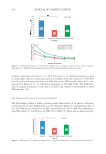
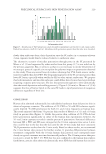
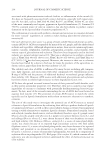
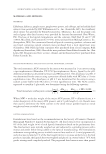
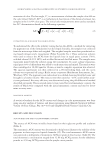
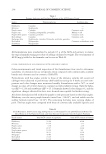
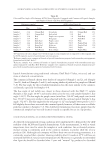
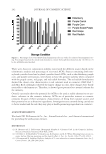
JOURNAL OF COSMETIC SCIENCE 200 women. Plotting the trend lines of skin AGEs by gender illustrates the difference visu- ally. The gap between the trend lines of face and arm is much wider in men (Figure 4A) than in women (Figure 4B). The trend line for the cheek skin AGEs in Figure 4A was steeper than that in Figure 4B because of a signifi cantly lower level in young male groups. In fact, for men in the group of 25 year of age, the facial AGE level was measured to be ~65% of the forearm skin. It increased quickly until attaining a nearly equivalent or greater level as in the forearm skin by the time the men reached 60–65 year of age. Inter- estingly, this dramatic change in facial skin AGE level is not seen in the female group. In young women, although still statistically signifi cant, the facial SAF measures were only slightly lower than what was measured from the forearm skin (Figure 4B). To further describe the site and gender differences, we calculated the rate of change from the trend lines in Figure 3. Data shown in Table II indicate that the facial skin AGEs in men increased with age exponentially in a rate of 0.021 (log AFR units per year), in con- trast to a 0.015 rate for women—a 1.4 times higher rate for men than that of women. Critically, the rate of change in skin AGEs at the facial site of men was a full 1.75 times the rate of change measured at the forearm site of both men and women (0.012 log AFR units per year). EFFECT OF FACIAL WRINKLES ON AGE Facial wrinkles quantifi ed by image analysis were correlated with cheek area AGE levels. Wrinkles were seen to increase with increasing AGE levels on the cheek. This trend was statistically signifi cant (p 0.05) as shown by Figure 5. Figure 4. Differences between the trend lines of cheek and forearm skin AGEs as a function of age in the male and female groups. (A) Skin AGE level in the male group. Gray line = cheek dark line = forearm. (B) Skin AGE level in the female group. Greater difference in skin AGE level is seen between the cheek and forearm sites in men than in women. Table II The Rate of Change of Skin AGEs with Age Left cheek Left volar forearm Male 0.021 0.012 Female 0.015 0.012 All subjects 0.017 0.012

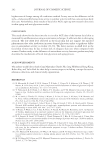
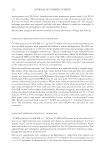
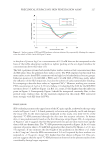
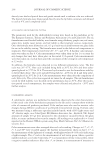
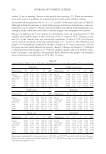
MEASUREMENT OF ADVANCED GLYCATION END-PRODUCTS 201 INFLUENCE OF PIGMENTATION ON SKIN AGE LEVEL Skin pigmentation potentially affects the result of SAF measurement. In AGE Reader, this effect is automatically corrected so that the AGE measurement is independent of skin pigmentation level. To verify this point, we measured skin color parameters (L*, a*, b*) in CIELAB color space from the cheek area of the facial image and calculated ITA° to correlate with the AGE levels in the same area. The result is shown in Figure 6, where no correlation is exhibited between the two skin parameters. DISCUSSION The level of facial skin AGE measured noninvasively using bioinstrumentation is, to the best of our knowledge, the fi rst such data to appear in the literature. It adds new data to SAF study as well as antiaging skincare research. In this study, we observed the associa- tion between the increased facial wrinkling and skin AGE level, which suggests the use of anti-glycation technology may be a meaningful antiaging strategy. It was interesting to see the difference between the AGE levels in face and in inner fore- arm skin. One would expect the levels of skin AGEs in the left cheek to be higher than that of the volar forearm, because it is an area that gets more sun exposure naturally in one’s daily life. The results we obtained are opposite this hypothesis. Consistently, lower levels of AGEs across the majority of the age span were shown on the face than on the forearm. Further studies are needed to understand the phenomenon. The second fact we observed was that the facial AGE level in men was lower than in women whether it was due to the difference in gender or in lifestyle remains to be elucidated. The observation that we found most interesting was the difference in the rate of change in AGE accumu- lation in the facial skin between genders and skin sites. The facial skin of men showed Figure 5. Correlation between skin AGE level and facial wrinkles. Facial wrinkles increased with the in- crease in skin AGE levels. The correlation was statistically signifi cant. Figure 6 . Correlation between skin AGE level and skin pigmentation. The r2 was 0.0006 ( p = 0.726), virtu- ally no correlation between these two skin properties.
Purchased for the exclusive use of nofirst nolast (unknown)
From: SCC Media Library & Resource Center (library.scconline.org)