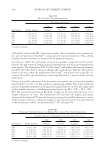
JOURNAL OF COSMETIC SCIENCE 332 Far boud et al. (106) formulated SLNs as an effi cient carrier of CoQ10 to enhance its stabil- ity. It was then incorporated into oil/water cream to improve skin hydration. A double- blind clinical study was conducted among 25 females to assess antiaging effects of developed formulations. Skin hydration and elasticity assessment confi rmed enhanced penetration, and antiwrinkle and antiaging effects (Supplementary Table 1) (106). In another study, Yue et al. (107) developed CoQ10-loaded NLCs to enhance their anti- oxidant effect on photoaged skin (107). The protective effect of CoQ10-loaded NLCs was enhanced compared with emulsion formulation, indicated by UV-irradiated fi broblast viability and inhibition of lipid peroxidation. The in vivo study showed better SC penetra- tion and dermal accumulation with the NLC formulation compared with emulsion (Sup- plementary Table 1) (107). Ret inaldehyde, a precursor of retinoic acid, is a useful photoaging treatment. Moreover, retinaldehyde is less irritating to the skin on topical application (108). Nayak et al. (109) coloaded retinaldehyde and CoQ10 in NLCs to improve their photoaging treatment. An ex vivo study showed a negligible permeation but greater accumulation in skin layers (109). A wrinkle model induced by UV was developed in mice and demonstrated effec- tiveness of coloaded NLCs as antiwrinkle treatment (109). COS METIC ACTIVES AND ANTIAGING PROPERTIES Vit amin C, vitamin E, polyphenols, green tea, silymarin, and others are known for their antioxidant potentials (110). The skin antiaging effect of green tea compounds (catechin and (-) epigallocatechin gallate) were investigated on human dermal fi broblasts. Results demonstrated that (-) epigallocatechin gallate enhanced the cell viability and has dose- dependent antioxidant activity. Furthermore, (-)-epigallocatechin gallate decreased MMP expression and other infl ammatory signaling pathways (111). Mammon e et al. (112) investigated different plant extracts and discovered that Dianella ensifolia extract has antioxidant potential and decreases skin hyperpigmentation. This extract contained (1-(2,4-dihydrophenyl)-3-(2,4-dimethoxy-3-methylphenyl) propane) which inhibits free radical and lipid oxidation induced by UV. Moreover, the reduction in skin discoloration was clinically assessed in human volunteers. Results showed that topical formulation contained extracted compound the increased the rate of tan fading compared with hydroquinone formulations (112). Differ ent traditional dosage formulas involved different antiaging mechanisms, includ- ing anti-infl ammatory antioxidant properties, increase in skin barrier strength, rejuvena- tion, and others (113). Sundaram et al. (114) designed an antiaging cream that consisted of the extract of Aegle marmelos fruit pulps, Nyctanthes arbor-tristis leaves, and the terminal meristem of Musa paradisiaca fl owers. The formula was evaluated for its antioxidant and anti-elastase activity, and results proved the herbal cream was a strong candidate for an- tiaging (114). Vitami n E protects against UV-induced hyperpigmentation, whereas vitamin C reduces the production of melanin (115,116). Raspberry reduces loss of transepidermal water and enhances gene expression that allows for hydration and moisturization of the skin via hyaluronic acid synthesis. A randomized controlled study by Rattanawiwatpong et al. (117) among 50 Thai females with Fitzpatrick skin type III or IV evaluated the synergistic,

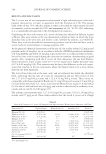
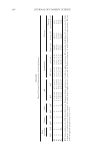
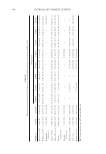
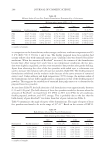
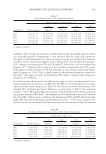
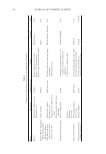
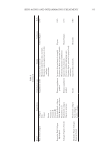
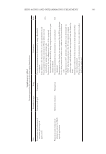
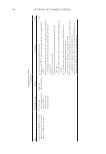
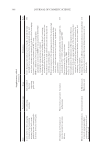
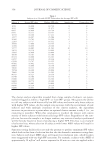
SKIN-AGING AND INFLAMMAGING TREATMENT 333 antiaging effect of the encapsulated serum of vitamin C, vitamin E, and cell culture ex- tract of raspberry leaves based on different skin parameters. Results showed the serum had synergistic antiaging effects, such as improvements in elasticity, wrinkles, radiance, smoothness, and skin darkening (117). Centella asiatica is widely used in Indian herbal medicine and known for its benefi cial skin effects. Maramaldi et al. (118) evaluated antiglycation and anti-infl ammaging of Centella asiatica in oil-in-water emulsion formulation (Supplementary Table 1). Triterpenes con- tained in the extract promote collagen synthesis moreover, both triterpenes and polyphe- nolics have shown a synergistic action for normalization of keratinocyte hyperproliferation, infl ammation, and generation of the natural epidermal homeostasis. This study showed C. asiatica extract promoted collagen synthesis, reduced DNA damage by UV, decreased photodimerization of thymine and expression of interleukin-1α, inhibited carboxymethyl lysine synthesis, and densifi ed epidermal collagen network in the papillary dermis (118). TOPICAL COLLAGEN FORMULATIONS For a substance to be delivered via the skin, many physicochemical properties need to be considered, including molecular weight, solubility, and partition coeffi cient (119). Im- portantly, topically applied collagen seems ineffective as it cannot be absorbed through the skin because of its high molecular weight, and only naturally produced collagen can be effective (120). Commercial products such as Collagen Hydrating Serum produced by Wilma Schumann (121) and Matricol Caviar Deluxe Collagen produced by Matricol (Medskin Solutions Dr. Suwelack AG, Billerbec, Germany) (122) whose unit price ex- ceeds $200 and $300, respectively, contain collagen (Table 1). Thus, their claims of de- livering pure natural collagen in high concentration through the skin and promoting new collagen are highly doubtful. Other commercial products are listed in Table 1. On the other hand, palmitoyl pentapeptide-4, with the trade name of Matrixyl (DECIEM Company, Toronto, Canada) is an active peptide of small size that is based on collagen type I propeptide (132). It was reported that Matrixyl promotes collagen type I synthesis in both in vitro cell culture and clinical studies (132). For example, controlled two double-blind clinical studies conducted in females revealed that the product improved wrinkle depth (133). Recently, hydrolyzed collagen has gained a lot of fame in the cosmetic industry because of its low molecular weight, it can penetrate the skin and produce antiaging properties. Zhang et al. (134) conducted an ex vivo study to investigate collagen hydrolysate penetra- tion and found that only 8% penetrated mouse skin. Moreover, in vitro and ex vivo studies cannot refl ect the in vivo bioavailability of these products, and there are limited studies that evaluate the in vivo permeation and effi cacy of such peptides (135). Unfortunately, numerous drawbacks, concerns, and challenges are associated with nutra- ceutical products. In addition, both topical and oral antiaging formulations have not been compared with Food and Drug Administration approved injected collagen or hyaluronic acid products, such as Evolence and others (136). Consequently, the market is currently fl ooded with expensive antiaging products that suffer from questionable safety and effi cacy profi les. Hence, valid, well-established, and common regulations for antiaging nutraceuticals along with in-depth clinical, in vivo, and in vitro studies are required to monitor emerging trends and demands of antiaging nutraceuticals in the global market ( 137).
Purchased for the exclusive use of nofirst nolast (unknown)
From: SCC Media Library & Resource Center (library.scconline.org)