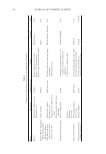
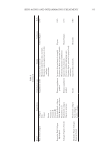
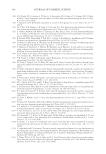
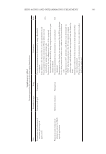
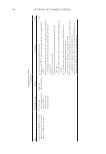
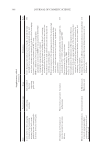
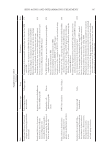
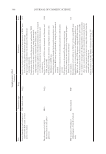
JOURNAL OF COSMETIC SCIENCE 330 Bio materials as penetration enhancers. Dif ferent biomaterials have recently emerged as safer skin penetration enhancers. For example, cell-penetrating protein, such as arginine, magainin, and lysine, facilitates the delivery of various cosmeceuticals through the skin (81). Arginine-rich peptide improves transdermal delivery of proteins into skin tissue (Supplementary Table 1) (82). Moreover, Li et al. (83) used trypsin as a biochemical en- hancer to enhance insulin transdermal delivery (83). Nas rollahi et al. (84) studied the ability of cell-penetrating peptides to transport elastin into fi broblast as skin-aging treatment. The study confi rmed the transport of the elastin–peptide complex across fi broblast cell culture via a fl uorescent microscope, which occurred by phys- ical interactions between the peptide and the membrane (Supplementary Table 1) (84). Car rier-based formulations. Ves icular systems of nanometer size are commonly used to en- hance skin penetration of drugs and other cosmeceuticals. Nanocarriers have received researchers’ attention because of their various advantages, such as improving drug phar- macokinetics, prolonging its half-life, and reducing its metabolism. In addition, nanocar- riers protect the drug in vitro and in vivo (85). Lip osome. Fir st introduced in 1961, liposomes are spherical vesicles with phospholipid bilayers that carry portions of the surrounding solvent within (86). This allows for the incorporation of hydrophilic, hydrophobic, and amphiphilic drugs. Natural and synthetic phospholipids are used in liposome formation along with cholesterol and surfactants (87). It was hypothesized that liposomes enhance cosmeceutical delivery by increasing skin barrier permeability and changing the intracellular lipids (88). Because of liposomes’ rapid partition, the cosmeceutical agent is carried to the SC, and as the vesicle remains in this layer, the drug passes to deeper layers (89). However, liposomes are greatly limited by their instability, aggregation, and molecule leakage. Also, their diffusion into the skin is heterogenous and inhibited by the skin barrier (90). Tsa i et al. (91) developed and investigated NGN-loaded elastic liposomal formulations via an ex vivo study (91). The NGN accumulation in different skin layers in case of elastic liposomes was signifi cantly higher relative to Tween 80 and saturated aqueous solutions. Furthermore, elastic liposome formulations caused less skin irritation when applied to rat skin than a standard irritant, indicating that elastic liposomes can be considered a good carrier for topical formulations of NGN (91). Cad deo et al. (92) created liposomal formulation to deliver two different phenols: resve- ratrol (lipophilic) and gallic acid (hydrophilic), both of which have protective skin effects against oxidation and infl ammation (92). The formulation’s ability to protect fi broblasts from oxidative damage of H2O2 was evaluated in vitro. In addition, therapeutic effi cacy was evaluated in mice based on capability to inhibit chemically induced edema and my- eloperoxidase activity (Supplementary Table 1) (92). Nio somes. Nio somes are vesicles consisting of nonionic surfactants such as Span 60, Span 80, Tween 60, and Tween 80, which are safe and cheap for pharmaceutical applications. They are good carriers of hydrophilic and hydrophobic cosmeceutical agents (93). Niosomes have advantages over liposomes, as they are more stable, cheaper, and easier in production (85). However, they showed reduced molecule fl uxes compared with liposomes (94). Gal lic acid derived from Terminalia chebula showed antiaging effects because of its anti- oxidant properties. However, its extract suffers chemical instability and inactivity on exposure to environmental conditions (95). Manosroi et al. (95) developed elastic and

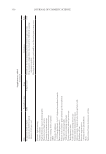
SKIN-AGING AND INFLAMMAGING TREATMENT 331 nonelastic niosomal gel formulation of gallic acid to enhance both its stability and skin penetration. An in vivo study was conducted to assess skin irritation effects via closed patch tests and evaluate antiaging effects based on skin elasticity, hydration, erythema, and pigmentation. The results indicated that niosomal formulation enhanced the stabil- ity and antiaging effi cacy of gallic acid (Supplementary Table 1). In another study, Gupta et al. (96) developed liposomes, niosomes, and curcumin–phosphatidyl choline (phy- tovesicles) vesicles to enhance curcumin topical bioavailability. They found that vesicular systems improved antiaging effects and phytovesicles were the most effective (Supple- mentary Table 1). Pro niosome, Ethosome, and Transfersome. Pro niosomes are fl owable, dry formulations composed of surfactant-coated carriers, which form multilamellar niosomes on hydration (97). Proniosomes have been developed to overcome niosomes’ drawbacks, such as aggre- gation and leaking (97). Pro tection of coenzyme Q10 (CoQ10) against photoaging is related to its antioxidant ef- fi cacy. Yet, its lipophilicity and high molecular weight hinder its topical applications (98). Yadav et al. (99) developed proniosomal formulation of CoQ10 to solve these prob- lems as listed in Supplementary Table 1. An in vivo study exposed the skin to UV radia- tion followed by a 4-week formulation application, assessing skin sagging via a pinch test visually for wrinkles, striation, and infl ammation. The study showed that pronisomes could be an effi cient way to deliver CoQ10 (99). Eth anol is an effi cient permeation enhancer. When added in 20–50% to phospholipid, it yields an elastic nanovesicular system known as ethosome (100). The improved penetra- tion of ethosome over liposome is because of ethosomes’ interaction with skin lipids. It has been hypothesized that ethanol reduces transition temperature, fl uidity, and density of skin lipids, causing deeper penetration of cosmeceutical agents into skin layers (100). Tra nsfersomes are bilayered, deformable vesicles formed by phospholipids, ethanol, and surfactants. Transfersomes penetrate SC because of their fl exibility and ability to squeeze between intracellular lipids. Moreover, the skin hydration gradient permits further vesi- cle penetration into deeper hydrated layers (101). Kau r et al. (102) encapsulated curcuminoids extract in liposomes, ethosomes, and trans- fersomes to evaluate their photoprotection and skin hydration effects. The study showed improvement in skin characteristics, indicating enhanced penetration and photoprotec- tion effects (Supplementary Table 1). Sar af et al. (103) developed curcuminoid-loaded transfersomes formulation for antiwrin- kle treatment, which was incorporated into cream and evaluated for their irritation. Fur- thermore, antiwrinkle effects were assessed by measuring skin elasticity of six female volunteers. Results revealed increased skin deposition with enhanced skin elasticity and fi rmness (Supplementary Table 1). Sol id Lipid Nanoparticles (SLNs) and Nanostructured Lipid Carriers (NLCs). In 1991, SLNs were introduced as a substitute for other colloidal carriers. They are a carrier system consisting of a solid core (lipid with a high melting point) and an aqueous surfactant coat (104). Solid lipids constitute about 0.1–30% w/w, whereas surfactant constitutes 0.5–5% to enhance stability. Particle size, drug encapsulation, stability, and release are infl uenced by the types of lipids and surfactants (105). For better stability and loading capacity, NLCs were produced, which are modifi ed SLNs consisting of solid and liquid fats (105).
Purchased for the exclusive use of nofirst nolast (unknown)
From: SCC Media Library & Resource Center (library.scconline.org)