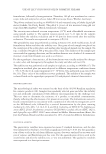
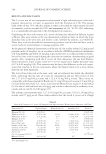
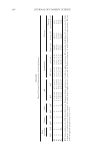
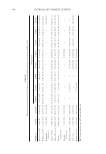
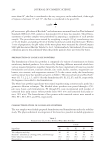
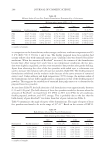
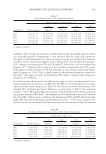
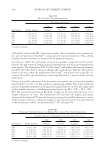
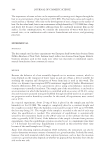
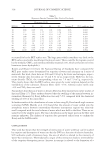
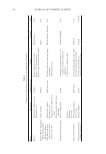
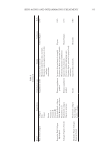
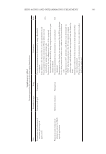
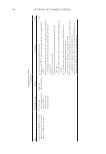
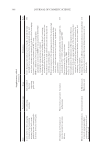
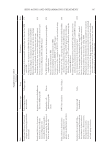
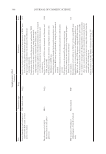
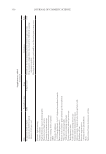
Title Formulation type Drug Evaluation Refs. An approach based on lipid nanoparticles (SLN) for topical delivery of α-Lipoic acid SLNs α-Lipoic acid Particle size was determined by photon correlation spectroscopy (143) Drug–excipient compatibility was evaluated by differential scanning calorimetry analysis Rheological analysis was performed by oscillation frequency sweep tests a Dynamic light scattering b Stratum corneum c High-performance liquid chromatography d Nanostructured lipid carriers e Scanning electron microscope f Transmission electron microscopy g Ferric reducing ability of plasma h ABTS i Ultraviolet B radiation j 3-(4,5-Dimethylthiazol-2-yl)-2,5-diphenyltetrazolium bromide k Matrix metalloproteinase-2 l Sodium dodecyl sulfate- polyacrylamide gel electrophoresis m Thin layer chromatography n Differential scanning calorimetry o Fourier transform infrared spectroscopy p Polydispersity index q Confocal laser scanning microscopy r Enzyme-linked immunosorbent assay s Adenocarcinomic human alveolar basal epithelial cells t Fibroblast cell line u Reactive oxygen species v 3,4-Dihydroxy-L-phenylalanine w SLNs x Immortalized human keratinocyte cell line Supplementary table I Continued JOURNAL OF COSMETIC SCIENCE 350

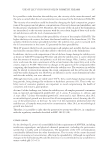
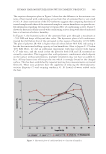
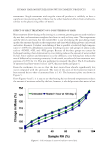
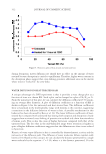
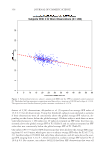
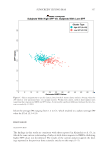
J. Cosmet. Sci., 71, 351–360 (September/October 2020) 351 Bias in Sunscreen SPF Testing: A Review of Published Data TRINA RICCI, ANDREW MARRA, KAREN RAUEN, and MICHAEL CASWELL , Consumer Product Testing Company, Inc., Fairfi eld, NJ (T.R., A.M., K.R., M.C.) Accepted for publication March 31, 2020. Synopsis Subversion bias, a type of selection bias, through manipulation of subject recruitment compromises data validity. This study explores the possibility of subversion bias in sunscreen sun protection factor (SPF) testing. It has been established that subjects with lower minimal erythemal dose (MED) values exhibit higher sunscreen SPF values. Consistency of this response is determined in subjects who participated in multiple sunscreen effi cacy clinical trials. All trials determined the SPF of the sunscreen standard P2. Of the 652 subjects with greater than three observations (n = 286), 35 subjects consistently had values either well above (n = 29) or below (n = 6) the average SPF value of the dataset (15.6 ± 1.2). The difference between the average SPF by the subject exhibiting the highest average SPF for P2, 19.8 ± 0.9, and the subject exhibiting the lowest average SPF for P2, 12.3 ± 2.6, is 7.5 SPF units, or 61%. Recruitment strategies based on historical SPF values for an individual would be considered subversion bias. Foreknowledge of those subjects with consistent results either in favor or not in favor of SPF testing outcomes could be exploited and would provide a reason for variation in results among testing facilities. INTRODUCTION The p rinciples of good clinical practice (GCP) include minimizing bias and maximizing precision (1,2). The ability to detect bias in a clinical trial is important to assess the valid- ity of the results. Validity refers to the degree to which a clinical trial accurately delivers the specifi c concept (e.g., data) that is attempted. External validity refers to the extent to which the results of a study are generalizable or transferable. The t hree types of clinical trial bias are information bias, confounding bias, and selection bias. Selection bias occurs when selection, enrollment, or continued participation of a subject in a clinical trial is somehow dependent on the likelihood of having the outcome of interest. Sub- version bias, a type of selection bias, occurs when the clinical team manipulates subject recruit- ment. Different types of subversion bias can occur. Herein, we provide evidence for the possibility of subversion bias in sunscreen sun protection factor (SPF) testing. The S PF of a sunscreen on a subject is inversely dependent on that subject’s unprotected minimal erythemal dose (MED) (3–5). In 1993, Kawada et al. (3) reported data on 48 differ- ent subjects. In 1999, Damien et al. (4) reported data on 45 different subjects from fi ve differ- Address all correspondence to Trina Ricci at tricci@cptclabs.com .
Purchased for the exclusive use of nofirst nolast (unknown)
From: SCC Media Library & Resource Center (library.scconline.org)