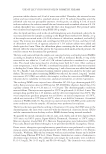
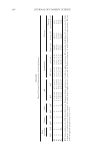
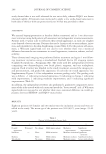
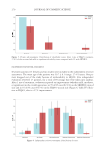
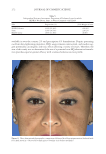
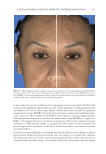
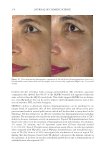
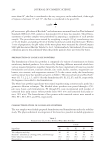
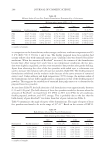
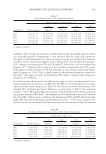
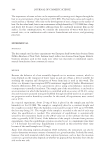
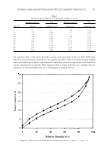
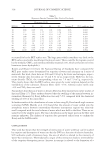
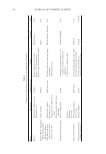
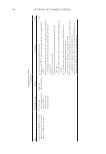
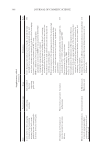
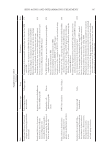
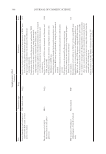
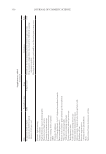
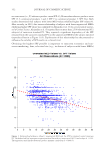
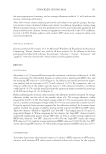
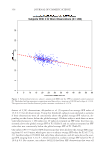
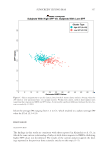
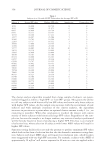
JOURNAL OF COSMETIC SCIENCE 358 The cluster a nalysis algorithm revealed that a large sample of subjects can poten- tially be flagged as either a “high SPF” or “low SPF” group. This grants the ability to cull any subjects with historically low SPF values and retain only those subjects with higher SPF values. As the sample size increases with the recruitment of new subjects and with multiple iterations of the cluster analysis, the algorithm increases in precision to a point where an optimal cluster amount is only 1 (i.e., no clustering is possible). When this conclusion is reached, the dataset will consist mainly of those subjects with historically large SPF values. Regardless of the sam- ple size, because the sample is no longer random, any statistical analysis performed will be heavily biased in favor of producing a higher SPF. This bias is an example of selection bias, where selection of subjects with lower MED values will result in higher SPF values. Sunscreen tes ting facilities face not only the pressure to produce maximum SPF values which leads to this form of selection bias but also the demand to minimize testing dura- tion. Subjects with lower MED values will require less irradiation time, which becomes more exaggerated with very high SPF sunscreens. For example, a subject with a MED of approximately 20 mJ/cm2 will receive exposure for 46 min on a test site applied with a Table I Subje cts (n = 29) with All SPF Values above the Average SPF of P2 Subject # Lowest SPF value Highest SPF value Sample size Counts above 15.6 1659 16.098 18.730 8 8 5032 16.086 21.571 6 6 6855 16.096 18.740 5 5 8141 16.111 18.737 5 5 10753 16.100 17.211 4 4 11577 16.297 23.584 5 5 20366 15.783 16.296 6 6 22203 15.717 16.312 3 3 28785 17.990 18.753 3 3 42199 16.099 20.106 4 4 53777 16.085 21.563 10 10 54633 16.116 18.060 4 4 55995 16.096 18.000 4 4 56638 16.101 16.180 4 4 60134 16.088 16.104 3 3 61257 16.119 20.114 8 8 61918 15.707 16.322 4 4 66482 16.092 18.751 3 3 68965 16.090 20.139 4 4 78620 16.113 20.356 3 3 78794 16.100 20.096 4 4 78860 16.100 16.295 7 7 80317 16.327 20.139 4 4 81248 16.286 18.770 6 6 81586 16.299 16.300 3 3 81609 18.772 20.300 3 3 81783 16.083 18.800 6 6 81840 16.110 20.116 3 3 81889 16.094 16.100 3 3

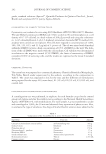
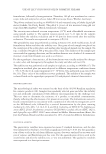
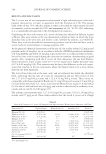
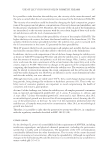
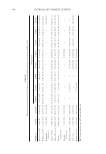
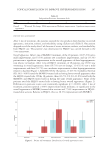
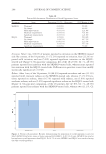
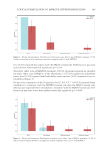
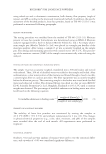
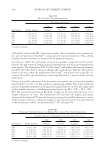
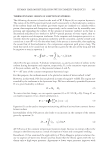
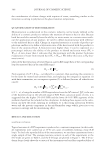
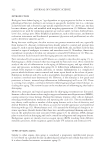
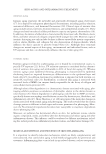
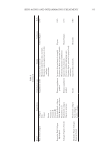
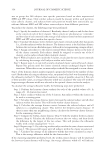
SUNSCREEN TESTING BIAS 359 sunscreen having an expected SPF of 75. A subject with a MED of 45 mJ/cm2 will receive exposure for approximately 103 min on a test site applied with the same sunscreen. Thus, the subject with the higher MED will dramatically reduce the throughput of the testing facility, thereby reducing profi tability. There is much pressure on testing facilities to commit selection bias, in confl ict with GCP (1,2). Selection bias for subjects with his- torically low MED values for whatever reason would result in a higher SPF of a sunscreen determined by one testing facility versus another testing facility that adheres to a GCP compliant recruitment procedure. SUBVERSION BI AS Additional an alysis presented herein reveals that a subset of subjects consistently presented with values either well above or well below the average SPF value of the dataset (15.6 ± 1.2). This subset of subjects may be instrumental in affecting the SPF value of a sunscreen in a clinical trial. For example, the difference between the aver- age SPF by the subject exhibiting the highest average SPF for P2, 19.8 ± 0.9, and the subject exhibiting the lowest average SPF for P2, 12.3 ± 2.6, is 7.5 SPF units, or 61%. In addition, although this difference in SPF value is the maximum found within this dataset on P2, this difference in SPF value may be even greater within a dataset on a sunscreen having a higher SPF value (4). This subset of subj ects appears to be separate and independent of the relationship between MED and SPF, which causes selection bias. The subject exhibiting the highest average SPF for P2 had an average unprotected MED of 14.9 mJ/cm2, and the subject exhibiting the second highest average SPF for P2 had an average unprotected MED of 18.1 mJ/cm2. The subject exhibiting the lowest average SPF for P2 had an average unprotected MED of 40.2 mJ/cm2. A testing facility might be more likely to commit subversion bias near the end of a SPF test. At the end of an SPF test, one more or two more high SPF values might be needed to obtain the expected SPF. However, the bias would be much more dramatic if conducted throughout all 10 subjects in an SPF test. Exploiting this difference among subjects (subversion bias) would provide another reason for variation in re- sults among testing facilities. Subversion bias for subjects with historically high SPF values, either consciously or subconsciously, would result in a higher SPF of a sun- screen for one testing facility versus another testing facility that adheres to a GCP compliant recruitment procedure. Table II Subjects (n = 6) with All SPF Values below the Average SPF of P2 Subject # Lowest SPF value Highest SPF value Sample size Counts below 15.6 4703 10.440 15.000 3 3 31524 12.836 14.368 4 4 61224 9.061 14.387 4 4 66837 13.064 14.384 3 3 71172 11.400 14.369 3 3 71862 11.583 14.983 3 3
Purchased for the exclusive use of nofirst nolast (unknown)
From: SCC Media Library & Resource Center (library.scconline.org)