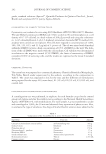
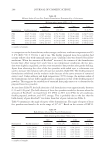
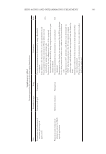
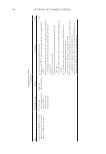
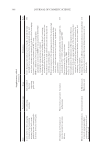
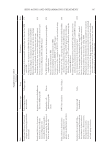
JOURNAL OF COSMETIC SCIENCE 244 RESULTS AND DISCUSSION The L. pisonis nut oil was transparent and presented a light yello wish green color and a pleasant characteristic oil odor, in agreement with the literature (4,5,19). The average yield of the oil was 35%, which is similar to what is described for other natural oils used in cosmetics, such as tucumã oil (22%) and murumuru oil (34–46.2%) (20), indicating it is a considerable raw material to the development of cosmetics. Considering the fatty acid contents in L. pisonis oils from nuts obt ained in different regions of Brazil, they were similar to the one determined in Espírito Santo in which the most abundant fatty acids were oleic and linoleic acids, followed by palmitic acid (Table II). These fatty acids are desirable for moisturizing products used for skin and hair, such as cream, body oil, and emollient or massage purposes (20). As the physical–chemical characteristics of the nut oil, the acidity index (0.12 mg/g) and peroxide index (6 meq/kg), are in accordance with the ANVISA parameters (maximum of 0.6 mg KOH/g and below 15 meq/kg, respectively) (21), it is indicated that no hydro- lysis of free fatty acids occurred during the extraction or oxidation, demonstrating its good quality. Also, comparing with the L. pisonis oil from Amazonia, the one from Espírito Santo presented a lower acidity value (0.31 ± 0.01 mg/g) and a higher peroxide value (0.27 ± 0.02 meq/kg) (19). This variation may be due to the difference in the soil compo- sition that interfere in the oil constituents, where the Espírito Santo’s oil is more diverse than the one from Amazonia. The level of lead detected in the nuts, arils, and oil evaluated was below the allowable limit, indicating that the nuts are secure for consumption and use. The content of iron was 2.17 ± 0.47 mg/100 g in nuts and 1.12 ± 0.15 mg/100 g in arils. These values are comparable with those reported for Brazil nuts (2.3 mg/100 g) and coconut (1.8 mg/100 g) (22) and lower than those in L. pisonis nuts from the Minas Gerais region (7.0 mg/100 g) (5). For the oil, the lead level was 9.40 μg/g and similar to those found in sunfl ower, olive, canola, and soy oils (9.14–9.82 μg/g) (23). The sodium concentrations were 3.27 ± 0.62 mg/100 g in nuts, 6.62 ± 1.06 mg/100 g in arils, and 0.7 μg/g in oil. These values indicate that the tested L. pisonis oil is of high Table II Fatty Acid Contents in L. pisonis Oil Samples from Espírito Santo, Minas Gerais, Amazonia, and Piauí Fatty acids (%) Espírito Santo Minas Gerais (5) Amazônia (19) Piauí (4) Myristic (C14:0) 0.09 ± 0.1 — — 0.09 ± 0.01 Palmitic (C16:0) 12.20 ± 0.01 11.29 14.49 ± 0.24 14.17 ± 1.17 Palmitoleic (C16:1) 0.41 ± 0.02 0.34 0.21 ± 0.01 0.26 ± 0.08 Margaric (C17:0) — — — 0.08 ± 0.01 Stearic (C18:0) 6.99 ± 0.03 3.77 5.84 ± 0.04 8.09 ± 0.30 Oleic (C18:1 n9) 49.95 ± 0.02 41.37 38.82 ± 0.08 43.17 ± 3.04 Linoleic (C18:2 n6) 29.84 ± 0.01 42.86 39.93 ± 0.11 34.83 ± 4.47 Linolenic (C18:3 n3) 0.2 ± 0.03 0.24 0.24 ± 0.01 0.58 ± 0.06 Arachidic (C20:0) 0.18 ± 0.01 0.13 0.22 ± 0.01 — (C20:1 n9) 0.07 ± 0.01 — — — Cis-11-eicosenoic (C20:1) — — — 0.07 ± 0.01 Behenic (C22:0) 0.05 ± 0.01 — Tra — a Tr = percentage 0.1.

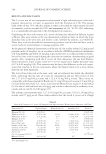
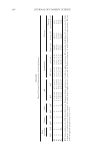
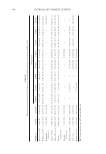
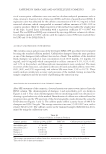
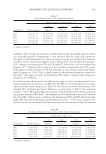
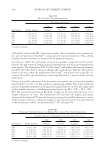
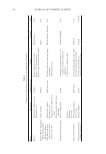
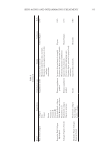
USE OF LECYTHIS PISONIS OIL IN COSMETIC CREAMS 245 quality, and the levels found in arils are comparable with those found in sesame seeds (3 mg/100 g), raw nuts, and chickpeas (5 mg/100 g) (22). In addition, the oil from L. pisonis could be considered nontoxic and safe for use , be- ing classifi ed as category 5 (24). Biochemical assays showed no signifi cant differences among the groups for liver and kidney damage and that an estimated lethal dose is 5.000 mg/kg. Regarding acute toxicity, the LD50 of L. pisonis oil in mice was 2.000 mg/kg, corr espond- ing to an LD50 in humans of 405.6 mg/kg. This elevated safe dose could indicate safe application of the oil in products, including topical applications on the face (unpublished results). The cell survival varied between 98.3 ± 5.2 and 119.3 ± 6.4 for L929 cells and be tween 113.4 ± 19.9 and 149.5 ± 10.9 for HaCat cells, corresponding to the highest and lowest concentrations of the oil tested, respectively. So, it is possible to infer that the oil is non- toxic because it did not affect the cell growth. The pharmaceutical form used to incorporate the oil from L. pisonis was cream, as it i s widely used and accepts well the oil compounds. Analyses of the formulation indicated that the base cream produced is oil-in-water (O/W) emulsion, meaning that oil micelles are dispersed in an aqueous medium. Such emulsions are smooth and easily removed with water (25). Different lipids that enhance the scattering coeffi cient, such as the green oils from macadamia nuts, wheat germ, and grape seeds, might be used in an O/W emulsion (25). The concentrations of oil used in the formulations were based on studies of other cosmetic formulations with oil using 0.5–10% oil (26,27). Considering macroscopic aspects, in all samples except F3, no phase separation or chan ges in texture or odor were observed (Table III). The changes in sample F3 could be attributed to the oil concentration (10%), where despite maintaining the texture, the formulation was less viscous, i.e., when corroborated by the centrifugation test, small droplets were noticed on the surface of F3. All formulations containing the oil remained stable with no color change during the te sts. As excepted, sample F3 presented more pronounced odor after the second cycle of heating and a paler color and rougher texture, different from the other samples, which remained smooth and shiny. The most stable formulations were those with concentrations of 1 and 5% nut oil, in agreement with Christoph et al. (26), where the concentration of melaleuca oil in formulations ranged from 0.5% to 5%. The control samples remained stable, becoming harder when frozen and regaining nor- mal characteristics after 30 min at room temperature. The importance of the pH control in a formulation over the entire period relevant to p roduct use is that it should maintain a value between 5.5 and 6.5 to be compatible with the skin pH and remain stable (28), as alteration of pH might decrease the stability of the formulation (16). In the tested formulations, the pH decreased during exposure to heat in the stability test (Table III), indicating that a stability process affects the formulation, but still remains within the acceptable value. The skin pH is believed to be slightly acidic (4.6–5.8), providing bactericidal and fungi- cidal protection at the surface (29). The determination and control of skin pH are desir- able characteristics of cosmetic products to avoid skin damage and could be controlled by the use of additives, such as antioxidants and vitamin E, to stabilize the oil.
Purchased for the exclusive use of nofirst nolast (unknown)
From: SCC Media Library & Resource Center (library.scconline.org)