JOURNAL OF COSMETIC SCIENCE 282 (21) P. E. Grimes, Management o f hyperpigmentation in darker racial ethnic groups, Semin. Cutan. Med. Surg., 28, 77–85 (2009). (22) L. E. Espinal-Perez, B. Mo n cada, and J. P. Castanedo-Cazares, A double-blind randomized trial of 5% ascorbic acid vs. 4% hydroquinone in melasma, Int. J. Dermatol., 43, 604–761 (2004). (23) P. K. Farris, Topical vita m in C: a useful agent for treating photoaging and other dermatologic condi- tions, Dermatol. Surg., 31, 814–818 (2005). (24) Z. D. Draelos, Skin lighte n ing preparations and the hydroquinone controversy. Dermatol. Ther., 20, 308–313 (2007). (25) J. Navarrete-Solís, J. P. C astanedo-Cázares, B. Torres-Álvarez, C. Oros-Ovalle, C. Fuentes-Ahumada, F. J. González, J. D. Martínez-Ramírez, and B. Moncada, A double-blind, randomized clinical trial of niacina- mide 4% versus hydroquinone 4% in the treatment of melasma, Dermatol Res Pract, 2011, 379173 (2011). (26) M. Taraz, S. Niknam, and A. H. Ehsani, Tranexamic acid in treatment of melasma: a comprehensive r eview of clinical studies, Dermatol. Ther., 30, 1–8 (2017). (27) W. J. Yun, S. H. Bang, K. H. Min, S. W. Kim, M. W. Lee, and S. E. Chang, Epidermal growth factor a nd epidermal growth factor signaling attenuate laser-induced melanogenesis, Dermatol. Surg., 39, 1903–1911 (2013). (28) A. Lyons, J. Stoll, and R. Moy, A randomized, double-blind, placebo-controlled, split-face study o f the effi cacy of topical epidermal growth factor for the treatment of melasma, J. Drugs Dermatol., 17, 970– 973 (2018). (29) W. O. Pratchyapurit, Combined use of two formulations containing diacetyl boldine, TGF-β1 biomi- me t ic oligopeptide-68 with other hypopigmenting/exfoliating agents and sunscreen provides effective and convenient treatment for facial melasma. Either is equal to or is better than 4% hydroquinone on normal skin. J. Cosmet. Dermatol., 15, 131–144 (2016). (30) H. Choi, S. Ahn, B. G. Lee, I. Chang, and J. S. Hwang, Inhibition of skin pigmentation by an extract of Lepidium apetalum and its possible implication in IL-6 mediated signaling, Pigment Cell Res. 18, 439–446 (2005). (31) Y. I. Yamaguchi, A. Morita, A. Maeda, and V. J. Hearing, Regulation of skin pigmentation and thick- ness by Dickkopf 1 (DKK1), J. Inv e st. Dermatol. Symp. Proc., 14, 73–75 (2009). (32) Y. Yamaguchi, T. Passeron, H. Watabe, K. Yasumoto, F. Rouzaud, T. Hoashi, and V. J. Hearingand, The effects of dickkopf 1 on gene expression and Wnt signaling by melanocyt e s: mechanisms underlying its suppression of melanocyte function and proliferation, J. Invest. Dermatol., 127, 1217–1225 (2007). (33) T. Hakozaki, L. Minwalla, J. Zhuang, M. Chhoa, A . Matsubara, K. Miyamoto, A Greatens, G. G. Hillebrand, D. L. Bissett, and R. E. Boissyand, The effect of niacinamide on reducing cutaneous pig- mentation and suppression of melanosome transfer, Br. J. Dermatol., 147, 20–31 (2002). (34) H. L. Gensler, Prevention of photoimmunosuppression and photocarcinoge n esis by topical nicotin- amide, Nutr. Canc., 29, 157–162 (1997). (35) A. R. Shalita, J. G. Smith, L. C. Parish, M. C.S Sofman, and, D. K. Chalker, Topical nicotinamide com- pared with clindamycin gel in the treatment of infl ammatory acne vulgaris, Int. J. Dermatol., 34, 434– 437 (1995). ( 36) A. Wozniacka, M. Wieczorkowska, J. Gebicki, and A. Sysa-Jedrzejowska, Topical application of 1-methylnicotinamide in the treatment of rosacea: a pilot study, Clin. Exp. Dermatol., 30, 632–635 (2005). (37) D. Levine, Z. Even-Chen, I. Lipets, O. A. Pritulo, T. V. Svyatenko, Y. Andrashko, M. Lebwohl, and A. Gottlieb, Pilot, multicenter, double-blind, ran d omized placebo-controlled bilateral comparative study of a combination of calcipotriene and nicotinamide for the treatment of psoriasis, J. Am. Acad. Dermatol., 63, 775–781 (2010). (38) W. Zhu and J. Gao, The use of botanical extracts as topical skin-lightening agents for the improvement of skin pigmentation disorders, J. Invest. Dermatol. Symp. Proc., 13, 20–24 (2008). (39) V. D. Callender, S. St Surin-Lord, E. C. Davis, and M. Maclin, Postinfl ammatory hyperpigmentation: etiologic and therapeutic considerations, Am. J. Clin. Dermato l ., 12, 87–99 (2011). (40) I. Majid, I. Haq, S. Imran, A. Keen, K. Aziz, and T. Arif, Proposing melasma severity index: a new, more practical, offi ce-based scoring system for assessing the sev e rity of melasma, Indian J. Dermatol., 61, 39–44 (2016). (41) D. A. Abou-Taleb, A. K. Ibrahim, E. M. Youssef, and A. E. Moubasher, Reliability, validity, and sensi- tivity to change overtime of the modifi ed melasma area and severity index score. Dermatol. Surg., 43, 210–217 (2017).

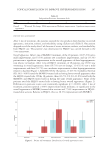
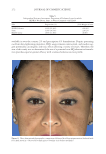
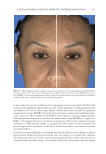
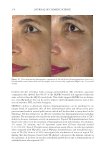
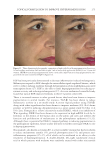
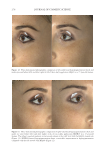
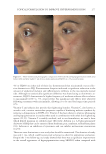
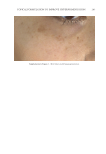
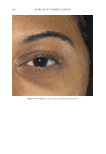
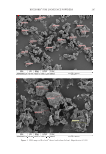
TOPICAL FORMULATION TO IMPROVE HYPERPIGMENTATION 283 Supplementary Figure 1. Mild lower eyelid hyperpigmentation.
Purchased for the exclusive use of nofirst nolast (unknown)
From: SCC Media Library & Resource Center (library.scconline.org)