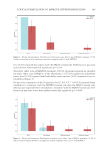
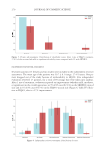
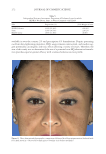
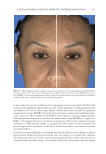
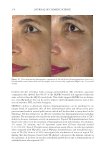
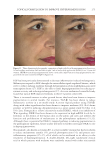
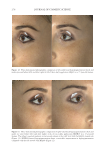
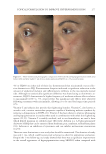
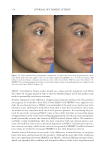
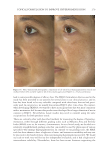
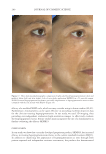
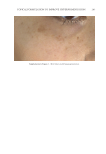
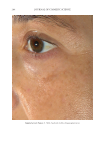
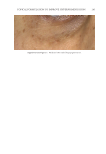
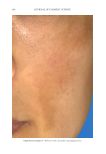
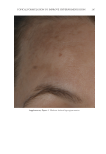
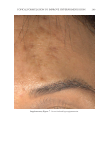
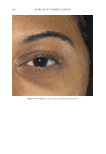
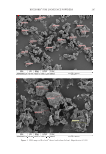
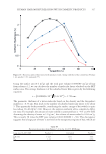
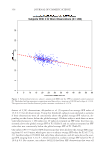
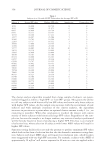
JOURNAL OF COSMETIC SCIENCE 290 Supplementary Figure 8. Severe lower eyelid hyperpigmentation.

J. Cosmet. Sci., 71, 291–302 (September/October 2020) 291 RiceSorb® as Talcum Substitute for Loose Face Powders: Formulation and Characterization AR PAPAT SIRIWARIN, PEERAPAT CHIDCHAI, DUANGKHAE MANEENUAN, NATTHA KAEWNOPPARAT, and SARUNYOO SONGKRO, De partment of Pharmaceutical Technology, Faculty of Pharmaceutical Sciences, Prince of Songkla University, Songkhla 90112, Thailand (A .S., P.C., D.M., N.K., S.S.), Drug Delivery System Excellence Center, Prince of Songkla University, Hat Yai, Songkhla 90112, Thailand (D .M., N.K., S.S.) Accepted for publication April 25, 2020. Sy nopsis Ex cessive and daily inhalation of talcum, a main ingredient of face powders, causes pulmonary talcosis, which has led to the replacement of talcum with safer natural ingredients. RiceSorb®, or Oryza sativa starch from Japanese rice, was used as an alternative owing to its nontoxic and excellent oil absorption capacity. The objectives of the present work were to formulate loose face powders from RiceSorb® and to investigate the physicochemical properties of the prepared formulations. Five formulations of loose face powders were prepared by varying the ratios between talcum and RiceSorb®: 4:0 (FT0), 3:1 (FT1), 1:1 (FT2), 1:3 (FT3), and 0:4 (FT4). The physicochemical properties were evaluated mainly based on USP 41 and NF 36 such as morphology by using a scanning electron microscope, bulk density, fl ow property (angle of repose), moisture content (MC), and pH. The stability of the formulations were also performed at ambient temperature and 45°C for 2 months. The formulations had pH 6.90–8.62, bulk density 0.33–0.49 g/ml, and an angle of repose 30°–41°. Overall, the formulations which contained only RiceSorb® (FT4) or higher proportion of RiceSorb®(FT3) had fi ner particles, lower bulk density, pH, and angle of repose than those of the formulations containing high proportion of talcum: FT0 and FT1. Under storage conditions for 2 months, the formulations containing high proportion of RiceSorb® exhibited noticeably increased MC and angle of repose. However, the other physicochemical properties were somewhat the same. The present results suggest the applicability of RiceSorb® for loose face powders. INTRODUCTION H uman beings have been decorating their faces with rudimentary cosmetics such as face powders since ancient times. Simple powdered materials available in local areas such as grinded wheat, grinded rice, and white pigments were commonly used to whiten their faces. After the industrial revolution in the 19th century, more sophisticated substances have Address all correspondence to Sarunyoo Songkro at sarunyoo@pharmacy.psu.ac.th.
Purchased for the exclusive use of nofirst nolast (unknown)
From: SCC Media Library & Resource Center (library.scconline.org)