JOURNAL OF COSMETIC SCIENCE 292 been formulated for modern face powders. Face powders are applied on the face or the neck to enhance skin’s natural beauty and to cover wrinkles or blemishes such as dark spots, freckles, and acne scars (1). In general, modern face powders can be classifi ed into two types: loose face powders and compact face powders. The main difference between these two forms is binding agents which are very important ingredients in compact face powders (2). In the current work, we focused on the loose face powders owing to the rela- tively easy preparation process. Modern face powders are composed of a variety of materi- als which are blended together to achieve the desired characteristics: covering power, adhesion, absorbency, slip, and bloom. Generally, the mainly used ingredient of loose face powders is talcum or talc, a hydrated magnesium silicate (1,2). Although talcum im- proves slip and adhesiveness of face powders to the skin, long-term daily inhalation of talcum has been shown to cause pulmonary talcosis (3,4). Thus, alternative materials for talcum substitutes have been explored. Among them, s tarches are of our interest because they are skin-friendly cosmetic ingredients and thus suitable for sensitive skin (5). Starch fl ours such as corn starch and rice starch are also basic substances for face powder formulations. Generally, they are used as covering power owing to their fi neness. Among several starches, rice starch is drawing attention because of its safety and unique properties. RiceSorb®, Oryza sativa starch derived from peel seeds of Japanese rice, is an interesting sub- stance for cosmetic application. Developed in France, RiceSorb® is white fi ne pow- ders with particle sizes 10 μm. Protein, fats, and impurities are removed to obtain RiceSorb®. It is highly purifi ed and sterilized. RiceSorb® is applicable for face powder formulae because of its exceptional absorption capability, especially for oily liquids, and its small size granules. As a result, a possibility of using RiceSorb® as talcum replace- ment had been evaluated. Interestingly, RiceSorb® acts as an oil absorbent that does not absorb moisture/water from the skin (6). This makes RiceSorb® suitable for oil- control products. Talcum can cause skin dryness because it not only absorbs oils but also absorbs water/moisture from the skin. Apart from the power base (white or off-white materials), color shades of face powders are considerably important factors. The color shades of face powders are dependent on the skin tones and fashion. Synthetic colors (e.g., pigments or lakes) have been usually used for formulating face powder preparations. In the current work, the coloring agent used for the prepared loose face powders was obtained from a plant extract (natural colorant). Plant extracts have been generally incorporated into the skin care products because of the awareness of harmful synthetic chemical substances (7). Tamarindus indica fruit pulp extract in powder form was used as a colorant in the present work. Widely cultivated in tropical countries, Tamarindus indica or tamarind has been shown to pos- sess several benefi cial medicinal properties (8). Afterward, its application in a cosmetic fi eld has been recognized. The tamarind extract powder has light brown–yellow range of colors, which suitably match the natural skin tones of Asian women. Like many plant extracts, it possesses antioxidant property because of the presence of several or- ganic acids such as tartaric acid, citric acid, and malic acid (9). Color bleeding due to perspiration is not expected because RiceSorb® in the formulation could absorb mois- ture (e.g., sweat). Laboratory-scale preparation was carried out using a mortar and a pestle to mix all ingredients together. The main objectives of the present study were to (i) formulate the loose face powders using RiceSorb® as a substitute for talcum and (ii) investigate the physicochemical

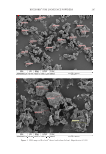
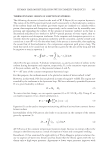
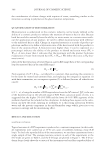
RICESORB® FOR LOOSE FACE POWDERS 293 properties and stability of loose face powders containing RiceSorb® in comparison to those containing talcum. EXPERIMENTAL METHODS MAT ERIALS RiceSorb® (100 % natural GMO-free rice starch), cosmetic grade, was supplied by Chanjao Longevity Company Limited, Bangkok, Thailand. Tamarind fruit pulp extract (powder), food grade, was purchased from Fuyang Bestop Import and Export Ltd., Anhui, China. The fruit pulps (sour type) without seeds were subjected to a solvent extraction method (water). The spray drying process was used to prepare the tamarind fruit pulp extract powder. Talcum, other white materials (e.g., zinc oxide and zinc stearate), and preservatives were purchased from P.C. Drug Center, Bangkok, Thailand. Ethanol (95% v/v) was supplied by KSP Octatech, Songkhla, Thailand. All chemicals were pharmaceutical grade, except where specifi ed. INVESTIGATION OF PHYSICOC HEMICAL PROPERTY OF RICESORB® Certain characteristics of RiceSorb® were evaluated as follows: morphology, bulk density, fl owability, and pH compared with those of talcum. These properties of raw materials affected the properties of the fi nished product, loose face powders. Morphology investigation. T he morphologies of RiceSor b® and talcum were evaluated by using a scanning electron microscope (SEM) [model Quanta 400 (SEM-Quanta), FEI Company, Brno, Czech Republic] equipped with an Everhart–Thornley detector. For better resolution and image quality improvement, the samples were coated with a thin layer of gold using a sputter coater (SPI Supplies, West Chester, PA). The SEM analysis was performed under a high vacuum condition (1.3 × 10⁻² Pa) at 20.00 kV. Bulk density. The bulk density of powders can be measured by determining the volume of the powder sample (known weight) which has been passed into a graduated cylinder. This was performed to check the uniformity of the bulk powder materials. The samples were passed through a sieve (60 mesh), if they were agglomerated. The powder samples were weighed (30 g) and gently poured into 100-ml cylinders without tapping according to USP 41 and NF 36 (10). The untapped apparent volume of the powder was read to the nearest graduated unit, and the bulk density was calculated as given in equation 1. The bulk density was used to esti- mate the fl owability of powders and to check the uniformity in bulk powder materials. weight of the powder g Bulk density bulk volume ml (1) Flow property. The fl ow of po wde r samples was t ested using a glass funnel with fi xed height (fi xed funnel method). The base upon which the cone formed was fi xed with a diameter of 10 cm [radius (r) = 5 cm]. The powder samples were gently passed through a glass funnel until a powder cone was formed. The height (h) of the cone was measured, and the angle of repose (θ) was obtained using equation 2. The degrees of angle of repose can characterize the fl ow behaviors of powders. For example, when the angle of repose is
Purchased for the exclusive use of nofirst nolast (unknown)
From: SCC Media Library & Resource Center (library.scconline.org)