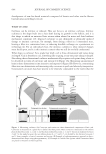
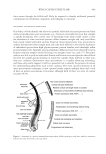
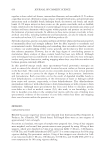
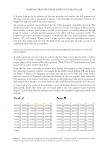
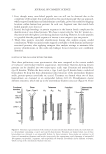
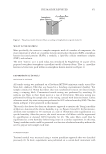
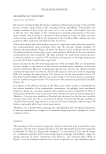
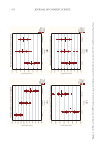
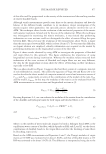
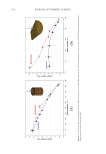
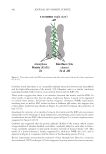
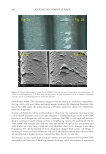
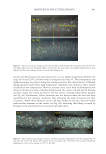
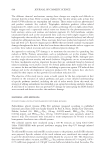
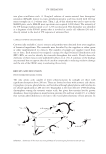
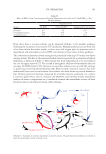
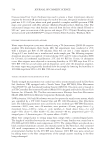
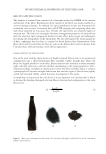
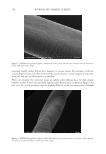
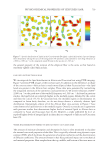
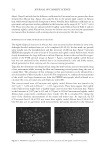
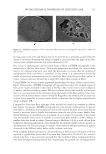
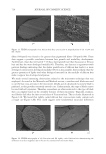
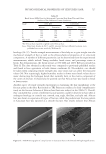
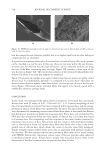
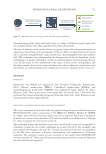
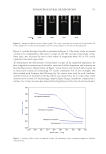
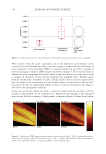
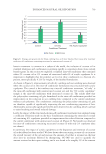
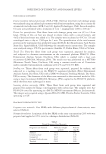
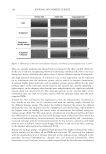
690 JOURNAL OF COSMETIC SCIENCE immediately below. This observation suggests that because of its multilayer composition, the top cuticle cells resist shear and tensile stresses produced by elongation. However, they fail at the CMC under the action of hoop or Poisson contraction stresses (3), which force them to lift upward. Cuticle cell failure by lifting and buckling is, thus, how the composite structure of the cuticle sheath dissipates stresses at high elongations. Cement breakage occurs at the CMC because at such elongations and moisture conditions, the CMC is still rigid and does not allow a compliant transfer of hoop stresses to neighboring cuticle cells underneath. By the same token, this analysis also indicates that the moduli of epicuticles, exocuticles, and endocuticles are stress hoop compliant, and, therefore, there is no damage across their boundaries. Yet the mechanism of stress dissipation changes from cuticle cell lifting or buckling to transversal crack formation and cuticle sheath detachment when the hair fibers are equilibrated at higher moisture contents (see Figs. 2a, 2b, 3a, and 3b). For instance, as the equilibrium moisture content increases between 65% and 80% RH, the number and area size of buckling patterns decreases, while the number of transversal Figure 2. Optical Microscopy (2a and 2b) and SEM (2c and 2d) pictures of hair fibers after subjected to 10 cycles of 15% elongation at 75% RH. Note the appearance of deep transversal cracks accompanied by small area size cuticle cell buckling patterns in all four pictures.

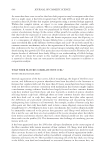
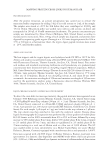
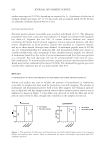
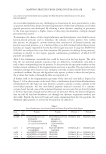
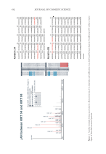
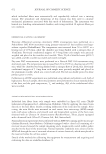
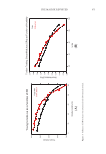
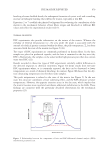
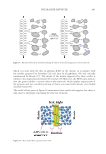
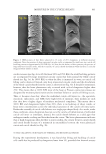
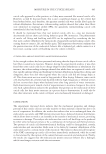
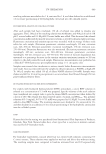
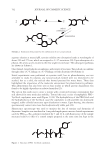
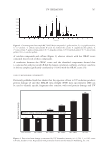
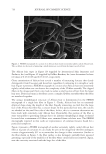
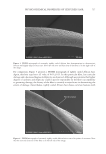
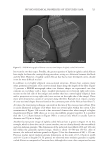
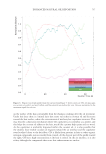
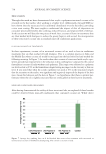
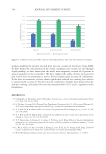
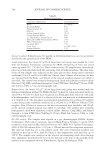
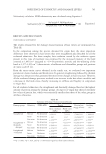
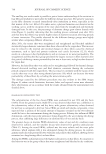
691 MOISTURE IN THE CUTICLE SHEATH cracks increases (see Fig. 2a to 2d). Between 90% and 95% RH, the small buckling patterns are accompanied by large transversal circular cracks that form around the whole cuticle sheath (see Fig. 3a). At 100% RH, or when the fiber is immersed in water, no cuticle cell lifting can be observed. Instead, only deep transversal circular cracks and the detachment of the whole cuticle sheath from the cortex is observed (see Fig. 3b). It should be mentioned, however, that the latter phenomena only occurred with cyclical elongations higher than 25%. This means that at 100% RH, most of the hoop or Poisson contraction stresses are dissipated by moisture plasticization and no interlayer failure or cuticle cell lifting occurs. Thus, it becomes clear that, when the individual cuticle cell layers (i.e., the epicuticle, exocuticle, endocuticle, and CMC) have high levels of moisture, their moduli are such that they have a higher degree of interlayer mechanical compliance. This means that at 100% RH and elongations higher than 20%, there is no build-up of shear, tensile, or hoop stress concentrations across the individual junctions of the cuticle cell intra layers. Rather the assembly of cuticle cells behaves as a single pipe-shaped body. As a result, under these conditions, stress dissipation does not occur by cuticle cell delamination of individual cuticle cell intra- or interlayers. Instead, the cuticle sheath behaves as a solid pipe that undergoes tensile cracking and detaches from the cortex. The latter phenomenon indicates that at high elongations when the fiber is water swollen, the cement between cuticle sheath and cortex breaks because of a mismatch in extensibility between the water plasticized cortex and cuticle sheath (see Fig. 3b). CUTICLE CELL LIFTING OR BUCKLING BY THERMAL AND MECHANICAL STRESSES During the experiment’s development, it was found that lifting and buckling of cuticle cells could also be produced by elongations lower than 5%, provided that thermal stresses Figure 3. SEM pictures of hair fibers subjected to 15 cycles of 25% elongation, at different moisture conditions. Note the presence of deep transversal circular cracks accompanied by small area size cuticle cell buckling patterns at approximately 90% RH (Fig. 3a). Note also the absence of these patterns, the presence of long transversal circular cracks, and the occurrence of cuticle sheath detachment when the fiber is cyclically elongated while swollen in water.
Purchased for the exclusive use of nofirst nolast (unknown)
From: SCC Media Library & Resource Center (library.scconline.org)