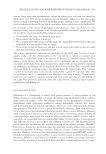
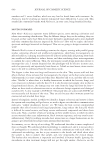
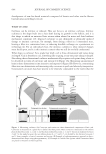
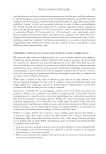
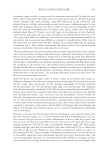
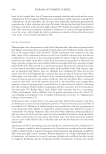
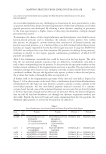
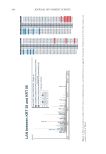
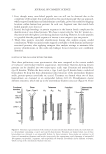
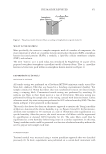
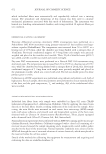
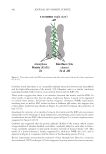
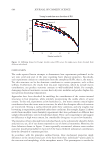
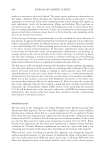
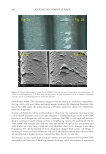
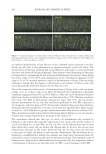
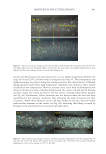
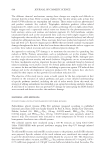
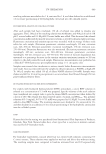
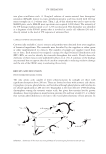
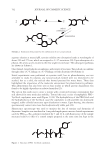
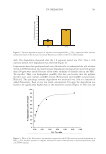
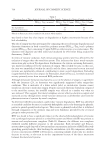
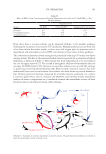
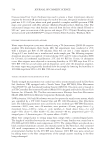
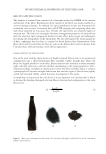
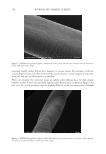
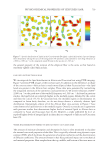
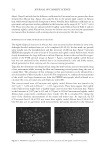
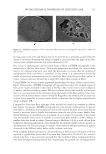
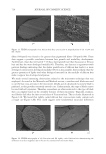
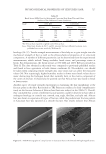
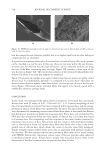
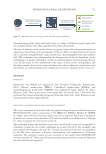
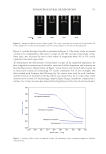
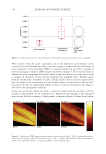
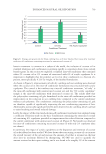
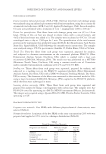
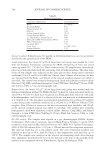
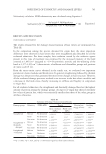
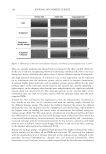
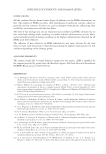
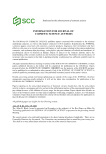
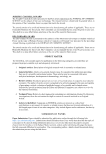
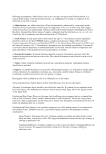
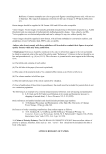
692 JOURNAL OF COSMETIC SCIENCE are applied simultaneously to hair. Because of the combined stresses required to produce lifting, we will refer to this phenomenon as thermomechanical cuticle cell lifting. The characteristics of this type of lifting had many differences with respect to those previously discussed and produced by high elongations. Their features varied depending on the range of temperatures accompanying the low mechanical deformations. For instance, blow-drying hair in the range of 70 to 80°C while applying low levels of mechanical elongation in the range of 2% to 5% instantly produced cuticle cell delamination or lifting. Video recording techniques showed that the degree of delamination and number of lifted cuticle cells increased gradually with blow drying time (see Figs. 4a to 4c). One of the important characteristics of thermomechanical lifting, such as the one shown in Figs. 4a to 4c, is that it only occurs when the hair had been equilibrated to humidity conditions ranging between 65% and 90% RH (i.e., when the cuticle sheath had absorbed high levels of water, and when the fibers were blow dried above 70°C). Moisture conditions lower than 70% RH, or blow-drying temperatures lower than 75°C, did not produce thermal delamination. In fact, hair that had been equilibrated at 30% RH, subjected to 5% elongation, and blow dried at 90°C did not lead to thermal lifting even when the blow- drying periods were extended for 5 minutes. Conversely, hair equilibrated at high moisture contents (i.e., 90% RH) did not produce delamination when blow dried at or below 50°C. These observations clearly indicate that for thermomechanical lifting to occur, the presence of water and its rapid evaporation are necessary in the cuticle cell. The experiments showed that this type of cuticle cell delamination also occurred by breakage at the cement that joins the endocuticle of top cuticle cells and the surfaces of cuticle cells below (i.e., at the CMC see Fig. 5a). This can be deduced from the fact that when these lifted cuticle cells are broken and chipped away by friction, they do not leave endocuticular remnants on the surface below (see Fig. 5b). For this reason, we will refer to this type of cuticle cell lifting as endocuticular delamination. The mechanism for its formation is straightforward, namely, the transient and rapid water evaporation from the endocuticle causes its contraction and alters its mechanical moduli. The combined action of both processes, along with the additional hoop stresses produced by low elongations, induces a concentration of stresses across the endocuticle or CMC, causing breakage of the CMC. Figure 4. Sequential images of a hair surface taken at different time intervals from a videorecording strip showing gradual increase in cuticle cell lifting with blow drying time at 80°C: Figure 4a (10 s), Figure 4b (20 s), Figure 4c (40 s), and Figure 4d (50 s).

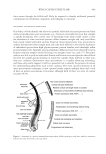
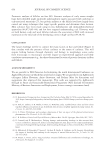
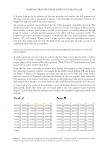
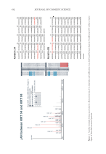
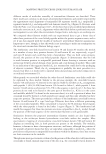
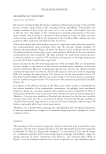
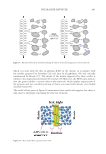
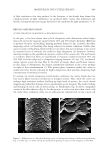
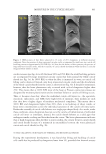
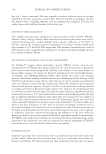
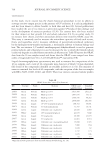
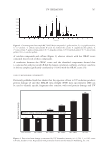
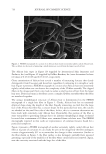
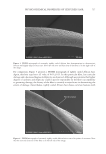
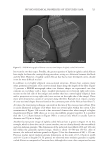
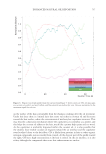
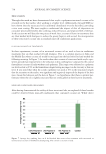
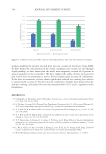
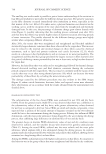
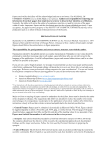
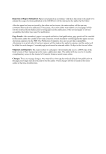
693 MOISTURE IN THE CUTICLE SHEATH Cuticle cell delamination was also observed to occur at higher temperatures between the range of 150 and 220°C and with levels of elongation less than 5%. These temperature and elongation ranges are typical during hot ironing processes. The characteristics of thermal lifting produced under these high temperature conditions were similar to those already described for low temperatures. However, in many cases, a new form of delamination was observed. In this new form of thermal delamination, the cuticle cells did not lift forming parabolic shapes but stayed attached to the hair surface, forming rather blister patterns (see Fig. 6a). Furthermore, blister formation was not detected when the hair had been equilibrated at low moisture conditions, thus indicating the need of moisture for their occurrence. When these blistered cuticle cells were broken by friction, they left visible endocuticular remnants on the surface (see Fig. 6b), indicating that lifting occurred by breakage at the junction between exocuticle and endocuticle. Figure 5. Optical microscopy images of the same hair fiber, immediately after being blow-dried at 80°C for 50 s while subjected to 5% elongation (Figure 5a) and after the same surface was slightly rubbed with a comb (Figure 5b). Note the broken patterns of cuticle cells in Figure 5b. Figure 6. Optical microscopy images of cuticle cell blister patterns, immediately after hot ironing (Fig. 6a) and after the cuticle cell blisters were broken by friction (Figure 6b) the blisters were produced by gently applying two cycles of hot ironing at 220°C to the fiber.
Purchased for the exclusive use of nofirst nolast (unknown)
From: SCC Media Library & Resource Center (library.scconline.org)