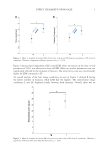
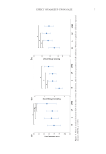
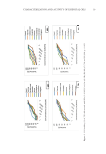
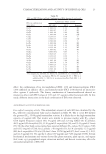
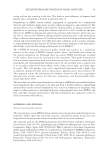
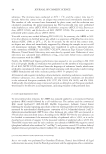
6 JOURNAL OF COSMETIC SCIENCE incremental effect observed with this parameter. As for the time viewed parameter, we can see a similar incremental effect following the application of additional makeup products. Image condition B received the lowest amount of time viewed (seconds) versus LFM, which received the strongest dwelling gaze. Again, the intermediate conditions of L and LF displayed values in the middle of both extremes. In terms of the revisits parameter, patterns differ slightly from the above. Image condition B remains the lowest result compared to the makeup conditions. Figure 6 outlines the results for attraction perception rated by panelists under different image conditions. The condition featuring all makeup products applied yielded the highest attractivity score. As for perceived age, no significant effect was perceived by panelists as they rated the four image conditions similarly. Results show that perceived age was quite linear across all image conditions, with all results between the ages of 44 and 46 years old. The results were, however, very different for perceived health, with a positive incremental effect from B to LFM observed following the application of additional makeup products, notably when the foundation was applied as seen in Figure 7. Figure 8 outlines correlations between some gaze parameters versus attractivity, perceived health, or perceived age. Moderate (r 0.4) and significant correlations were observed between the gaze parameters and attractivity, while weak (r 0.4) although nonsignificant correlations could be seen with perceived health. No associations whatsoever could be established with gaze parameters and perceived age. As shown in Figure 9, paired comparison of LF versus LFM, viewed by a different panel this time, also led to a longer viewing time in favor of LFM. The magnitude of the difference between LF and LFM was similar irrespective of whether wearing facial masks or not. Other eye-tracker parameters were not significantly affected by the inclusion of mascara, as observed in the previous panel (Figure 4). Figure 10 displays an example of images from a volunteer used during the second assessment focused on mask-wearing. Figure 4. Mean ± standard deviation (SD) of (A) time viewed and (B) attractivity sum count of LF versus LFM conditions. *Denotes a significant difference (paired t-test or Wilcoxon Matched Pairs Test, p 0.05).

Figure 5. Mean ± standard deviation (SD) of (A) time viewed, (B) fixations, and (C) revisits parameters of all conditions. *Denotes a significant difference (repeated measure ANOVA, p 0.05). 7 EFFECT OF MAKEUP UPON GAZE
Purchased for the exclusive use of nofirst nolast (unknown)
From: SCC Media Library & Resource Center (library.scconline.org)