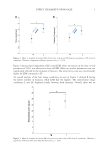
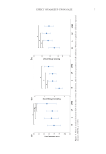
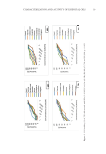
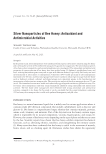
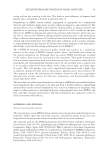
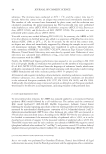
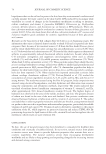
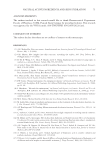
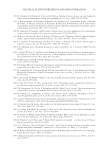
Figure 1. Cell viability (%)of 3T3 cells treated with EOs (2–0.0625% v/v) for (A) 24h, (B) 48h, (C) 72h, and (D) 96h p 0.05*. 19 CHARACTERIZATION AND ACTIVITY OF ESSENTIAL OILS

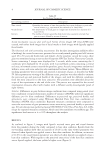
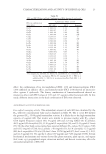
20 JOURNAL OF COSMETIC SCIENCE (IZD: 16 mm), cinnamon (IZD: 36.75 mm), and tea tree (IZD: 14.67 mm) EOs exhibited antimicrobial activity against C acnes (43). Esmael et al. (2020) reported that IZDs of tea tree oil were 21.02 mm and 20.85 mm, and IZDs of rosemary oil were 15.18 mm and 14.77 mm against S epidermidis and C acnes, respectively. Cinnamon, lavender, and lemon EOs were found to be resistant to both strains (44). In this study, both bacteria were found extremely sensitive (IZDs 20 mm) to oregano, cinnamon, lavender, and tea tree. These results were higher than previous reports. The other EOs (eucalyptus, laurel, sandalwood, and lemon) presented moderate activity similar to previous articles. MINIMUM INHIBITORY CONCENTRATION AND MINIMUM BACTERICIDAL CONCENTRATION VALUES OF ESSENTIAL OILS EOs having strong antibacterial potency (IZD ≥ 12) were selected to evaluate their bacteriostatic and bactericidal features using MIC/MBC assays, and results are shown in Table III. Oregano was the most active agent with the MIC/MBC values of 0.03125% (v/v) toward S epidermidis and 0.0625% (v/v) toward C acnes. The MIC/MBC values of tested EOs were in the range of 0.03125–64% (v/v). Taleb et al. (2018) reported oregano MIC/MBC values of 0.34/0.672 and 0.67/1.34 mg/ml tea tree 1.28/2.55 and 1.27/5.10 mg/ml and lavender 2.52 and 2.52 mg/ml against P acnes and S epidermidis, respectively (40). Previous studies demonstrated that the MIC of cinnamon was 0.13 and 0.25 mg/ml (45) sandalwood 0.50 and 0.25 mg/ml (46) and tea tree 0.31–0.63 and 0.63–1.25 mg/ml (47) against P acnes Table I Principal Phytochemical Components of the Organic EOs From Turkey EO (Plant species) Percentage of principal components (%)Lemon (C lemon) limonene (33.34%), p-cymene (18.45%), β-pinene (10.56%), α-pinene (3.70%), myrcene (2.45%), and limonene oxide (2.40%) Tea tree (M alternifolia) p-cymene (19.30%), α-pinene (7.25%), β-pinene (1.68%), limonene (5.90%), γ-terpinene (6.30%), α-terpinene (2.53%), terpinene-4-ol (10.37%), α-terpineol (9.96%), carvone (3.30%), isoborneol (2.79%), and caryophyllene oxide (4.37%) Lavender (L officinalis) linalol (20.67%), isoborneol (10.21%), 1.8-cineole (9.01%), delta-3-carene (6.11%), terpinene-4-ol (6.10%), β-caryophyllene (5.45%), α-pinene (3.55%), myrcene (1.27%), and α-bisabolol (1.87%) Laurel (L nobilis) 1.8-cineole (eucalyptol) (30.61%), sabinene (9.62%), p-cymene (7.90%), α-pinene (6.27%), β-pinene (4.87%), terpinolene (9.57%), terpinene-4-ol (5.49%), and linalol (1.68%) Eucalyptus (E globulus) eucalyptol (55.56%), p-cymene (25.96%), α-pinene (8.58%), limonene (1.36%), and α-terpineol (1.46%) Sandalwood (S album) β-santalol (28.90%), α-santalol (9.33%), α-bergamotol (11.65%), vanillin (1.37%), and isobornyl acetate (1.27%) Cinnamon (C verum) cinnamaldehyde (66.15%), cinnamil acetate (5.93%), α-pinene (5.66%), naphthalene (5.08%), delta-3-carene (3.62%), β-caryophyllene (2.64%), p-cymene (1.71%), copaene (1.04%), eugenol (1.32%), and carvone (2.06%) Oregano (O vulgare) carvacrol (42.7%), thymol (1.99%), p-cymene (16.40%), α-pinene (1.58%), myrcene (2.60%), α-terpinene (2.53%), terpinene-4-ol (2.23%), β-caryophyllene (3.02%), isoborneol (2.73%), linalol (4.50%), and naphthalene (1.25%)
Purchased for the exclusive use of nofirst nolast (unknown)
From: SCC Media Library & Resource Center (library.scconline.org)