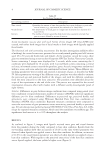
34 JOURNAL OF COSMETIC SCIENCE remaining DPPH percentage was calculated. The percent scavenging activity of DPPH was calculated using the following formula: %Scavenging [(1- BS/BC)]×100 =where “BS” and “BC” correspond to absorbance of sample and absorbance of control, respectively. The result was expressed in equivalent μg butylated hydroxytoluene per 1 g of dried sample. Ferric reducing/antioxidant power assay (FRAP). The procedure described by Benzie et al. was used (10). The goal of this approach is based on the reduction of a ferric 2,4,6-tripyridyl- s-triazine complex (Fe3+-TPTZ) to its ferrous, colored form (Fe2+-TPTZ) in the presence of antioxidants. The FRAP reagent contained 2.5 ml of a 10 mM TPTZ (2,4,6-tripyridyl- s-triazine) solution in 40 mM HCl, 2.5 ml of 20 mM FeCl 3 ,and 25 ml of 0.3 M acetate buffer, pH 3.6. It was prepared daily and warmed to 37°C. Aliquots of 200 µL of sample were mixed with 1.8 ml of FRAP reagent, and the absorbance of the reaction mixture was measured at 593 nm by spectrophotometer after incorporated at 37°C for 10 minutes compared to the sugar analog. The aqueous standard solutions of FeSO 4 .7H 2 O (100– 1,000 µM) were used for the calibration curve, and the results were expressed as the FRAP value (µM Fe(II)) of the bee honey sample solution. ANTIMICROBIAL ACTIVITY The antimicrobial susceptibility of AgNPs–bee honey and bee honey were evaluated using the disk diffusion method. The stability of disks containing oxacillin and gentamicin was prepared. Disposable plates were incubated with the tested gram-positive (S aureus) and gram-negative (Escherichia coli) bacteria. The antibacterial effect of AgNPs–bee honey was tested and evaluated against bacteria where 2.0 × 10⁸ CFU/ml by determining the minimum inhibitory detection (11) on microdilution plates using Mueller Hinton Broth (Difco™). The concentrations of AgNPs–bee honey and bee honey (AgNO 3 used as a control) ranged from 15.62 to 1,000 µg/ml. Different concentrations (15.62, 31.25, 62.50, 125.00, 250.00, 500.00, and 1,000 µg/ml) of AgNPs were dispensed into each well. Zones of inhibition were measured after 24 hours of incubation at 37°C. SERUM FORMULATION To prepare 100 g serum, 2.0 g of glycerin, 0.25 g of tween 80, and 0.25 g of poly (ethylene glycol) were added and mixed in a water bath at 80°C for the oil phase. Then 0.5 g of xanthan gum and 0.1 g methyl paraben were dissolved in 94.9 ml of distilled water at 50°C to prepare the liquid phase. The liquid phase was used to dissolve 2.0 g of AgNPs– bee honey nanoparticles, and the mixture was added slowly with continuous stirring in the oil phase to form a cold silver nanoparticles serum. Another cold cream without the nanoparticles was also formulated to serve as a control (Table I).

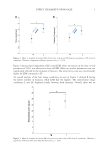
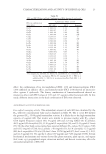
35 Silver Nanoparticles of Bee Honey RESULTS AND DISCUSSION PHYSICOCHEMICAL PARAMETERS OF BEE HONEY The physicochemical analysis of the study bee honey generally indicated water content, an acidic pH, and electrical conductivity values of 14.6%, 4.38, and 0.5 µs/cm respectively. Samples A, B, and C were bee honey from longan flowers, wildflowers, and benjaphan flowers, respectively. The physicochemical parameters of A, B, and C bee honey are shown in Table II. BIOSYNTHESIS OF AgNPs In the current work, silver nanoparticles were successfully synthesized with bee honey. The reaction mixture was observed for the change in color after the incubation period. No color change was observed in the control flask containing only bee honey without 1 mM AgNO 3 ,kept under the same conditions (Figure 1a), whereas the contents of the experimental flask turned completely brown (Figure 1b). As the biosynthesis proceeded, the reduction of silver ions continued, and the color changed gradually from light yellow to dark brown within 8 hours (Figure 1b). This brown coloration could be due to the surface plasmon vibrations of silver nanoparticles formed in the reaction mixture (12). CHARACTERIZATION BY UV-VISIBLE SPECTROSCOPY The biosynthesized AgNPs–bee honey nanoparticles were characterized at different incubation periods using UV-visible spectrophotometer. At different periods of incubation, Table I Compositions and Concentrations of Ingredients in Serum Formulations Ingredient Formulation (g) F0 F1 F2 F3 F4 Xanthan gum 0.25 0.5 1.0 1.5 2.0 Deionized water 96.4 95.9 92.9 89.9 86.9 Bee honey/AgNPs–bee honey 2.0 1.0 2.0 3.0 4.0 Glycerin 1.0 2.0 3.0 4.0 5.0 Methyl paraben 0.1 0.1 0.1 0.1 0.1 Tween 80 0.125 0.25 0.5 0.75 1.0 Poly(ethylene glycol) 0.125 0.25 0.5 0.75 1.0 Table II Physicochemical Parameters of Bee Honey Samples Bee honey sample origin Water content (%)pH Electrical conductivity (μS/cm) Longan flowers 14.05 ± 1.02 5.05 0.55 ± 0.08 Wildflowers 15.22 ± 0.98 4.48 0.52 ± 0.08 Benjaphan flowers 15.69 ± 0.25 4.39 0.47 ± 0.06
Purchased for the exclusive use of nofirst nolast (unknown)
From: SCC Media Library & Resource Center (library.scconline.org)