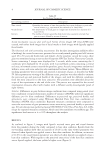
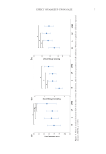
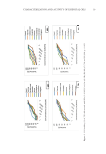
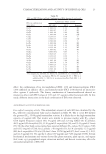
40 JOURNAL OF COSMETIC SCIENCE including pH value, viscosity, and phase separation. The viscosities (50–200 revolutions per minute) of F0-nano and F1-nano were 180 to 272 cP and 413 to 768 cP, respectively (Figure 7). F1-nano showed higher viscosity than F0-nano, but no difference was found when compared to base serums. The viscosity of formulations (F0-nano–F4-nano) compared between before and after accelerated stability (15, 30, and 45°C), showed in Figure 8a, shows AgNPs–bee honey nanoparticles serums and control serums. It was found that all serums appeared yellow to brawny in color, smooth in texture, and had bee honey odor. The formulations of F-0 to F-2 and F0-nano to F2-nano showed smooth texture, whereas F-3 to F-4 and F3-nano to F4-nano showed viscous texture. The formulation of F1-nano was in good accordance with the results of serum formulation. After the accelerated stability test, the result accorded with the centrifugation test after preparation. After the centrifugation to characterize the phase separation, F-2 and F4-nano occurred in the phase separation except for F-1 and F1-nano, which were in good accordance with the results of serum formulation as shown in Figure 8b. The pH of the serum formulation should have acidic Control serums Nanoparticles serums 45°C Nanoparticles serums 30°C Nanoparticles serums 15°C a b Figure 8. Appearance of control serums (F0–F4) and AgNPs–bee honey nanoparticles serums (F0-nano to F4-nano) after stored at various temperature. Figure 7. Viscosity values of serum from AgNPs–bee honey nanoparticles.

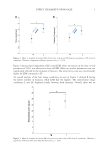
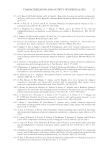
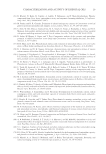
41 Silver Nanoparticles of Bee Honey pH as the skin has an acidic pH of around 4.93 to 5.66. Serum formulations with a pH of about 4.0 to 7.0 are beneficial for the skin as they maintain or even fortify the skin barrier and support the natural skin flora. At the same time, a pH of 4.0 to 5.0 helps reduce the use of preservatives and stabilizes active cosmetic ingredients. The AgNPs–bee honey showed higher activity against gram-positive than gram-negative. In this study, the AgNPs–bee honey serum was prepared and tested against S aureus and E coli. The zone of inhibition in diameter was discerned by disk diffusion method. The clear zone diameter increased as the concentration of AgNPs–bee honey serum increased. The clear zone diameter of the bacterial inhibition zone for S aureus and E coli is shown in Figure 9. The clear zones produced against pathogens tested (1, 2, 3, and 4% of AgNPs–bee honey serum) were found to be 6.1 ± 0.2, 7.9 ± 0.1, 10.2 ± 0.5, 12.3 ± 0.6 mm for S aureus and 0.65 ± 0.02 mm of 4% AgNPs–bee honey serum for E coli, respectively. (a) (b) Figure 9. Zone of inhibition of serum formulations varying the concentration (1–4% AgNPs–bee honey nanoparticles) against S aureus (a) and E coli (b).
Purchased for the exclusive use of nofirst nolast (unknown)
From: SCC Media Library & Resource Center (library.scconline.org)