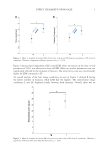
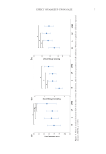
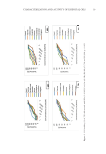
53 MULTIDISCIPLINARY PROCESS OF HAND SANITIZER means higher measured hydration (23). TEWL was evaluated with a Tewameter® TM Hex probe (Courage and Khazaka, Cologne, Germany), which uses an open-chamber method to measure the density gradient of the water evaporation from the skin this is proportional to the TEWL (24). TEWL should be as low as possible in healthy skin, as lower values correlate with less water loss and better barrier function (25). Skin pH was measured with a Skin-pH- meter PH 905 probe (Courage and Khazaka, Cologne, Germany), which is a measurement electrode that allows direct contact with the skin via a flat glass membrane on the tip of the probe (26). Usually, human skin pH ranges between 4 and 6 and plays a vital role in keeping the stratum corneum barrier function and resident microbiota healthy (27). Small-scale consumer evaluations were performed in parallel with the skin parameters’ evaluations. A consumer evaluation is the process of assessing the properties or performance of existing or new products or services as perceived by consumers (28). During the product development process, these evaluations are important in aligning the product’s characteristics as much as possible with consumers’ preferences and insuring its acceptance (29). Although ABHS F#1 was more hydrating than F#2, it also had a significantly worse sensorial evaluation (Figure 2). The sensorial evaluation was conducted on a scale from dislike (0–4) to like (6–9). Therefore, the higher the value given to the attribute, the better the evaluation. Considering this, F#2 was selected as the base formulation to go forward for further improvement, because product development should not be exclusively guided by pure effectiveness it should also be guided by sensorial acceptance (29). Improvement of moisturizing capacity. To raise ABHS F#2’s moisturizing capability, the concentration of squalane and glycerin was increased. Squalane is a colorless and odorless hydrocarbon oil, with good physical and chemical stability resulting from its hydrogenation (30). Squalene was originally found in shark livers, but it can currently be obtained from renewable and environmentally friendly sources, such as olives and sugarcane, and it can also be produced by fermentation using engineered yeast strains (30,31). In addition, squalene is also naturally present in the lipid layers of the skin, which makes squalane, its saturated derivative, an excellent moisturizer for topical applications (30,32). Several attempts were made to increase the squalane concentration (data not shown), but the oil phase separated from the formulation. To improve this, the concentration of emulsifier was performed, which originated with formulation F#3, to avoid the oil phase splitting over time. Improvement of hydration capacity. Formulations F#4 and F#5 were created, with increasing concentrations of glycerin, and tested on volunteers. Glycerin, which is also referred to as Figure 2. Radar charts of different ABHS prototypes [A) F#1 vs F#2 B) F#3 vs F#4 vs F#5 C) F#3 vs F#6 vs F#7] for the studied sensory attributes. *p 0.05 **p 0.01 ***p 0.001 NS means there were no significant differences (p 0.05).

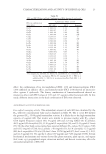
54 JOURNAL OF COSMETIC SCIENCE glycerol, was added as a humectant. This is because it helps the skin to retain moisture by attracting water, by absorption and adsorption, and by decreasing evaporation (6). Glycerin results from the hydrolysis of fats and oils that naturally exist in animals and plants (33) in this study, the glycerin used was from plant origin. Skin products, including ABHS, usually contain humectants to increase skin water content and provide relief from dryness (34). Formulations F#3, F#4, and F#5 significantly increased skin hydration and decreased skin TEWL and pH when comparing the baseline and application values (Table III). When the three formulations were compared with each other, F#5 (0.6% glycerin) significantly increased skin hydration more than the other two (Figure 1). However, once again, this was associated with a worse sensorial evaluation (Figure 2). Glycerin is considered the most effective humectant for increasing skin hydration. Still, an excessive concentration of it causes a sticky feeling on the skin (35), which is what was observed in this study. Therefore, formulations F#4 and F#5 were discarded. Improvement of drying time for hands. The short drying time for ABHS is important in hospital settings, because lack of time has been identified as a reason that health-care workers skip disinfecting their hands (36,37). Hand rubbing was timed until the volunteers felt that their hands were dry. The same set of volunteers was used for all of the tested formulations, because there was a significant correlation between hand surface area and drying time (38). Formulation F#3’s drying time was equal to the benchmark (Table IV). To try to reduce this amount of time, it was decided that the formulation viscosity would be reduced— first by increasing the ethanol concentration and then by decreasing the emulsifier amount. Increasing the ethanol led to formulations F#6 and F#7. The ethanol increments in formulations reduced the viscosity and significantly reduced drying time (Table IV). However, although the results were not statistically significant, this had a negative impact on skin hydration and TEWL (Figure 1). These results are consistent with previous studies, where the short-term use of ABHS decreased skin hydration and increased TEWL (39,40). Decrease of formulation’s viscosity with replacement of squalene by a chemically shorter compound. Formulation F#7’s viscosity was still much higher than that of the benchmark formulation and the formulations recommended by the WHO (41). Additionally, viscosity enhancers have the potential to compromise antimicrobial efficacy (4). To reduce the formulation viscosity, the authors reduced the emulsifier polyacrylate crosspolymer-6 to 0.05% (w/w). However, this reduction led to a new challenge: the squalene oil phase split out from the formulation. These difficulties are to be expected in the development of multifunctional products, as there is the need to combine incompatible ingredients into a single delivery system (42). Considering the fact that the main function of the ABHS is hand disinfection, a new emollient was tested: hemisqualane, which is also obtained from green sources or sustainable processes of production. Hemisqualane is a nonpolar C15 hydrocarbon that Table IV Viscosity and Drying Time (Mean ± SD) of Formulations F#3, F#7, and F#8, and Benchmarka Formulation Viscosity (mPa s) Drying time (seconds) F#3 89.2 26.92 ± 4.28 b F#7 56.5 22.08 ± 1.9 a F#8 5.4 22.92 ± 3.26 ab Benchmark 2.5 26.92 ± 2.79 b a Different letters (a, b) under the column drying time indicate statistically significant differences (p 0.05) determined by the post hoc Duncan’s Multiple Range test.
Purchased for the exclusive use of nofirst nolast (unknown)
From: SCC Media Library & Resource Center (library.scconline.org)