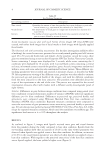
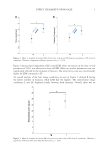
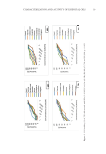
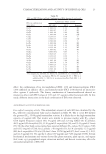
64 JOURNAL OF COSMETIC SCIENCE important function of the skin is to protect the body from microorganisms and unwanted elements in the surrounding environment. The main barrier of the skin is the outermost layer (the SC). Skin moisture is one of the fundamental elements that influences skin health. Moisturizers are the most prescribed products in dermatology and help to sustain skin integrity and well-being, creating a healthy appearance. The main actions of moisturizers are to smoothen the skin’s surface and to enhance water content in the SC to moisten the skin (3). Traditionally, moisturizers have been considered to hold back transepidermal water loss Figure 1. Schematic overview of skin layers. (Adapted from Benjamin Cummings, Pearson Education Inc.) Figure 2. The SC morphology. Adapted with permission from reference 1. Copyright 2019 Open Scientific Publishers.

65 NATURAL ACTIVE INGREDIENTS AND SKIN HYDRATION (TEWL) by occlusion (4). Water maintains the elasticity and softness of the SC. Moisturizers are used to improve skin barrier function by influencing the structure of SC and skin barrier homeostasis through reduction of TEWL, boosting skin hydration, and reducing proliferation activity of the epidermis (5). Buraczewska stated that moisturizers have also been shown to regulate skin barrier recovery after exposure to irritants (6). Moisturizers are formulated primarily as oil-in-water emulsions, where oil droplets are dispersed in water and stabilized by emulsifiers (3). Emulsions can be categorized into creams, lotions, gels, ointments, and suspensions. Creams are the most widely used moisturizers to treat dry skin conditions, as they are cosmetic and pharmaceutical products that are produced to soothe, restore, reinforce, protect, and treat the skin. They therefore keep skin in “good condition” (1). Moisturizers may either have simple contents and consist of several ingredients or be a complex mixture of many materials (3). Natural active ingredients used in cosmetic formulations have been found to provide a number of beneficial effects such as good moisturization, skin smoothening and rejuvenation, healing, anti-aging properties, and anti-inflammatory properties. According to Corley and Matthews, the Natural Products Association recognizes a product as natural if 95% or more of its ingredients come from natural sources (7,8). According to a Grand View Research market analysis report from 2022, the global natural cosmetics market size was estimated at $34.12 billion in 2018, and it is projected to register a compound annual growth rate of 5.01% from 2019 to 2025. The market demand for natural personal care products is being driven by the population increase in various countries. For example, a large market exists in the United Kingdom for products that focus on the aging population. These consumers possess higher disposal income and demand products that can fulfill their skincare needs. The rising population of millennials in the Asia-Pacific region and other regions is also driving global demand. Consumers are willing to spend more money on natural products due to increasing disposable incomes and more of a consciousness regarding appearance (9). Natural sources may consist of vitamins, fatty acids, polyphenols, and terpenes that may improve certain endogenous bioactivities and can be used in cosmetic products. They also show characteristics as emollients and skin moisturizers and can be used for hair protection and softening (10). Plants are considered the most influential sources of active ingredients in the cosmetic industry. Examples of plant sources that are currently used as natural active ingredients in cosmetic formulations include: papaya peel, cucumber, sweet potato, shea butter, mango butter, cocoa butter, aloe vera, palm oil, avocado oil, sweet almond oil, pumpkin seeds, Centella asiatica, Calendula flowers, jojoba oil, sunflower seed oil, argan oil, coconut oil, and comfrey roots. Palm oil is also included as one of the natural source active ingredients used in cosmetic formulations. Active ingredients from natural sources, especially plants, normally exhibit emollient properties. Emollients are agents that are mainly oils and lipids and function to soften and smooth the SC by increasing hydration (4). Emollients also contain humectants and hygroscopic compounds that serve to hydrate the SC (11). Humectants possess good moisturizing properties because they increase TEWL by strengthening water absorption from the dermis into the epidermis, where water is easily lost to the surroundings (4). There are also active ingredients obtained from animals and marine sources used in the cosmetic industry. These include sea cucumber, algae, snails, shark fish liver oil, hydras, jellyfish, cuttlefish, starfish, sea urchins, and fish scales, along with animal bone, cartilage, and/or muscle.
Purchased for the exclusive use of nofirst nolast (unknown)
From: SCC Media Library & Resource Center (library.scconline.org)