343 Photoprotective Effects of Carotenoid
that the carotenoid is noncarcinogenic and nonmutagenic, and it therefore can be safely
used in a sunscreen formulation.
EVALUATION OF FORMULATED SUNSCREEN CREAM
The following were the variations of parameters that were considered acceptable37,38 for
approval of sunscreen formulations:
Appearance, color, and odor. This was unchanged when stored under direct or indirect
sunlight at room temperature. Slight changes were acceptable in formulations stored at
higher temperatures.
pH value. There were changes up to 0.2 pH units.
Apparent viscosity. There were percentage changes of ± 20%.
SPF value. There were percentage changes of ± 5%..
Critical wavelength value (λC). There were percentage changes of ± 2%..
UVA/UVB ratio value. There were percentage changes of ± 5%.
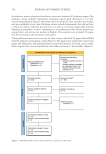
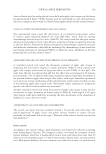
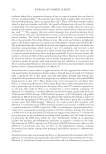
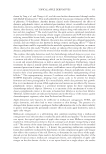
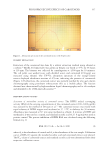
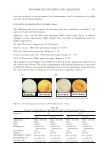
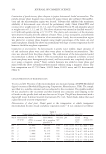
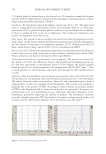
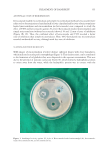
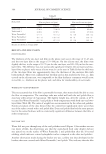
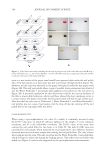
The formulated cream (Figure 5A and 5B) was evaluated for the organoleptic parameters on
day 0 and on the 30th day. The results of organoleptic and rheological properties are presented
in Table III. There was no substantial difference observed in the organoleptic characteristics of
the cream after 30 days of storage (at 27 ± 2°C), per the acceptability criteria.37,38
Figure 5. (A) Freshly prepared formulation, (B) formulation after 30 days.
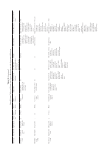
Table III
Evaluation of Organoleptic and Rheological Parameters of Formulated Sunscreen
Parameters Bc BcCE
0 days 30 days 0 day 30 days
Appearance Shiny, cream-like Shiny, cream-like Shiny, cream-like Shiny, cream-like
Color White White Peach Peach
Odor Odorless Odorless Odorless Odorless
Homogeneity Uniform and
homogenous
Uniform and
homogenous
Uniform and
homogenous
Uniform and
homogenous
Consistency Good Good Good Good
Texture Smooth Smooth Smooth Smooth
Spreadability (cm.g/s) 90.08 ± 0.014 90.79 ± 0.10 80.25 ± 0.025 80.75 ± 0.03
Extrudability (%)72.14 ± 0.032 72.28 ± 0.025 71.45 ± 0.22 71.68 ± 0.01
Viscosity (cP) 35,487 ± 0.95 34,080 ± 0.57 43,751 ± 0.58 43,320 ± 0.66
that the carotenoid is noncarcinogenic and nonmutagenic, and it therefore can be safely
used in a sunscreen formulation.
EVALUATION OF FORMULATED SUNSCREEN CREAM
The following were the variations of parameters that were considered acceptable37,38 for
approval of sunscreen formulations:
Appearance, color, and odor. This was unchanged when stored under direct or indirect
sunlight at room temperature. Slight changes were acceptable in formulations stored at
higher temperatures.
pH value. There were changes up to 0.2 pH units.
Apparent viscosity. There were percentage changes of ± 20%.
SPF value. There were percentage changes of ± 5%..
Critical wavelength value (λC). There were percentage changes of ± 2%..
UVA/UVB ratio value. There were percentage changes of ± 5%.
The formulated cream (Figure 5A and 5B) was evaluated for the organoleptic parameters on
day 0 and on the 30th day. The results of organoleptic and rheological properties are presented
in Table III. There was no substantial difference observed in the organoleptic characteristics of
the cream after 30 days of storage (at 27 ± 2°C), per the acceptability criteria.37,38
Figure 5. (A) Freshly prepared formulation, (B) formulation after 30 days.
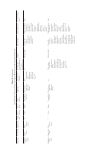
Table III
Evaluation of Organoleptic and Rheological Parameters of Formulated Sunscreen
Parameters Bc BcCE
0 days 30 days 0 day 30 days
Appearance Shiny, cream-like Shiny, cream-like Shiny, cream-like Shiny, cream-like
Color White White Peach Peach
Odor Odorless Odorless Odorless Odorless
Homogeneity Uniform and
homogenous
Uniform and
homogenous
Uniform and
homogenous
Uniform and
homogenous
Consistency Good Good Good Good
Texture Smooth Smooth Smooth Smooth
Spreadability (cm.g/s) 90.08 ± 0.014 90.79 ± 0.10 80.25 ± 0.025 80.75 ± 0.03
Extrudability (%)72.14 ± 0.032 72.28 ± 0.025 71.45 ± 0.22 71.68 ± 0.01
Viscosity (cP) 35,487 ± 0.95 34,080 ± 0.57 43,751 ± 0.58 43,320 ± 0.66