354 JOURNAL OF COSMETIC SCIENCE
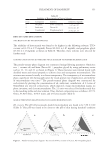
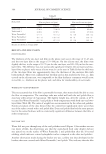
(5.5), which helped to release drug at the infected site. F2 formulation showed the highest
viscosity (958 cP), which favored conversion of microemulsion to gel and assisted to achieve
longer action and slower drug release (Table I).
Cloud point. F2 formulation showed the highest cloud point, 82 ± 1.1°C. The high cloud
point at a high Smix ratio demonstrated stable microemuslion (Table I). A cloud point
greater than 30°C is generally favored, which is indicative of good stability and availability
of drug in solubilized from at the site of application. The cloud point temperature was
found to be dependent on the Smix ratio.
Drug content. The amount of Smix and Omix was found to be directly proportional to the
drug content. As the amount of Smix and Omix was increased, drug content of formulation
was also found to be increased. F2 formulation contained 45.77% of Omix and 43.82% of
Smix, which depicted drug content of 89% ± 0.03 as mentioned in Table I.
Selection of best batch. The best microemulsion formulation was selected based on the following
criteria: high viscosity, high cloud point to depict stability, and high drug content. Thus,
F2 was selected as best batch to formulate further in gel (Table I).
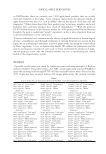
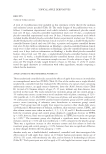
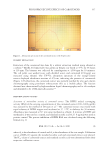
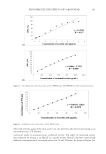
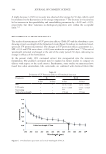
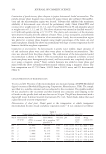
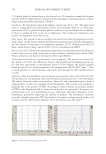
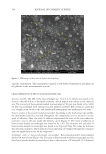
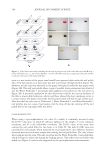
Determination of particle size, size distribution, and zeta potential. The particle size of batch F2
was found to be 326.3 nm, which was closer to the standard microemulsion particle size
(10–300 nm), along with a poly-dispersity index of 0.5129 (Figure 2A). Earlier research
found the particle size of microemulsion to be ranging from 106.68–268.57 nm.26,27 Due
to small particle size, microemulsion could easily pass through the flaky epidermal layer
of scalp.
Typically, stable microemulsion systems showed zeta potential values more than ±30 mV.
On this basis, the zeta potential value of F2 formulation was found to be +75.6 mV (Figure
2B), which indicated stable microemulsion. Tween 80 and polyethylene glycol showed
minimal effect on the zeta potential of the formulation. The positive zeta potential is
primarily due to the presence of TTO. According to earlier research, an increased amount
of TTO in the formulation led to an increase in positive zeta potential.28 A positive zeta
potential lead to the even distribution of active ingredients and other components in the
formulation, potentially improving the stability of product. The formulation contained
positively charged component TTO that binds to the negative charge present on hair and
stratum corneum, which favors adherence of the formulation onto the scalp.29,30
Figure 2. Particle size (A), Zeta potential (B).
(5.5), which helped to release drug at the infected site. F2 formulation showed the highest
viscosity (958 cP), which favored conversion of microemulsion to gel and assisted to achieve
longer action and slower drug release (Table I).
Cloud point. F2 formulation showed the highest cloud point, 82 ± 1.1°C. The high cloud
point at a high Smix ratio demonstrated stable microemuslion (Table I). A cloud point
greater than 30°C is generally favored, which is indicative of good stability and availability
of drug in solubilized from at the site of application. The cloud point temperature was
found to be dependent on the Smix ratio.
Drug content. The amount of Smix and Omix was found to be directly proportional to the
drug content. As the amount of Smix and Omix was increased, drug content of formulation
was also found to be increased. F2 formulation contained 45.77% of Omix and 43.82% of
Smix, which depicted drug content of 89% ± 0.03 as mentioned in Table I.
Selection of best batch. The best microemulsion formulation was selected based on the following
criteria: high viscosity, high cloud point to depict stability, and high drug content. Thus,
F2 was selected as best batch to formulate further in gel (Table I).
Determination of particle size, size distribution, and zeta potential. The particle size of batch F2
was found to be 326.3 nm, which was closer to the standard microemulsion particle size
(10–300 nm), along with a poly-dispersity index of 0.5129 (Figure 2A). Earlier research
found the particle size of microemulsion to be ranging from 106.68–268.57 nm.26,27 Due
to small particle size, microemulsion could easily pass through the flaky epidermal layer
of scalp.
Typically, stable microemulsion systems showed zeta potential values more than ±30 mV.
On this basis, the zeta potential value of F2 formulation was found to be +75.6 mV (Figure
2B), which indicated stable microemulsion. Tween 80 and polyethylene glycol showed
minimal effect on the zeta potential of the formulation. The positive zeta potential is
primarily due to the presence of TTO. According to earlier research, an increased amount
of TTO in the formulation led to an increase in positive zeta potential.28 A positive zeta
potential lead to the even distribution of active ingredients and other components in the
formulation, potentially improving the stability of product. The formulation contained
positively charged component TTO that binds to the negative charge present on hair and
stratum corneum, which favors adherence of the formulation onto the scalp.29,30
Figure 2. Particle size (A), Zeta potential (B).