352 JOURNAL OF COSMETIC SCIENCE
Formulation of ketoconazole loaded microemulgel. Gel formulation was preferred here for easy
application of microemulsion, as well as better retention on the scalp for a longer period.
The gel was prepared as follows: Carbopol 934 (0.054 gm) was soaked in 1.04 mL of
water (obtained from the microemulsion region) for 1–3 h. The best batch (which showed
highest viscosity, pH, drug content, and cloud point) was incorporated into the gel to get
ketoconazole-loaded microemulgel.23 The resultant ketoconazole-loaded microemulgel was
further evaluated for drug content, antifungal activity, and drug release.
CHARACTERIZATION OF KETOCONAZOLE LOADED MICROEMULGEL
Viscosity and pH. The viscosity and pH of ketoconazole-loaded microemulgel was similar to
the viscosity and pH of ketoconazole-loaded microemulsion.
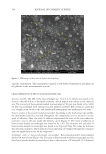
Texture analysis of ketoconazole loaded microemulgel. The spreadability of the microemulgel
was measured using a CT3 texture analyzer (Brookfield Engineering Corporation,
Massachusetts, USA) in compression mode by using the spreadability accessory (TA-BT-KI).
Here, the work of adhesion is necessary to overcome the attractive force between the surface
of the sample and material. Tackiness, the cohesive or stickiness property, is defined as the
pressure required to pull the probe off the surface of the sample. Firmness is the resistance
to compression. Briefly, the sample was filled in a female probe to avoiding air pocket. At
the defined test speed of 2mm/s, a male probe (35 mm diameter of 45°) was forced down to
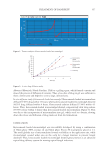
the defined depth of 10 mm. The force-time plots, cohesiveness, adhesiveness, and hardness
were studied. The work of adhesion was calculated from the energy required to deform the
sample by using Eq. 2:
Workof adhesion AUCTackiness
AUCFirmness =(2)
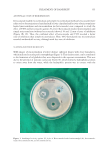
Antifungal study of ketoconazole-loaded microemulgel. Ketoconazole-loaded microemulgel
0.5 mL (10 mg/mL) was tested against microbial stain M. furfur (MONERA lab, Pune,
India). The antifungal study was performed similar to the antifungal study of the
ketoconazole-loaded microemulsion.
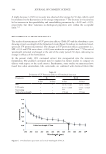
In vitro diffusion study of ketoconazole-loaded microemulgel. The in vitro drug diffusion study
of ketoconazole-loaded microemulgel was performed through the cellophane membrane
using a Franz diffusion cell (DBK Instruments, Mumbai, India) having an effective surface
area of 12.5 cm2. First, the phosphate buffer solution (pH 5.5: methanol 1% (v/v)) was
used as a receiver media at 37 ± 5°C. Next, the cellophane membrane was fixed between
the donor compartment and the receiver compartment. Freshly prepared ketoconazole-
loaded microemulsion (drug equivalent to 10 mg/mL), ketoconazole-loaded microemulgel
(drug equivalent to 10mg/mL), and ketoconazole solution (each 0.5mL) were placed on the
cellophane membrane. Here, the stirrer speed was set at 100 rpm to agitate the receptor
fluid. Next, 1 mL aliquot was periodically removed through each sampling arm of the
receptor chambers at appropriate time intervals and was diluted with phosphate buffer pH
5.5: methanol (1%). It was replaced with fresh buffer solution. Each experiment was carried
out three times. The spectroscopy analysis was carried out immediately after withdrawal of
samples with the help of a UV spectrophotometer at 244 nm.24
Formulation of ketoconazole loaded microemulgel. Gel formulation was preferred here for easy
application of microemulsion, as well as better retention on the scalp for a longer period.
The gel was prepared as follows: Carbopol 934 (0.054 gm) was soaked in 1.04 mL of
water (obtained from the microemulsion region) for 1–3 h. The best batch (which showed
highest viscosity, pH, drug content, and cloud point) was incorporated into the gel to get
ketoconazole-loaded microemulgel.23 The resultant ketoconazole-loaded microemulgel was
further evaluated for drug content, antifungal activity, and drug release.
CHARACTERIZATION OF KETOCONAZOLE LOADED MICROEMULGEL
Viscosity and pH. The viscosity and pH of ketoconazole-loaded microemulgel was similar to
the viscosity and pH of ketoconazole-loaded microemulsion.
Texture analysis of ketoconazole loaded microemulgel. The spreadability of the microemulgel
was measured using a CT3 texture analyzer (Brookfield Engineering Corporation,
Massachusetts, USA) in compression mode by using the spreadability accessory (TA-BT-KI).
Here, the work of adhesion is necessary to overcome the attractive force between the surface
of the sample and material. Tackiness, the cohesive or stickiness property, is defined as the
pressure required to pull the probe off the surface of the sample. Firmness is the resistance
to compression. Briefly, the sample was filled in a female probe to avoiding air pocket. At
the defined test speed of 2mm/s, a male probe (35 mm diameter of 45°) was forced down to
the defined depth of 10 mm. The force-time plots, cohesiveness, adhesiveness, and hardness
were studied. The work of adhesion was calculated from the energy required to deform the
sample by using Eq. 2:
Workof adhesion AUCTackiness
AUCFirmness =(2)
Antifungal study of ketoconazole-loaded microemulgel. Ketoconazole-loaded microemulgel
0.5 mL (10 mg/mL) was tested against microbial stain M. furfur (MONERA lab, Pune,
India). The antifungal study was performed similar to the antifungal study of the
ketoconazole-loaded microemulsion.
In vitro diffusion study of ketoconazole-loaded microemulgel. The in vitro drug diffusion study
of ketoconazole-loaded microemulgel was performed through the cellophane membrane
using a Franz diffusion cell (DBK Instruments, Mumbai, India) having an effective surface
area of 12.5 cm2. First, the phosphate buffer solution (pH 5.5: methanol 1% (v/v)) was
used as a receiver media at 37 ± 5°C. Next, the cellophane membrane was fixed between
the donor compartment and the receiver compartment. Freshly prepared ketoconazole-
loaded microemulsion (drug equivalent to 10 mg/mL), ketoconazole-loaded microemulgel
(drug equivalent to 10mg/mL), and ketoconazole solution (each 0.5mL) were placed on the
cellophane membrane. Here, the stirrer speed was set at 100 rpm to agitate the receptor
fluid. Next, 1 mL aliquot was periodically removed through each sampling arm of the
receptor chambers at appropriate time intervals and was diluted with phosphate buffer pH
5.5: methanol (1%). It was replaced with fresh buffer solution. Each experiment was carried
out three times. The spectroscopy analysis was carried out immediately after withdrawal of
samples with the help of a UV spectrophotometer at 244 nm.24