348
J. Cosmet. Sci., 74.6, 348–359 (November/December 2023)
*Address all correspondence to Ashlesha P. Pandit, ashlesha.pandit@gmail.com
Microemulgel-Based Delivery of Ketoconazole Using Tea
Tree Oil for Treatment of Dandruff
ANUPAMA KESBHAT, SUMEET S. DHAKANE, PRATIKSHA LABADE, PALAKSHI LAD
AND ASHLESHA P. PANDIT
Department of Pharmaceutics, JSPM’s Rajarshi Shahu College of Pharmacy and Research, Tathawade,
Pune, Maharashtra, India (A.K., S.D., Pr.L., A.P.)
Bharati Vidyapeeth (DTU) Medical College, Pune, Maharashtra, India (Pa.L.)
Accepted for publication November 01, 2023.
Synopsis
Microemulsion can potentially deliver skin care actives. A microemulsion vehicle composed of several skin-
beneficial oils can also provide extra skin care efficacy in addition to skin care actives. Therefore, the current
study was intended to utilize a combination of skin-beneficial oils, such as tea tree oil (TTO)-coconut oil,
during the formulation of microemulsion. Microemulsion was formulated using pseudo-ternary phase
diagram, wherein oil mixtures at various surfactant/cosurfactant ratios were used. Microemulsion area of this
ternary plot was also selected to get ketoconazole-loaded microemulsion. Microemulsion was characterized
to achieve particle size of 326.3 nm, zeta potential of +75.6 mV, and polydispersity index (PDI) of 0.5129.
Thus, stable microemulsion was further converted to microemulgel for easy application on the scalp with a
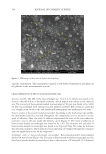
good viscosity (3,400 cp). Scanning electron microscopy (SEM) images clearly depicted the micro-droplets
dispersed in the continuous phase. Additionally, antifungal activity of ketoconazole loaded microemulgel
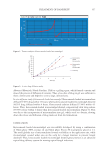
(38 mm) and simple microemulsion (without ketoconazole, 12 mm) against Malassezia furfur revealed a large
zone of inhibition. This confirmed the combined effect of microemulsion and the use of TTO. Ketoconazole-
loaded microemulgel shows great promise as an advanced topical drug delivery system for treating topical
fungal infections.
INTRODUCTION
Dandruff is the chronic scalp infection characterized by itching and flaking of skin on the
scalp and the hairy parts of the skin.1 It is a common disorder mostly found in the 18–25
age group and at puberty, and affects 5% of the global population. It becomes infrequent
after the age of 50.2 While it is not serious or contagious, it is difficult to treat and can cause
loss of confidence among patients. Dandruff is also known as seborrheic dermatitis, mainly
caused by the fungi Malassezia furfur (also known as Pityrosporum ovale) and is a species of
yeast that is naturally found on the skin surface of humans and some other mammals.3,4
Today, advanced delivery technologies such as microemulsion, nano-emulsion, nanoparticles,
and liposome are often used instead of conventional technologies for effective delivery
J. Cosmet. Sci., 74.6, 348–359 (November/December 2023)
*Address all correspondence to Ashlesha P. Pandit, ashlesha.pandit@gmail.com
Microemulgel-Based Delivery of Ketoconazole Using Tea
Tree Oil for Treatment of Dandruff
ANUPAMA KESBHAT, SUMEET S. DHAKANE, PRATIKSHA LABADE, PALAKSHI LAD
AND ASHLESHA P. PANDIT
Department of Pharmaceutics, JSPM’s Rajarshi Shahu College of Pharmacy and Research, Tathawade,
Pune, Maharashtra, India (A.K., S.D., Pr.L., A.P.)
Bharati Vidyapeeth (DTU) Medical College, Pune, Maharashtra, India (Pa.L.)
Accepted for publication November 01, 2023.
Synopsis
Microemulsion can potentially deliver skin care actives. A microemulsion vehicle composed of several skin-
beneficial oils can also provide extra skin care efficacy in addition to skin care actives. Therefore, the current
study was intended to utilize a combination of skin-beneficial oils, such as tea tree oil (TTO)-coconut oil,
during the formulation of microemulsion. Microemulsion was formulated using pseudo-ternary phase
diagram, wherein oil mixtures at various surfactant/cosurfactant ratios were used. Microemulsion area of this
ternary plot was also selected to get ketoconazole-loaded microemulsion. Microemulsion was characterized
to achieve particle size of 326.3 nm, zeta potential of +75.6 mV, and polydispersity index (PDI) of 0.5129.
Thus, stable microemulsion was further converted to microemulgel for easy application on the scalp with a
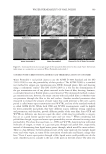
good viscosity (3,400 cp). Scanning electron microscopy (SEM) images clearly depicted the micro-droplets
dispersed in the continuous phase. Additionally, antifungal activity of ketoconazole loaded microemulgel
(38 mm) and simple microemulsion (without ketoconazole, 12 mm) against Malassezia furfur revealed a large
zone of inhibition. This confirmed the combined effect of microemulsion and the use of TTO. Ketoconazole-
loaded microemulgel shows great promise as an advanced topical drug delivery system for treating topical
fungal infections.
INTRODUCTION
Dandruff is the chronic scalp infection characterized by itching and flaking of skin on the
scalp and the hairy parts of the skin.1 It is a common disorder mostly found in the 18–25
age group and at puberty, and affects 5% of the global population. It becomes infrequent
after the age of 50.2 While it is not serious or contagious, it is difficult to treat and can cause
loss of confidence among patients. Dandruff is also known as seborrheic dermatitis, mainly
caused by the fungi Malassezia furfur (also known as Pityrosporum ovale) and is a species of
yeast that is naturally found on the skin surface of humans and some other mammals.3,4
Today, advanced delivery technologies such as microemulsion, nano-emulsion, nanoparticles,
and liposome are often used instead of conventional technologies for effective delivery