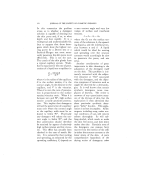
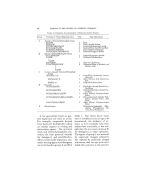
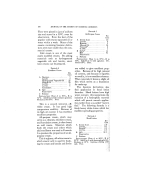
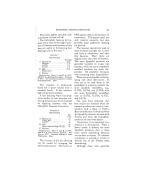
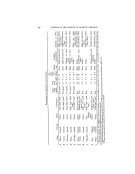
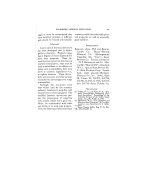
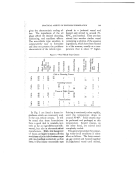
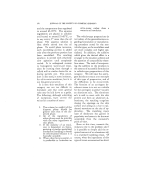
CLASSIFICATION OF SURFACE-ACTIVE AGENTS 313 and the assigned values have ranged from one to forty. When two or more emulsifiers are combined or blended, the HLB values are addi- tive in behavior. Thus, if we blend three parts of emulsifier "A" having an HLB of 8 and one part of an emulsifier "B" having an HLB of 16, the resulting HLB of the blend will be the sum of three-quarters of 8 and one-quarter of 16, i.e. (6 4- 4) or 10. We should note that chemical type alone does not establish hydro- phile-lipophile balance. Thus, soaps may.range from strongly hydrophilic for sodium laurate to strongly lipo- philic for aluminum oleate esters, ether-esters, and ethers may range from low to high HLB's, sulfates and sulfonates may range from medium to high. HLB is no t the same as solubility, though there is an over-all relation- ship. Thus, materials having low values tend to be oil soluble and materials having high values tend to be. water soluble. However, two emulsifiers may have the same HLB and exhibit different solubility char- acteristics. In the preparation of an emul- sion, the reduction of interfacial tension makes it easier to disperse one of the phases in the other. The nature of the interface established by the adsorption of the emulsifier at the interface in some •manner influences the two immiscible liquids to such an extent that one breaks up into droplets while the other re- tains its continuity. The interface apparently "bends" more easily in one direction than the other. This would seem to decide the type of emulsion that is formed--whether O/W or W/O. Presumably, the be- havior of an emulsion could be ex- pressed by observing the proper characteristics of this interface. It occurred to us that the "bend- ing" tendency of the interface might be observed by determining the in- terfacial tension in different direc- tions (i.e., up and down), from one phase to the other and vice versa. A literature search revealed that Roberts (4) had already made a brief study of this effect in relation to natural petroleum emulsions. In his work, differences in interfacial tension were observed whether the duNouy ring was pulled up or pushed down through the interface. However, the existence of a differ- ence in interfacial tension is ques- tioned since interfacial tension is in itself the difference in free energies of the two phases. It is possible that the observed differences are due to the introduction of a third phase, the platinum ring. Whether or not this is true, with efficient emulsifier systems, observations are most dif- ficult because, by their very nature, these systems have an interfacial tension of almost zero (since they form emulsions spontaneously) and therefore the precision of measure- ment is low. Hence, this phase of the study was not considered further. Other experimental means of esti- mating HLB have been considered. Lambert and Busse (2) recently published a rapid method of deter-

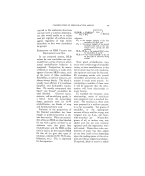
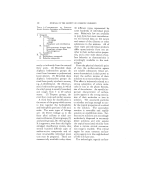
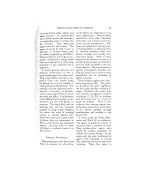
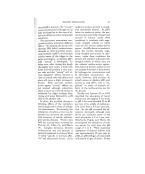
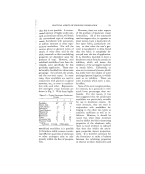
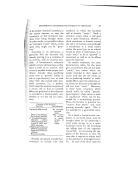
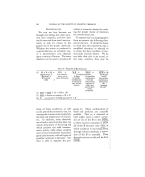
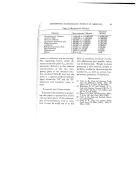
314 JOURNAL OF THE SOCIETY OF COSMETIC CHEMISTS mining the "dye solubilization" ef- ficiency of surface-active agents as previously described by McBain (3). A comparison of our estimated HLB values and some of the data pub- lished by Lambert and Busse is most interesting. In their derivation of an equation for a solubilizing iso- therm, n and K are constants which are characteristic for each agent. In Table 1 we compare HLB values and TABLE I Esti- log K mated Agent n (2) (2) HLB Igepal CA 0.80 o.•9 •2.8 Emulphor ELA 0.83 o.3 t t3.3 Emulphor ON o. 9• o. • • • 5.4 Sodium Oleate • .06 0.24 18 their data for n and K for several agents. While there is no apparent relationship between HLB and K, there is remarkable agreement be- tween HLB and n. This is being studied further in an effort to es- tablish the existence of the agree- ment. However, until this or some other system of estimation is de- vised, estimation by cross reference of a large number of emulsification tests with established materials ap- pears to be the most satisfactory, though laborious, method. Our original estimation of empiri- cal HLB values for many Atlas sur- face-active agents was based •n re- suits observed in a large number of emulsification studies conducted over several years. These studies were predominately of O/W emul- sions. We found that the emulsi- tiers most often used as O/W emul- sifiers had assigned HLB values within the range of about nine to twelve. The values of our surface- active agents used for other pur- poses were then correlated, with the results shown in Table 2. After TABLE 2 HLB Range Use 4-6 W/O emulsi fiefs 7-9 Wetting agents 8-I 8 O/W emulsifiers t3-• 5 Detergents 5-• 8 Solubilizing we had conceived the idea of HLB as applied to our own materials and had assigned values to many of them we began investigating expan- sion of the idea's usefulness. The Atlas Span and Tween emul- sifiers had found their way into industry as detergents, wetting agents, etc., by every conceivable method and there were a multitude in the development stage aimed at these various uses. When our lab- oratory began correlating HLB of industrially used compounds and development stage materials versus their use, there occurred a self- alignment that was remarkable to see. One could appreciate the poten- tial advantages of any method whereby we could connect HLB data on our own materials to HLB data for all surface-active agents. Widely applied, this could simplify immensely the choice of emulsifiers for a given industrial task. Consideration of these possibili-
Purchased for the exclusive use of nofirst nolast (unknown)
From: SCC Media Library & Resource Center (library.scconline.org)