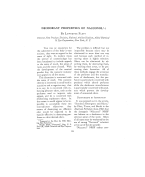
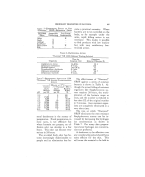
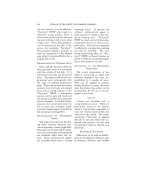
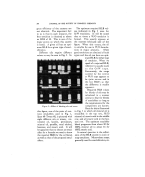
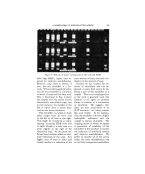
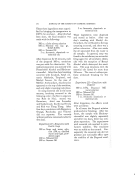
CLASSIFICATION OF SURFACE-ACTIVE AGENTS 315 ties led to the realization that here we may have a common denomina- tor that would enable us to relate and pin together all surface-active agents regardless of type which heretofore at best were considered by groups. ESXlMATION OF HLB V^LUES EMULSIFIERS AND OILS In our proposed system, HLB values for new emulsifiers are esti- mated from a series of tests in which actual emulsification behavior is compared. Comparison, by means of blends or mixtures, is made with agents of known HLB values, such as the series of Atlas emulsifiers. Emulsifiers, as used in industry, are almost always blends. The blend is usually most efficient if it combines lipophilic and hydrophilic emulsi- fiers. We usually recommend that Span* and Tween* emulsifiers be used blended. Glyceryl mono- stearate, self-emulsifying grade, is a blend. Even the monovalent soaps, generally used for O/W emulsification, are blends of soap and hydrolyzed fatty acid. Variation of the proportions of the blended emulsifiers has been taught as preferred practice to ob- tain best results. When two emulsi- fiers of known HLB are thus blended for use with a given oil there is an optimum ratio that gives best emulsification and the HLB at this ratio is said to be the required HLB for the oil (to give that type' of emulsion, whether O/W, W/O solu- bilization, etc.) This is expressed by the equation: optimum• /42'•tHLB•t +/4•BHLB• \ ratio ! /4/•t +/.•B = HLB oil wherein: /'•l = the amount (weight) of the first emulsifier (At) used, and /4• = the amount (weight) of the second emulsifier (B) used at the "op- timum ratio," giving the best emulsion HLB•t, HLB• = the assigned HLB values for emulsifiers At and /• HLB oil = the "required HLB" of the oil for the type of emulsion being studied Since good emulsification may occur over a wide range of emulsifier ratios, or since emulsification in the entire series may be only mediocre, the optimum ratio may be obscured. By averaging results with several emulsifiers and several oils the esti- mation is made more precise. In conducting a number of these tests it will be apparent that the infor- mation will have relationship to many factors. To establish the necessary cross relationships, series of emulsions were prepared over a standard for- mula. The emulsion in these tests were prepared in a uniform manner in so far as possible. Ten grams of emulsifier, or the appropriate amount of fatty acid for a soap, was weighed into an 8-oz., tall form, wide-mouthed jar. Ninety-five grams of oil, or molten wax, was added and the jar and contents agitated until the ingredients were well mixed. Ninety-five cubic cen- timeters of water was then added at one time (cold or hot depending upon the melting point of the oil or wax) and the jar capped and shaken. If required, alkali or amine is added

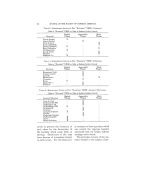
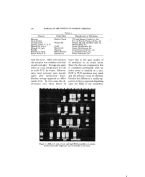
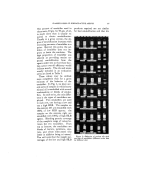
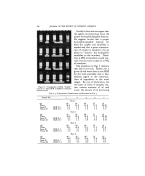
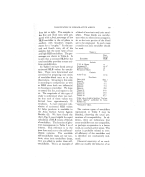
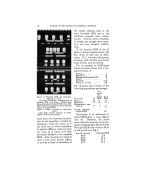
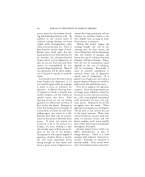
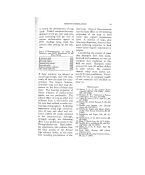
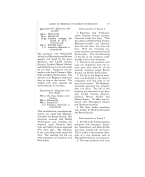
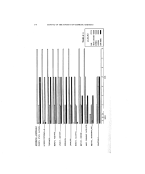
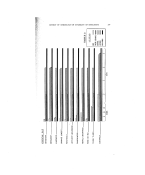
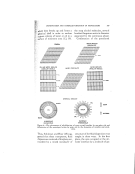
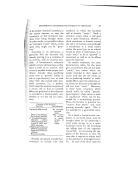
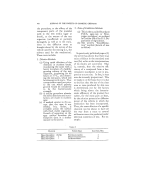
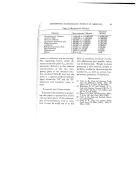
316 JOURNAL OF THE SOCIETY OF COSMETIC CHEMISTS TAsLe 3 Material Trade Mark Manufacturer or Distributor Beeswax Beehive Brand Cetyl Alcohol .......... Cottonseed Oil Wesson Oil Lanolin, anhyd., U.S. P ........... Mineral Oil, heavy Nujol Mineral Oil, light Marcol GX Paraffin Paraseal Petrolatum, white White Perrecta Stearic Acid, D.P. Emersol •so Will and Baumer Candle Co., Inc. E. I. du Pont de Nemours & Co., Inc. Wesson Oil and Snowdrift Sales Co. Botany Mills, Inc. Stanco Distributors, Inc. Stanco Distributors, Inc. Socony-Vacuum Oil Co., Inc. L. Sonneborn Sons, Inc. Emery Industries, Inc. with the water. After a few minutes the emulsion was reshaken and then stored overnight. Storage was again either at room temperature for oils or at 60-70øC. for waxes. Observa- tions (and pictures) were usually taken after twenty-four hours. Further storage appeared to affect results little. In a few cases the ob- servations were taken before 24 hours due to the poor quality of of emulsions in an entire series. Since the data are comparative this is considered permissible when an entire series is handled as a unit. O/W or W/O emulsions may result and this behavior must be checked. Usually the difference is readily ap- parent, in fact is expected depending upon the HLB of the emulsifiers. Figure l.--Effect of ratio of low and high HLB emulsifiers on emulsi- fication (the same weight per cent of emulsifier is not best)
Purchased for the exclusive use of nofirst nolast (unknown)
From: SCC Media Library & Resource Center (library.scconline.org)