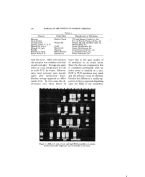
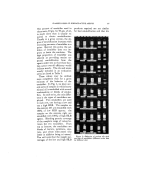
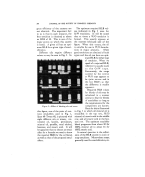
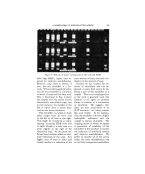
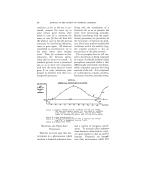
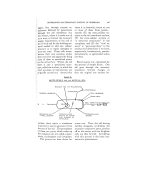
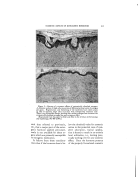
DETERMINING BACTERIOSTATIC POTENCY OF CHEMICALS uOGEsTED SIMPLIFIED METHOD-- ONE-REDUCTION" METHOD the basis of the above assump- ibns we have developed a test which believe serves to give a reliably .•: •urate answer as to the bacterio- potency of a chemical, and more simple to perform than any the others mentioned above. It involves using the standard D.A. zone technique (filter-paper ) in reverse. Basically, :this new method, instead of g the zone size as produced bY'ithe chemical we determine the '•[miting concentration of the chem- ical at the point where no clear 7: •s produced. discussed above, various phys- i•al: and physico-chemical factors •?::may enter in to •nfluence the d•L • . . '•/•.• ::.:fus•on rate or soluuon pressure, as •?•::• •- . . . •?•:•:•mell as mutual solubd•ty relauon- •.•i:•sh•ps, which factors will determine •'how far the chemical "M" will diL •:•j•5•'fuse •nto the agar m the t•me T, :•5•::•'Which is that time such as is re- •*•3•:•:•quired by the bacteria being tested •.:•*• •: to overcome its lag-phase influences •?and start growing again. Thus, the :•'•5•:•:Point where these two opposing •?'forces meet will set the size of the ?•'•.clear zone area. However, contrary to what some others claim, it is the :.w •ter s opinion that the zone size ß •.•? •s not a criterion of the relative ?•'/': bacteriostatic e•ciency of the prod- )• •::•: uct. '•:•':"•::• Following through on this same •):?.•':basis it seems to us that as long as ? :there is any "M" available in the •..•:.: agar it can and will contact a "B." •::::: So long as such a contact is possible, 403 or does actually occur, we have bacteriostasis available or in ac• tion. Therefore, in order to deter- mine the real efficiency of the prod- uct, all that we need to do is to ap- ply the material absorbed into the filter paper in successive serial dilu- tions onto the surface of seede• agar and then incubate it in the normal manner. Then, at the end of the selected time period (24 hours, 48 hours, or 72 hours, etc.) remove the filter papers from the agar surfaces and examine under a microscope the area where the papers previously rested. About 25 magnifications is sufficient. Where .no bacteria exist in this area, which will always be the case if any "clear zone" is produced, one has no difficulty oeo so observe it. When some organisms are growing in this area, say up to 50 per cent of those present in the agar outside of the filter-paper area, it is still quite easy to make such an ob- servation without question. This situation continues to apply up to about where a 25 per cent reduction in colony count is present. From there on, to determine the exact end- point where a zero reduction oc- curs (thus representing no action between M and B) may be difficult. However, the difference in dilutions or concentrations of M as required to produce a 25 per cent reduction in colony count compared to that as required to show zero reduction does not appear to be materially sig- nificant, or enough to make it a serious factor. Equally great er- rors, on the percentage basis, occur

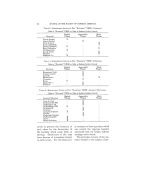
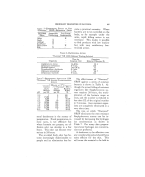
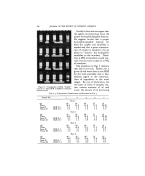
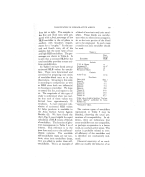
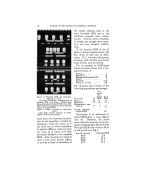
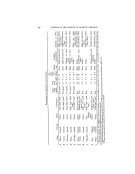
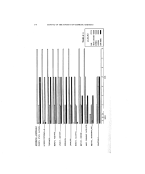
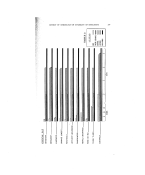
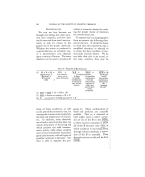
404 JOURNAL OF THE SOCIETY OF COSMETIC CHEMISTS when endeavoring to duplicate zone sizes or find end-points of bacterio- stasis by the various dilution pro- cedures. It is recognized that this simpli- fied procedure does not determine directly the exact concentration of "M" which is the final limiting bacteriostatic concentration, al- though this figure can be obtained by indirect methods if it is ever deemed necessary to have it. The amount of medication in the solu- tion into which the filter paper is dipped is not necessarily the same as that present in the seeded agar in the area where bacteriostasis is going on. Variations in the pick-up value of the paper, .its retentive power for the chemical, the diffusion power of the material when placed on the agar, the lag phase of the organism, etc., all enter in to affect the end result. If one so wishes, however, these factors can be de- termined, with a good degree of ac- curacy, by weighing the filter paper before and after dipping into the solution, for the pick-up value, then by analyzing the paper for its chem- ical content before and after it has been on the agar for the incubation period, followed by calculating the volume of the agar in which the re- duction of count occurs. From such calculations one can obtain very close to what is the actual bacterio- static concentration of the chemical in question. However, experi- mental evidence, as shown in the table of data to follow, shows quite conclusively that the differences be- tween the concentration as present in the solution into which the paper is dipped before placing on the agar and that producing the bacterio- static effect in the agar are not sufFi- ciently great to make a material difference for the purpose at hand. This assumption is based upon the fact that these dilutions so found parallel so closely those as f•)und by the commonly used dilution method, and the closeness with which one can duplicate a result is approxi- mately the same for either method. Furthermore, as mentioned above, the lag-phase phenomena of bac- terial growth plays an important role in determining the actual zone size one obtains when using the standard zone-of-inhibition test. The extent of this lag phase is in- fluenced by, and thus varies with, factors that are not related to the bacteriostatic phenomena. Thus, the zone size is not a direct criterion or a relative variable of the bacterio- static power of the substance being tested by the zone method. However, in our Zone-Reduction test method this variable is elim- inated. The end point read is' that which represents the concen- tration of the chemical (i.e., mole- cules, M,) that just neutralizes a definite number of molecules of bacteria (B). The lag-phase phe- nomenon does not interfere with this reaction, as it is immaterial as to how long it takes for the bacteria to overcome local resistance effects and get started growing, or how far the chemical may diffuse due to solubility influences in the vehicle (including both the agar at•d the
Purchased for the exclusive use of nofirst nolast (unknown)
From: SCC Media Library & Resource Center (library.scconline.org)