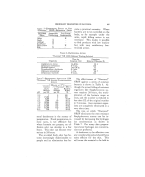
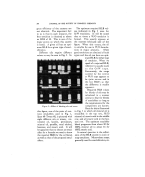
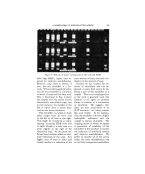
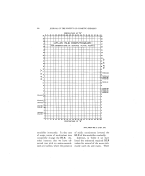
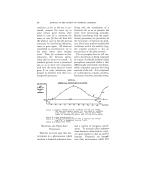
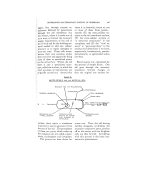
:'. This, no doubt, is a partial answer :!i)( to the phenomenon in question, but •::-!"in addition--and quite likely to a •'::':' greater degree--there exists in these i!i(:. situations another set of conditions, ?or influences. These are physico- 'j.i chemical in nature, and act to pre- .... ' vent contact between the medica- ,::•: tion and the bacteria by forming a ß film over the latter by some form i !:!::i.: of agglutination of the former by ::::::::: adsorption of either M or B onto i:: :I:'I the glass, metal, or rubber, etc., :,.. !.'•i:i. used as the vessel to contain the mixture, or by the normal clumping .:. of the bacteria themselves as they have grown in the culture, etc. By shaking, swabbing, neutralizing, etc. these uncoatacted, or partially con- tacted, organisms are iater set free ß to be found as viable when the vast majority of the others have been killed. These, no doubt, account for many of the "wild plusses" which show up in our test data and cause so much difficulty in evaluating germicidal potencies of the quater- naries. It should also be brought out here that this phenomenon is not one exclusive for quaternary ammonium compounds. It occurs for many other types, if not all, of germicidal substances, but in most cases to a lesser degree. A descrip- tion of how this fact fits into our general formula will be found above where Chart 4 is discussed. PRACTICAL ASPECTS OF BACTERI0- STASIS Hav{ng shown what bacterio- stasis is and how it works on bac- DETERMINING BACTERIOSTATIC POTENCY OF CHEMICALS 401 teria, we will now present a brief outline as to how the cosmetic and allied industries can make use of these bacteriostatic properties of chemicals. This includes two op- posite approaches, namely: (a) For preservative purposes, wherein the inhibition of some of the normal metabolic processes of the bacterial cell is the goal rather than inhibiting the growth or reproduc- tion abilities of the cell. Thus, the product (cosmetic cream) is "pre- served" and kept from deteriorating from either a chemical or a psy- chological standpoint. Here the effect is outside the cell, i.e., in the substrate. (b) For therapeutic purposes, wherein growth prevention is the basic aim. In the former case it is the product itself that requires the bacteriostatic influences applied to it whereas in the latter case it is th• host on which the product is to be applied, that becomes the main object of interest as far as the effects of the bacteriostatic action is concerned. TEST METHODS FOR BACTERIO- STATIC ACTIVITY In general, the following five procedures are used for the purpose of determining if a product possesses bacteriostatic properties, if it is ex- erting such powers under the specific conditions, or if it is capable of doing the same, and in what limit- ing concentrations. Each method, however, may produce a different answer as to the end-point concen- tration, due to the specific nature of

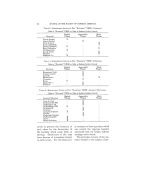
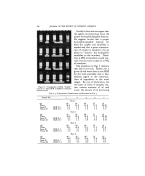
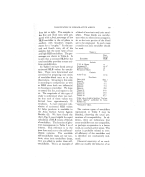
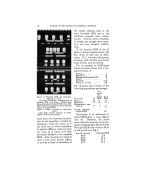
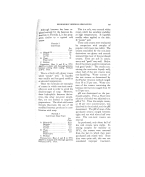
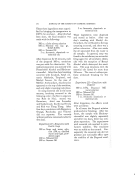
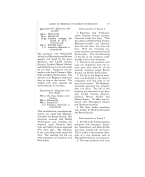
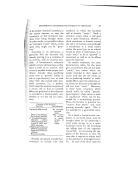
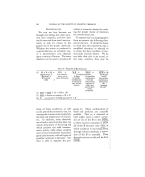
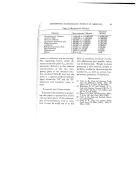
402 JOURNAL OF THE SOCIETY OF COSMETIC CHEMISTS the procedure, to the effects of the component parts of the material used in the test media (agar or broth), to the nature of the test organism (unaffected or partially damaged), as well as to the varia- tions in the diffusion rates as brought about by the nature of the vehicle used for the testing (i.e., the solvent used for the medication). These tests include: 1. Dilution Methods ß (a) Using serial dilutions of the chemical in nutrient broth, inoculating the same with a heavy inoculum of a healthy growing culture of the test organism, incubating for 48 hours at 37øC., and observ- ing the end point, which will be where growth starts. That concentration used just prior to the one which permits growth would be considered to be the bacteriostatic strength. (b) A similar procedure wherein the serial dilutions and inocu- lations are made in nutrient agar. (c) A method similar to (b) ex- cept that the agar is not seeded, but, rather, is streaked across the surface with fresh viable organisms. Growth of organisms on the agar surface furnishes the end-point data in a similar manner to the above. 2. Zone-of-f nhibition Methods (a) This is the so-called Standard F.D.A. agar-cup or filter- paper procedure, as outlined in Circular 198 of theU. S. De- partment of Agriculture. (b) The writer's "Zone-Reduc- tion" method (details of test to follow). In previously published papers (5) the writer has shown that there may exist a fallacy in the standard zone test (2a) as far as the interpretations of its results are concerned. That is, namely, that the relative effi- ciency of a compound from a bac- teriostatic standpoint is not in pro- portion to zone size. In fact, it may even be inversely proportional. This we explain on the basis that it is due to the fact that the size of the clear area or zone produced by this test is determined, not by the 'factors which bring about the bacterio- static efficiency of the product but rather, for the most part at least, by the solution potential or diffusion power of the vehicle in which the medication has been incorporated. Thus, the same dilution of a specific chemical can be shown to have all the way from a trace to several millimeter zone size produced under identical conditions of test. For ex- ample: Tx•tz 1 Chemical Vehicle Base Zone Size, Min. Hexachlorophene (0•1%) Hexachlorophene Hexachlorophene " Petrola tum-lanolin GlyceryLmonos tearate Carbowax blend
Purchased for the exclusive use of nofirst nolast (unknown)
From: SCC Media Library & Resource Center (library.scconline.org)