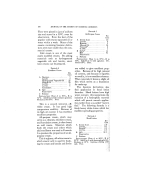
COSMETIC FUNCTIONS OF SYNTHETIC DETERGENTS* By ANTHONY M. SCHWAItTZ, Ph.D. Harris Research Laboratories, I'?ashington zz, D.C. QVlTE REGULARLY in the his- tory of chemical technology there have become available radically new materials which stimulate and facili- tate rapid advancement in widely divergent fields. The introduction of such materials is usually followed by a period of intensive develop- ment during which specialists in- vestigate them and attempt to utilize their novel characteristics to fullest advantage. For some time, we have been in such a stage with regard to the synthetic surface- active agents. Cosmetic technolo- gists have not lagged behind the leaders in taking advantage of these new substances. The basic purpose of this paper is to indicate some of the interesting specific characteris- tics of surface-active agents, and to consider how they might be utilized to an even fuller potential. The more general physical and chemical properties of the surface-active agents have been amply surveyed and are by now quite familiar. A brief review of the more important points will,'however, serve to orient the subsequent discussion. * Presented at the May 20, 1949, Meet- ing, New York City, 327 With respect to chemical struc- ture the surface-active agents are characterized by having a highly unsymmetrical molecule, one por- tion of which is 2•olar and hydro- Milic, with high residual valency. The other portion of the molecule is non-f•olar and hydrophobic. pending on the relative influence of these two portions the material will be primarily oil-soluble or water- soluble, although many common surface-active agents are soluble in both types of solvent. The oil-sol- uble substances are of considerable technical importance but this dis- cussion will be concerned largely with the water-soluble series. These produ.cts may be classified primarily according to the nature of the drophilic group as shown in Table 1. A second basis for classification is the nature of the hydrophobic group. In cohamercial detergents this group is seldom, if ever, molec- ularly uniform. It usually consists of a mixture of isomers or homo- logues belonging to the same series. The more common series of hydro- phobic groups are: (1) The straight chain aliphatic hydrocarbon groups of 8 to 18 carbon atoms, derived di-

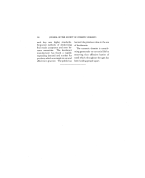
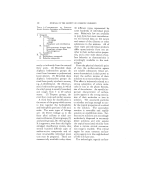
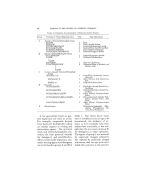
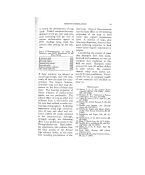
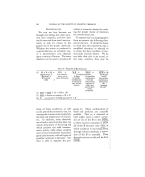
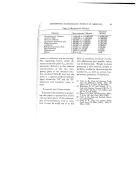
328 JOURNAL OF THE SOCIETY TABLE 1--C LASSlFICATION OF SURFACE- ACTIVE AGoeNTS ACCORDING TO HYDROPHILIC Gl•ouPs I. Ionogenic A. Anionic 1. --COOH 2. --O--SOaH 3. --SOaH 4. Phosphoric and miscellaneous B. Cationic 1. Non-quaternary nitrogen bases 2. Quaternary nitrogen bases 3. Non-nitrogenous C. Ampholytic II. Non-Ionic A. Polyhydroxy compounds B. Polyether compounds rectly or indirectly from the natural fatty acids. (2) Branched chain aliphatic hydrocarbon groups de- rived frotan kerosene or polymerized lower alkenes. (3) Branched chain aliphatic hydrocarbon groups de- rived from purely synthetic sources, e.g., 2-ethylhexanol. (4) Alkyl aro- matic hydrocarbon groups, in which the alkyl group is usually branched, and ranges from 3 to 20 carbon atoms. (5) Terpene groups, de- rived from rosin and similar sources. A third basis for classification is the nature of the group which serves to link together the hydrophobic and hydrophilic portions of the mol- ecule. The main types of linkage are: (1) Direct linkage as in the fatty alkyl sulfates or alkyl aro- matic sulfonates, (2) e'ster groups, (3) acid amide groups, (4) ether groups. It is apparent, even from this highly abridged classification system, that several hundred different types of surface-active compounds and al- most innumerable individual prod- ucts may be prepared. There are commercially available today about OF COSMETIC CHEMISTS 30 different types represented by some hundreds of individual prod- ucts. Relatively few are available in pure form but most manufactur- ers will furnish data on the nature and extent of the diluents or other substances in the mixture. All of these types and individual products differ quantitatively from one an- other in their surface active proper- ties, and a very wide choice of sur- face behavior or characteristics is accordingly available to the tech- nologist. From the physical chemist's point of view the surface-active agents 'are soluble substances whose pri- mary characteristic is their power to lower the surface tension of their solutions to an extraordinary extent. This effect is intimately related to a strong adsorption of solute mole- cules or ions at the phase bounda- ries of the solution. An equally im- portant characteristic of surface- active agents is the strong associa- tion of their molecules or ions in solution. The associated particles or micelles are large enough to con- fer the typical properties of a colloid to the solution. The association reaction is reversible and rapidly assumes an equilibrium state. Sur- face-active solutions are accordingly molecularly dispersed in extremely dilute solutions and only assume the typical associated miceilar form when a certain critical concentra- tion range is reached. This critical region for most common surface- active agents is in the neighborhood of 0.01 to 0.5 per cent. The technologist regards surface-
Purchased for the exclusive use of nofirst nolast (unknown)
From: SCC Media Library & Resource Center (library.scconline.org)