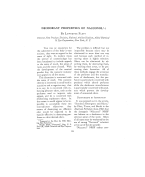
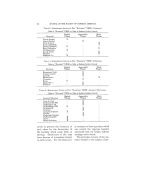
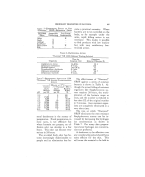
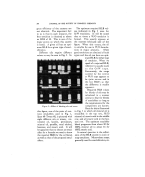
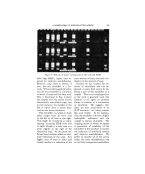
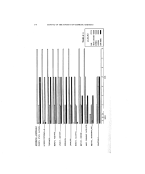
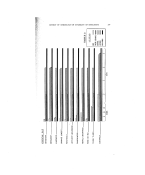
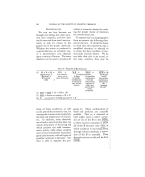
:i:i•?i.•fume, the discc loration of cos- •?'irnetics, their preservation, the last- .:..,:.:: ing quality of perfume, and other Ji'v: subjects but there is no mention •:":".:: of the action of perfume on the sta- i!7)i 57 bility of emulsions. Let us now consider the effect of ' ?::!..5 that last but not least important in- 517..:' gredient in the formula, perfume. It 555:/was noticed that the emulsions were ¾.:-,•.. superior when the perfume ingredi- i: '":':: :::•,:: ents were controlled with care. By 5711ji::changing the ingredients in com- i:i:•i i pounding the perfume or by having them supplied by an outside firm, the emulsions were thus often ren- :::::i:: dered unsatisfactory. In view of " this fact, several experiments were :5. performed which are outlined in the following discussion. Five different types of emulsions were made, and the effects upon them of 1 1 aromatic chemicals and 10 essential oils were studied. " In the following discussion, the word "separation" is synonymous with the word "breaking." SUMMARY OF EXPERIMENTS To make the emulsions, the in- gredients were those most commonly used in the cosmetic industry. The emulsion was the liquid O/W type made with surface-active agents and also two emulsifiers of natural ori- gin, all favoring O/W emulsions. These emulsifiers were as follows: 1. Triethanolamine Stearate 2. Castile soap, powdered 3. Duponol ME (sodium lauryl sulfate) 4. Lecithin soybeans (phospho- lipid) 5. Gum Arabic (pentosan colloid) EFFECT OF CHEMICALS ON STABILITY OF EMULSIONS 375 The oils used were mineral and sesame. The aromatic chemicals and essential oils listed below were added separately to the five above emulsions. In so doing, 115 experi- ments were performed (21 perfum- ing ingredients added separately to each of the five emulsions thus re- suiting in 105 experiments and 10 controls not perfumed). In the dispersion of the oils, laboratory high speed Epenbach colloidal mills were used. Atromatic Chemicals 1. Phenylethyl Alcohol 2. Hydroxycitronellal 3. Terpineol 4. Benzyl Acetate 5. Linalyl Acetate 6. Geraniol 7. Linalool 8. Benzyl Alcohol 9. Methyl Ionone 10. Amylcinnamic Aldehyde 11. Methyl Anthranilate 12. Control not perfumed Essential Oils 1. Geranium 2. Bergamot 3. Lavender 4. Orange (sweet) 5. Patchouly 6. Vetivert (Bourbon) 7. Sandalwood 8. Neroli (Bigarade) 9. Rose de Mai 10. Ylang Ylang 11. Control not perfumed Experiment _r--Emulsions with Triethanolamine 50 gm. Triethanolamine 150 gm. Stearic Acid (triple- pressed) 3000 cc. Distilled Water

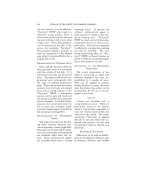
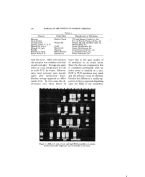
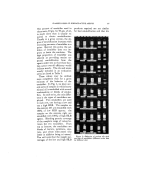
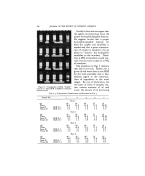
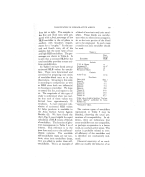
376 JOURNAL OF THE SOCIETY OF COSMETIC CHEMISTS These three ingredients were saponi- fled by bringing the temperature to 100øC. for one hour. After this had been done, the final emulsion was made with the following: 300 cc. of the above solution 100 cc. Mineral Oil (sp. gr. 0.845-O.855) 100 cc. Sesame Oil 5 cc. Aromatic chemicals or essential oils After dispersion for 15 minutes, each of the prepared 100-cc. emulsions was put aside for observation. Im- mediate separation was noticed with Phenylethyl Alcohol and Hydroxy- citronellal. After five days breaking occurred with Linalool, Amyl cin- namic Aidehyde, Terpineol, and Methyl Ionone. In the case of Methyl Anthranilate, discoloration appeared on the top of the emulsion and only slight creaming took place. In using essential oils in the same manner, breaking occurred in the following order: the first to separate was Rose de Mai second was Geranium third was Lavender and Sandalwood fourth was Neroli and fifth was Ylang Ylang. After four days, emulsions with Bergamot, Orange, Patchouly, and ¾etivert did not separate. The controls without perfume remained stable for five days. Experira ent II--Em ulsions ,• with Castile Soap 300 cc. Soap and water solu- tion (294: cc. distilled water and 6 gm. pow- dered soap) 100 cc. Mineral Oil 100 cc. Sesame Oil 5 cc. Aromatic chemicals or essential oils These ingredients were dispersed and stored as before. After one day's standing with Methyl An- thranilate, the oil floated to the top creaming occurred, and there was a yellow coloration. After two weeks the oil separated from the water in all samples. In general, soap was found to be satisfactory as an emulsi- fying agent for all synthetic chemi- cals with the exception of Benzyl Alcohol which destroyed the emul- sion. The soap emulsions with the essential oils lasted for more than 24: hours. The control without per- fume withstood breaking for five days. Experiment III--Emulsions with Duponol 300 cc. 0.507o Duponol ME water solution 100 cc. Mineral Oil 100 cc. Sesame Oil 5 cc. Aromatic chemicals or essential oils After dispersion, the effects noted were as follows: In all cases the Duponol solution produced slow breaking. After two hours, the sample with Hydroxy- citronellal was slightly separated and after two days, there was com- plete separation. The experiments . with essential oils resulted in satis- .:.• ,.. factory stability. The emulsions were as stable as the control. Con- sequently the essential oils did not ß produce any noticeable effect upon the stability of the Duponol emul- sions. .
Purchased for the exclusive use of nofirst nolast (unknown)
From: SCC Media Library & Resource Center (library.scconline.org)