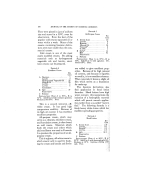
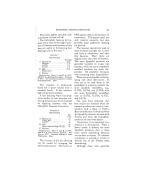
751. emulsion is stirred continuously :? until cooled, when it resembles a • rather stiff vanishing cream. The !?':.11 aluminum salts and other inorganic ili•:i': materials are then added very : slowly until dissolved or dispersed. : This procedure is critical and some- what tricky, inasmuch as the addL tion of the astringent salt results in a rise in temperature, which must be controlled by the introduction • of water in the cooling jacket of the "•':.mixing vessel or other suitable means. This, together with other factors, might result in an immedi- ate breaking of the emulsion and the spoilage of the particular batch. After the salts are added, the cream is ready for the introduction of per- fume, which is added rather slowly in order to insure complete mixing. Titanium oxide is usually included' in formulations of this type. For this, and other reasons, it is often considered advisable to mill the entire cream in order to insure dis• tribution of the inorganic material. Here again a note of caution is ad- vised the peculiar nature of the materials tends to dull the surface of the milling machinery, even after only one run, particularly when colloid mills are employed, EMULSION FORMULATION 373 where clearances are rather close. In view of the foregoing, it would seem that hardly any of the broad generalizations which were applied to .the preparation of emulsions of the non-vehicle type can be applied to those of the vehicle variety. Each product in this category has to be considered as an individual prob- lem. The trend, if anything, is for preparations of this sort to become more and more complex. Fortu- nately, there is an ever-growing num- ber of materials available to which the cosmetic technician may look as a means for solving his problems. These materials are not only in- creasing in number and variety they have become more uniform and standardized than they were only a few years ago. By becoming acquainted with the properties and limitations of the latest develop- ments in the field of synthetic emul- sifiers and other surface-active ma- terials, the cosmetic chemist will find that he has available a vast potential storehouse of highly spe- cialized tools to assist him in meet- ing the varied and intricate prob- lems presented in the equally highly specialized realm of cosmetic emul- sion technology.

THE EFFECT OF SOME AROMATIC CHEMICALS AND ESSENTIAL OILS UPON THE STABILITY OF COSMETIC EMULSIONS* By S. A. Kauas, Sc.D. Bronxville 8, N.Y. IN VIlE COt•USE OV several years' experience in manufacturing emulsions, it was found that the liquid emulsions of the O/W type behaved irregularly regardless of the rigid control of all ingredients except perfume. This effect could not be explained otherwise than to blame the perfume. It is generally known that perfume is quantitatively the smallest item in every cosmetic formula, its amount usually being 1 per cent or even expressed in the form q. s. (quantity sufficient) and is given last in the formula. Since the importance of a good cosmetic emulsion is evident, even the small- est item of the formula should not be overlooked in order to obtain satisfactory results. In recent years many new in- gredients have been presented to the cosmetic industry with technically elaborate data. However this data, as helpful as it ig in improving the manufacture of emulsions, does not cons!der the entire specific task. For instance, none of this helpful data considers the effect of per- * Pre•ented at the May 20, 1949, Meeting, New York City. fume upon the stability of emul- sions. In emulsion literature, no one, to the author's knowledge, has pointed out sufficiently the. action of perfume upon the stability of emulsions. In dealing with food emulsions, Cotran (2) stated that the flavoring of mayonnaise does not exert any effect upon the per- sistence of emulsions. Berkman and Egloff (1), however, pointed out that the stability of an emulsion is determined by the coincidental action of various factors, such as the type of dispersion, temperature, pH values, viscosity, preservation, electrolytes, etc. Jannaway (3), writing on the stability of cosmetic emulsions, stated more specifically that all of th• constituents of an emulsion should be carefully con- sidered. After this clear statement by a cosmetic specialist, one would expect to find some reference to per- fume. Furthermore, the same au- thor, in writing on the perfuming of toilet preparations, considers many aspects of good cosmetic emulsions but not their stability in regard to perfume. He 'and others stressed the irritation of the skin by per- 374
Purchased for the exclusive use of nofirst nolast (unknown)
From: SCC Media Library & Resource Center (library.scconline.org)