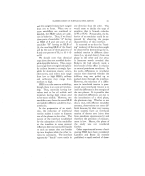
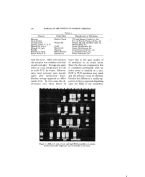
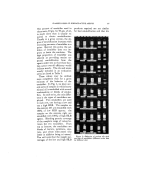
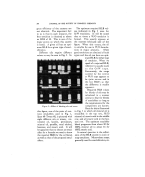
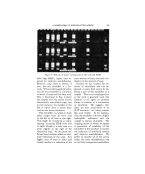
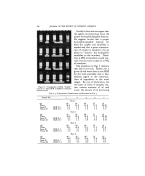
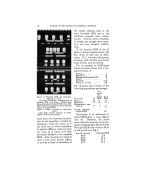
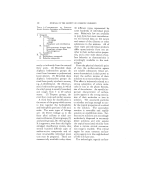
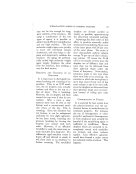
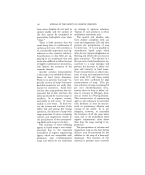
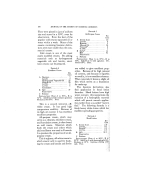
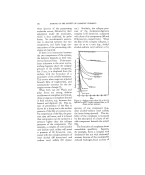
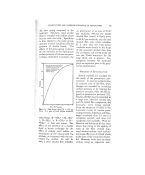
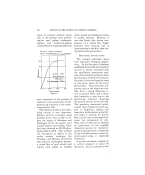
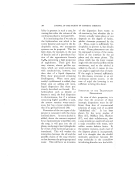
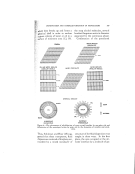
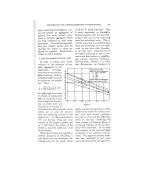
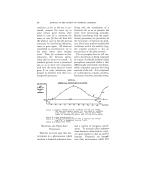
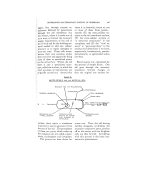
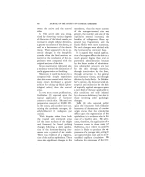
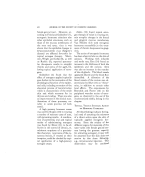
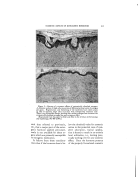
PENETRATION AND COMPLEX-FORMATION IN MONOLAYERS 391 show streaming birefringence, can- not be treated as aggregates of spheres• but must contain cylin- drical or lamellar aggregates which are long compared to their other dimensions. As would be expected, they give sharper bands, and the spacings are nearer to those ex- pected for lamellae. Examination of them is still in progress. LmHT-Sca•r•.R•m STvm•.s (20) In order to obtain more direct evidence of the existence of mi- celiar aggregates in the dispersions, investiga- tions were carried out by a light-scattering method, using Rayleigh's formula to determine the droplet size. This is I0 - 2r=X 4 k,m•i--•2/ for right-angle scattering of a beam of unpolarized light of intensity I0 and wave-length X in the solu- tion, in which there are N particles 0f volume F and refractive index m relative to the solute, per cc., and the distance from the scattering solution to the observer is r. In these experiments, N/x was known, being the total volume of the disperse phase, and so // and hence the radius of the droplets, assumed spherical, could be calculated. When the formula was applied to systems prepared as described, it was found that the diameters cal- culated were far too small, values of 10-20 A. being indicated. This is easily explained, as Rayleigh's formula assumes that the total scat- tering is the sum of the scattering from the individual units. This is true for a gas, but is manifestly false when the scattering units are sepa- rated by less than their diameter, as we have here. Alternatively, if we regard scattering as due to con- centration fluctuations in neighbor- ing volume elements (Einstein, Smoluchowski, Debye) it is clear that fluctuations are hindered in o o•1 o-z 03 C4 NV Figure 5. highly concentrated solutions, as has indeed been shown for tobacco mo- saic virus and sucrose solutions. In order to overcome this diflSculty, series of solutions containing the same volume of disperse phase in increasing volumes of the oil (ben- zene) were examined. In all cases the intensity of the scattered light increased as the solutions were di- luted. The apparent droplet diam- eter was calculated in each case, and it was found that the log d-con-

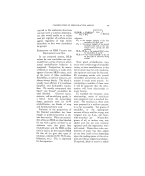
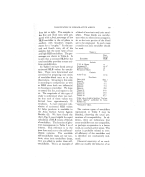
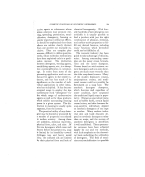
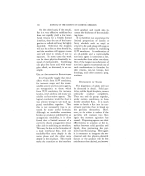
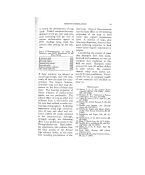
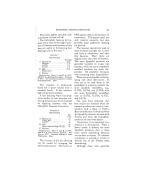
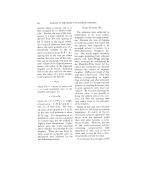
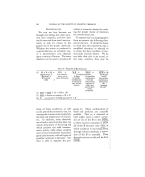
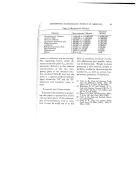
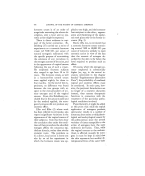
392 JOURNAL OF THE SOCIETY OF COSMETIC CHEMISTS centration plots were linear extra- polation to infinite dilution gave the ideal droplet diameters. As will be seen from the table, these agreed well with the calculated values, and ß indicate the general correctness of TAI• Loe 1 Volume of Oleic •---- Droplet Diameters, •. ----• Acid, Light- Cc. Calc. X-ray Scattering 0.75 363 480 330 1.00 280 300-350 285 1.50 201 185-235 210 2.00 164 125-190 165 3.16 120 100-125 107 the hypothesis. The diameters in the last column were derived as- suming that the paraffin chains of the soap form part of the scattering unit. If, as is possible, they do not, calculations must be made without the monolayer, and 50 A. added to the result. If this is done, the re- sults are: 365, 295, 220, 155, 128 A., also in good agreement with the calculated values. If the two sets of experimental values are used to derive the thickness of the mono- layer, a value of 22 A. is obtained. Of course, the fa•t that the lowest concentration that could be investi- gated was about 10 per cent lays the accuracy of the extrapolation open to criticism, but it seems to be justi- fied by the results. We have also examined the system benzene - water - cetyltrime thylam- monium bromide-chloroform, which forms dispersions completely anal- ogous to the others. However, interpretation of the results must be made on a different basis, be- cause the area occupied per CTAB molecule could not be determined a priori. Again, x-ray and light- scattering results agreed, and in this case it proved possible to carry light-scattering measurements down to a concentration of 6 per cent. It will be seen that the area per CTAB molecule is found from the light-scattering results to be 3545 A.2, which is not much more than the area per molecule in a close- packed monolayer of CTAB (28-30 A?). This indicates that the area available for the chloroform is not more than about 18 A.2 The chloroform will alter the hydro- phobic-hydrophilic balance of the oil phase, and must be associated in some way with the positively charged nitrogen atoms of the soap. TASLE 2 Light- Area per Wt. of Scattering X-ray CTAB CTAB, Diameter, Spacing, Mole- Gm. A. A. cule, A? 1.50 320 369 45 2.25 280 Ca. 270 35 3.00 200 ... 40 REFERENCES (1) Schulman, J. H., and Rideal, E. K., _Proc. Roy. Soc., 122B, 29, 46 (1937). (2) Schu[man, J. H., and Stenhagen, E., Ibid., 126B, 356 (1938). (3) Marsden, J., and Schulman, J. H., Trans. Faraday Soc., 34, 748 (1938). (4) Cockbain, E.G., and Schulman, J. H., Ibid., 35, 1 (1938). (5) Schulman, J. H., and Hughes, A. H., Blochem. 7., 29, 1236, 1243 (1935). (6) Schulman, J. H., and Matalon, R., Faraday Sot., 43, 479 (1947)iH" (7) Matalon, R.,
Trans. and Schulman, J. ., Faraday Soc. Discussion "Lipoprotexns 6, 27 (1949). (8) Dory, P., and Schulman, J. H., fbid. 21. (9) Elkes, J. J., Frazer, A. C., Schulman,
Purchased for the exclusive use of nofirst nolast (unknown)
From: SCC Media Library & Resource Center (library.scconline.org)