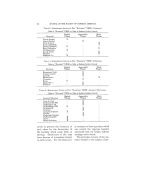
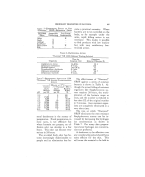
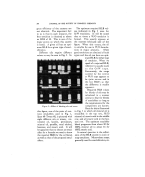
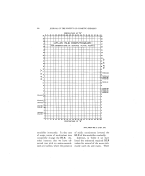
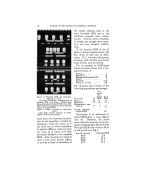
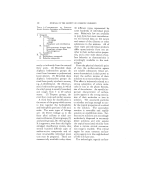
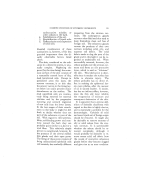
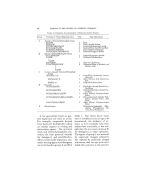
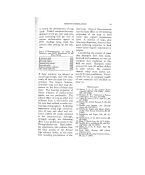
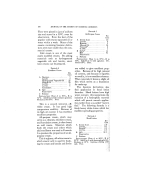
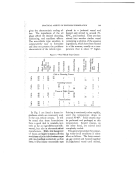
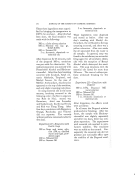
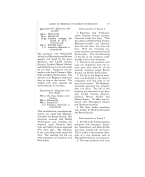
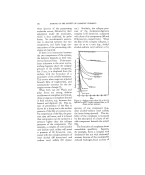
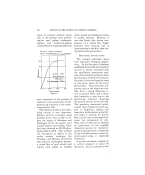
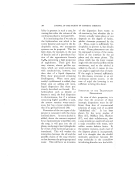
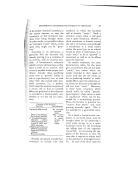
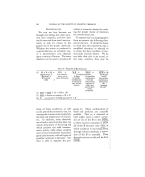
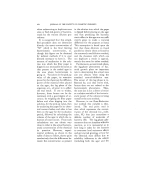
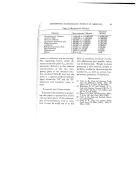
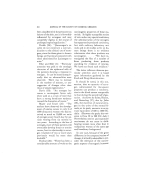
the proper chemical is present, in correct amount, to stop the •ccurrence of the untoward redc- ons from being brought about. In other words, it is possible to have an "antiseptic cream" which, at the same time, might not be "germ- free." :. • According to its derivation, a ß germicide kills the bacterial cell, thereby putting it in a condition of •o activity, with no recovery pos- :sible. A bacteriostatic substance inhibits certain cell functions so that there is little or no activity, with •)?!:? recovery possible under proper con- !?!?!!:ditions. Usually these qualifying i.!/2•:i::" i: ,, ,, . . i •%:.:• terms refer to growth (either m :i•i)ii:::i•::isize or reproduction), but as used :•i!?i!today they also include other met- ? ::.abolic processes, i.e., a product • which stops the enzyme formation of 5(? a certain cell so that no harmful 'i• 3:)i': effects are produced in the substrate :i!i}?.:is considered a bacteriostatic one, ?!ii:?' whether or not the cell can repro- '? duce. i'::'}: i: i Location or the Activity The Cell The Substrate germicide kills the cell. An antiseptic prevents sepsls. Stops all metabolism. May consist No recovery possible. or any one "pseudobacteriostatic" or combi- substance inhibits nations of (slows up) cell grow th, these as well as other met- others. abolic processes. bacteriostatic substance inhibi ts (s tops) growth. Stops most all cell me- tabolism. ' Recovery possible. Actually one should consider bac- teriostasis to include cnly that DETERMINING BACTERIOSTATIC POTENCY OF CHEMICALS 395 condition in .which the bacterial cell is entirely "static." Such a situation occurs when a. cell goes into a spore formation, wherein a thick membrane is formed around the cell or its nucleus, and, although it metabolizes to a small extent within the spore (just as an animal would do when it hibernates), it is truly "static" as far as "growth" is concerned, as well as to its effects upon the substrate. As usually employed, the term bacteriostasis refers, for the most part, to conditions that are not truly "static," but rather which are merely retarded in their speed of action such that the net result, as far as producing harmful or unde- sirable effects upon the substrate, or on a host, are the same as though the cell was truly "static." However, in these latter situations which should really be called "pseudo-' bacteriostasis," there exists a state of equilibrium which can be dis- turbed by a neutralizing process. Thus, the bacteria in question can "recover from death" and start growing normally again. This is not possible for a germicidal situa- tion. As a result a bacteriostatic con- dition, in its broad sense, may be brought about by (a) producing a truly static set-up, as in a spore formation (curve 2) (b) increasing the killing time of the organism (curve3b) (c) increasing the lag- phase of the bacteria so that the time that it requires to adjust itself to the chemical is prolonged (curve 3a). In each of the three cases the

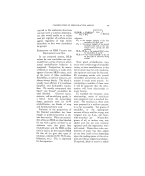
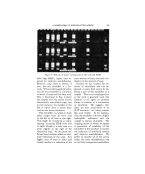
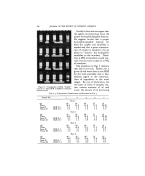
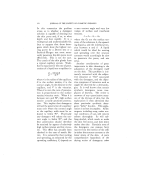
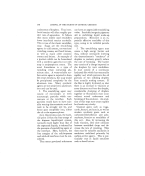
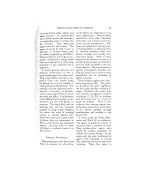
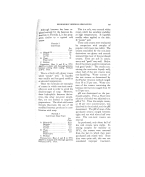
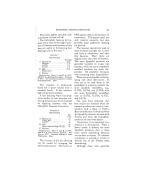
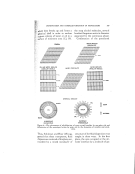
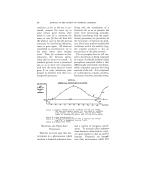
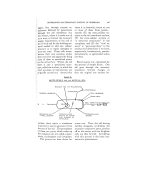
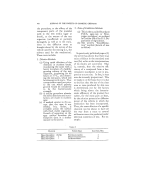
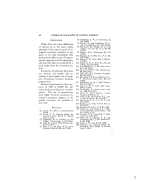
JOURNAL OF THE SOCIETY OF COSMETIC CHEMISTS condition, as far as the net is con- cerned, remains the same up to some certain point (time), after which in case (a) it continues the same, in case (b) the cell then dies off, while in case (c) the cell, having overcome its interfering influences, starts to grow again. All three are considered as bacteriostatic up to the point where these changes occur. Then (a) continues as bac- teriostatic, (b) becomes germi- cidal, and (c) returns to normal. A standard growth curve is presented also so as to show the comparison with how the same bacteria would grow if no toxic substances were present to interfere with their nor- mal growth processes. fering with the metabolism of a bacterial cell so as to prevent the latter from functioning normally. Besides interfering with the repro- ductory processes, the prevention of the formation of chemical by-prod- ucts which may produce undesirable conditions within the medium (e.g., the cosmetic product) is also an end product of this phenomenon. For our purpose here we will con- sider a bacterium as being composed of a mass of colloidal material called protoplasm contained within a thin differentially permeable membrane, which substance contains the living material of the cell. It is comprised of carbohydrates, lipolds, proteins, hormones, vitamins, enzymes, water, CHART GROWTH AN0 BACTERIOSTASIS CURVES CURVE I = NORMAL "GRowTH CURVE", SHOWING (A) THE LAG PHASE r (8) PosITIVE GROWTH PHASE r (C) LOG PHASE OF ACCELER- ATE0 GROWTH• (D) RESTING PHASE r (g) LOG DECLINING PHASE OF ACCELERATED OEATH• AND (F) THE DEATH PHASE, CURVE 2 = TRUE I•ACTIrRIOSTASIS, CURVE • .- IIpSEUDO-I•ACTERIOSTASI.5"' ("A"' = OELAyL O LAG PHASE) AN0 ("l•" = INCREASED KILLING CURVE 4 = GERMICIOAL CURVE, Bac'rERza A•TD THEZR LZ•E PROCESSES Thus far we have seen that bac- teriostasis is a phenomenon which involves a chemical substance inter- and a variety of inorganic constit- uents. To maintain their existence these bacteria utilize food in a man- ner quite similar to that as used by humans. Chemicals are brought into their environment which they
Purchased for the exclusive use of nofirst nolast (unknown)
From: SCC Media Library & Resource Center (library.scconline.org)