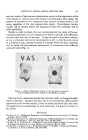
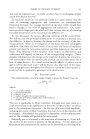
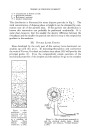
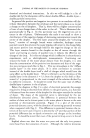
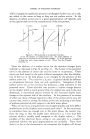
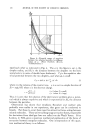
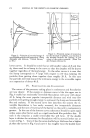
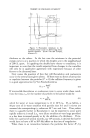
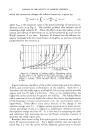
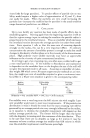
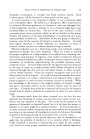
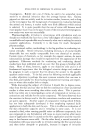
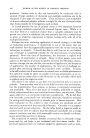
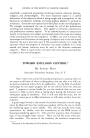
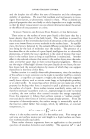
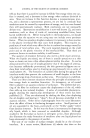
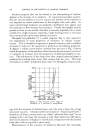
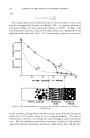
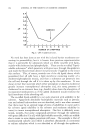
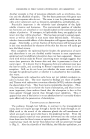
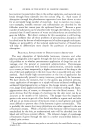
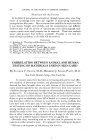
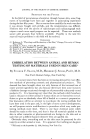
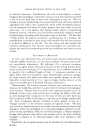
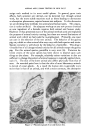
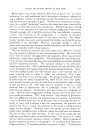
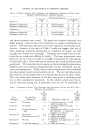
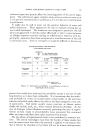
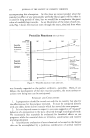
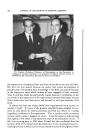
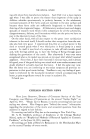
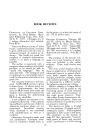
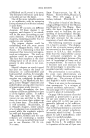
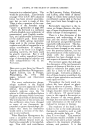
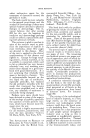
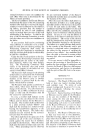
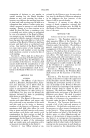
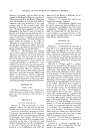
172 JOURNAL OF THE SOCIETY OF COSMETIC CHEMISTS •ooj ß __ o .... -50 Figure 5.--Variation of potential energy of two colloidal particles with separation. (From Alexander and Johnson, "Colloid Science," p. 116.) Figure &--Potential energy of interaction for two identical oil globules, as a function of the distance between the surfaces, at low values of the surface potential. (From Van den Tempel, reference 3.) lower curves. It should be noted that at still smaller values of Z and thus •b0, there need be no hump in the curve so that the droplets will be drawn together regardless of thermal energy. In the other curves it is seen that the hump corresponds to //large with respect to kT thus keeping the particles from getting closer together than roughly 20 •. In this case the particles will tend toward the minimum energy in the accessible region at a separation of about 40 fk. IV. FLOCCULATION AND COALESCENCE The nature of the processes taking place in coalescence and fiocculation are now clearer. If the energy rs. distance curve is like the upper one in Fig. 6 stable but moderately reversible fiocculation will occur with about 45 A. being the most popular interparticle distance and with very few particles ever getting enough energy to surmount the hump and irreversibly fioc and coalesce. If the second curve best describes the system the re- versible fiocculation is less easily reversed, the interparticle distances smaller, and the rate of traversal of the barrier on the path to coalescence is greater. In the case of the bottom curve coalescence should be quite rapid unless some other factor such as a rigid interfacial film prohibits this. If such is the situation a stable irreversible fioc will form. If the double layer is thicker the minimum for fiocculation will be moved further out as is seen in Fig. 7. Curve 2 has the same double layer thickness but a higher •0 than the curves in Fig. 6 and curve 1 has roughly twice the double layer

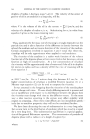
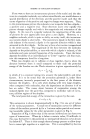
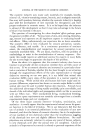
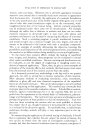
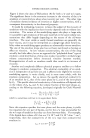
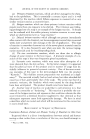
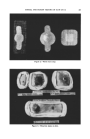
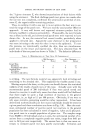
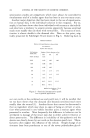
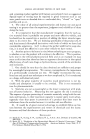
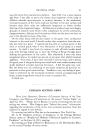
THEORY OF EMULSION STABILITY 173 •T I00 50 Figure 7.--Secondary minimum in the potential energy curve at fairly large inter- particle distance. (From Van den Tempel, reference 3.) thickness as the others. In the last case the minimum in the potential energy curve is at a position in which the droplets are in the neighborhood of 200 A. apart. In applying the double layer theory to emulsions, it is important to note that the results expected from changes in the variables will only be in qualitative agreement with experiment because of other factors to be discussed later. Next comes the question of how fast will flocculation and coalescence occur in the several cases given above. If there were no forces of attraction or repulsion between the particles (F = 0) the collision frequency is given to a good approximation by Von Smoluchowski as 8nokT Gv--o - 3r/ (10) If irreversible fiocculation or coalescence were to occur under these condi- tions the time, tl/2, for the number of particles to be halved would be tl/• - 4kT no which for water at room temperature is (2 X 10n)/n0. If, as before, a 10 per cent oil in water emulsion with particle sizes 0.1 and 1 micron are assumed the corresponding t•-2 values are 10 -8 sec. and 1 sec. Thus, unless there is a goodly barrier to fiocculation it can be expected to occur quite rapidly unless n0 is small (i.e., very dilute emulsion or very large particles) or rt has been increased greatly as by the addition of a thickener. If sta- bility for a period of several months, say 10 7 seconds, is desired the barrier would have to have a 10 7 to 10 •ø fold effect on the time of coagulation. When there is an interaction between the particles the factor //?, by
Purchased for the exclusive use of nofirst nolast (unknown)
From: SCC Media Library & Resource Center (library.scconline.org)