162 JOURNAL OF THE SOCIETY OF COSMETIC CHEMISTS method, the epidermis was first pulverized or homogenized and then incubated with the topical agent. This method has the disadvantage that in a finely ground state the epidermis is much more vulnerable to chemical attacks than when its cellular organization is not disrupted. Therefore, the results obtained with this method must be checked with the more cumber- some second method. In the latter procedure, pieces of skin are treated under standard conditions with the ointments to be investigated and then incubated for several hours at 35 to 37øC. At the end of this period the skin is wiped free of ointments, the epidermis is separated from the corium, dried, defatted, and pulverized or homogenized. Chemical determinations are then carried out in the epidermal powders or homogenates. This method rather closely simulates in vivo conditions of exposure. With both types of methods we have studied the concentration of--SH groups in the epidermis. Sulfhydryl groups react with a variety of chemi- cal substances, are influenced by a number of physical agents, and can com- bine with topical allergens. Preliminary results, showing the effects of sul- fur, ammoniated mercury, salicylic acid, etc., agreed with those previously obtained with conventional methods. A new method for the in vitro study of penetration of topical agents through human skin also utilizes strips of skin from surgical or autopsy ma- terial. The substances to be tested are incorporated into ointment bases and these ointments, as well as the ointment bases alone, are rubbed into the skin under standard conditions. The pieces of skin are then incubated at 35øC. for several hours. The surface is thoroughly wiped free of oint- ments and the epidermis is removed. On the surface of the denuded corium, suitable spot tests are carried out to check whether the substance, whose absorption is being studied, has penetrated through the epidermal barrier. (This procedure is discussed in detail in a later publication.) This new method of ours has several advantages. It utilizes human skin and thus the results have a more direct bearing on clinical practice than have observations made on animals. The procedure is simple and well suited for serial studies. Moreover, it is the only experimental method for the study of percutaneous penetration of toxic substances in man. It is also the only method which permits correlation between the rate or extent of percutaneous penetration and chemical changes brought about in the epidermis. The main disadvantage of the method is the use of dead skin. Cellular death may affect the epidermal barrier which prevents the absorption of many substances. Against this valid objection the following facts may be brought up: (1) In our experiments, absorption of salicylic acid followed the same pattern in dead skin as has previously been described in living skin. (2) Dead skin is impermeable to vitamin A in the author's opinion, this substance does not penetrate through living skin either. (3) While the

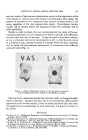
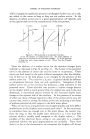
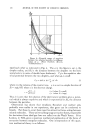
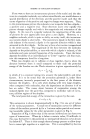
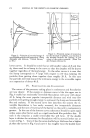
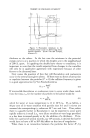
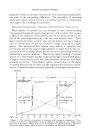
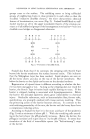
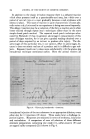
EFFECTS OF TOPICAL AGENTS UPON THE SKIN 163 rate and extent of percutaneous penetration varies in skin specimens which were excised at various times (few hours to several days) after death, the pattern of absorption of a substance from various ointment bases is the same, regardless of the time elapsed after death. Nevertheless, further studies will be needed, before the adequacy of this new technique will be fully established. Similar to older methods, this new method permits the study of the per- cutaneous penetration of any substance for which a suitable and sufficiently sensitive spot test may be devised. It may be used to determine whether or not a substance penetrates the epidermis at all to find the derivatives of a substance (e.g., among the salts of a metal) which are best absorbed and to study the percutaneous penetration of substances from different ointment bases (Fig. 1). VA S. LAN. , i! ' ......... '%.... • .. --' •.:.•..: ....... . ..... •..... Figure 1.--Ferric chloride spot testing of the percutaneous penetra- tion of salicylic acid from vaseline (1.) and lanolin (r.) bases. The new in vitro techniques permit the objective study of changes brought about in the skin. Because the skin, due to its accessibility, offers unique opportunities for in vitro studies, it may be safely predicted that the scope and application in dermatology of such techniques will greatly increase in the future. REFERENCES Van Scott, E. J., "Mechanical Separation of the Epidermis from the Corium," 5•. Investig. DermatoL, 18, 377 (1952). Flesch, P., and Sarahove, A., "Method for Separation of Human Epidermis into Cellular and Keratinous Components," Proc. Soc. Exp. BioL Med., 85, 483 (1954). Van Scott, E. J., and Flesch, P., "Sulfhydryl Groups and Disulfide Linkages in Normal and Pathological Keratinization,"/Irch. DermatoL and SyphiloL, 70, 141 (1954). Van Scott, E. J., and Lyon, J. B., "A Chemical Measure of the Effect of Soaps and Detergents on the Skin," )e. Investig. DermatoL, 21, 199 (1953).
Purchased for the exclusive use of nofirst nolast (unknown)
From: SCC Media Library & Resource Center (library.scconline.org)