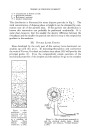
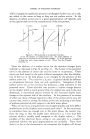
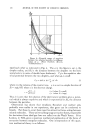
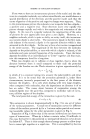
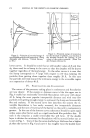
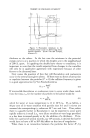
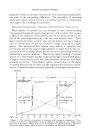
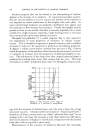
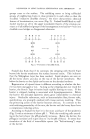
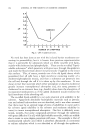
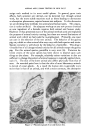
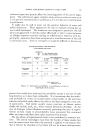
THE MECHANISM OF PERCUTANEOUS PENETRATION AND ABSORPTION* By STEPHEN ROTHMAN, M.D. Section of Dermatology, Department of Medicine, University of Chicago, Chicago 37, Ill. IN THIS DISCUSSION the term "percutaneous absorption" will be used as meaning the penetration of material through the skin into the blood stream. To indicate penetration from the outside into the skin but not beyond it, I shall use the term penetration. There are two main pathways for penetration into and absorption through the mammalian skin: the transepidermal and the transfollicular routes (1) (Fig. 1). * Presented at the December 9, 1954, Meeting, New York City. TRANSFOLLICULAR ROUTE TRANSEPIDERMAL ROUTE ,-.HORNY LAYER -EPIDERMAL BARRIER -MALPIGH'IAN LAYER GORIUM Fig. 1.--Routes of percutaneous absorption. 193

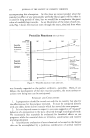
194 JOURNAL OF THE SOCIETY OF COSMETIC CHEMISTS TRANSEPIDERMAL ABSORPTION In the early 1920's the German physiologist, Herrmann Rein, demon- strated in the epidermis of human skin the presence of a rather superficially situated barrier for water, electrolytes and possibly for water-soluble non- electrolytes such as glucose. On the basis of electrophysiological experi- ments and experiments with dyes he came to the following conclusions: (1) this membrane lies at the boundary of cornified and noncornified epi- dermis, somewhere in the region of the stratum lucidum (2) it is a single cell layer with negative electric charge and is impermeable for anions and (3) cations tend to move inward across the membrane but will be held by electrostatic forces whereby easily demonstrable diffusion potentials develop. Long ago I suggested that this barrier has the characteristics of an electric double layer, the outer horny layer having a strongly acid, and the inner epidermal layer, a slightly alkaline reaction while the proteins of the inter- posed membrane layer are at their isoelectric point. The lipid film of the skin surface may delay percutaneous absorption only to a minimal degree because its constituents are miscible with water and permit the penetration of both water- and fat-soluble materials. Similarly, the loose part of the horny layer (stratum disjunctium) cannot be regarded as a true barrier for anything because it has large pores and is permeated even by gross molecule aggregates. However, a great number of substances are held below the stratum disjunctium just at the site of Rein's membrane. The best evidence that this "superficial barrier" exists and is somewhere at the lower end of the horny layer has been recently brought forward by Szakall (2, 3) when he successfully isolated at that level a fine membrane in human skin which showed quite specific properties. lie took advantage of Wolf's (4) Scotch Tape method which makes it possible to strip off the horny layer in extremely thin subsequent sheets in living subjects (5). In the description of Szakall these sheets consist of fairly coherent horny cells but if the groups of cells are treated with fat solvents they fall apart into tiny grains, "like sand." After an average of eight Scotch Tape appli- cations, the lower end of the horny layer is reached. Below it a fine, thin membrane can be separated which has a tough, apparently fibrous struc- ture. It is snow-white and rather transparent. The fibrils which form a fine network correspond with the fine folding lines of the surface. The membrane has a high tensile strength and is elastic. It remains cohere•t after treatment with fat solvents. The membrahe is rich in histochemically demonstrable sulfhydryl groups indicating that it is identical with Giroud's keratogenous zone. In this zone, just above the living cells of the Malpighian layer, apparently there is an unfolding of coiled polypeptide chains whereby hidden sulfhydryl
Purchased for the exclusive use of nofirst nolast (unknown)
From: SCC Media Library & Resource Center (library.scconline.org)