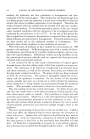
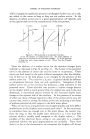
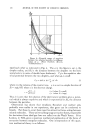
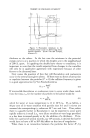
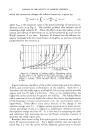
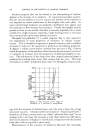
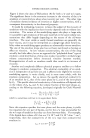
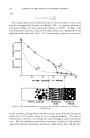
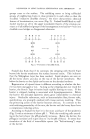
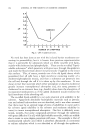
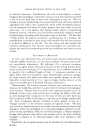
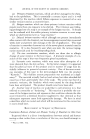
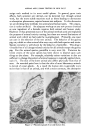
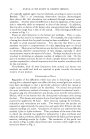
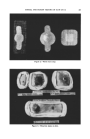
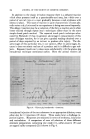
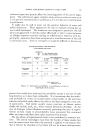
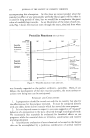
MECHANISM OF PERCUTANEOUS PENETRATION AND ABSORPTION 195 groups come to the surface. The unfolding seems to bring sulfhydryl groups of neighboring chains in close proximity to each other so that the so-called "oxidative disulfide closure," the most characteristic chemical feature of keratinization, can occur (Fig. 2). Indeed Szakhll finds no sulf- hydryl reaction at all in the upper noncoherent layers of the stratum cor- neum as if all sulfhydryl groups of the keratogenous zone had been built into disulfide cross bridges or disappeared otherwise. 0 H H OH --C--N--C--C--N--- HCH SH StI I HCH o Htt 0 H 0 H II 0 H II I II I --C--N--C--C--N-- tICI{ S S ItCH o I[ H o H Fig. 2.--Formation of disulfide bond. Szakall also finds that if he continues the stripping with Scotch Tape beyond the barrier membrane the surface becomes moist. This indicates that the Malpighian layer has been reached. Lipid droplets are seen on all the horny sheets and also on the top of the barrier membrane. But below the barrier no free lipids can be seen on the denuded surfaces. Regeneration of injured tissue is different according to whether the bar- rier has been damaged or not. As long as the stripping does not reach the barrier, the Scotch Tape irritation heals rapidly leaving no trace. If the barrier is stripped, healing is associated with hyperpigmentadon. Below the barrier the denuded epidermis shows great vulnerability to chemical injury. Oxidizable substances, such as leucomethylen blue, ferrous salts, quinhydrone, are promptly oxidized with tissue necrosis resulting. Thus the protecting action of the barrier becomes obvious. In contrast to the avid oxidizing potentiality of the fete, the barrier and the horny layer have a conspicuous reducing action. According to Szakall the barrier is the most acid layer of the epidermis (Fig. 3) with a minimum of about pH 5. With the cornifying cells ascend- ing in the horny layer the pH gradually increases. Below the barrier, the pH again increases until it gets close to 7.4, the pH of blood. It seems that circulation of the fiu!d of intercellular spaces (the "Saftstr6mung") stops at the barrier.

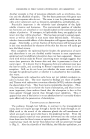
196 JOURNAL OF THE SOCIETY OF COSMETIC CHEMISTS pH 6,4 6.2 5.8 5.6 5.4 5.0 4.$ 0 1 2 3 4 5 6 7 8 9 10 NUMBER OF STRIPPINGS Fig. 3.--pH of epidermal layers. No work has been done as yet with the isolated barrier membrane con- cerning its permeability, but it is known from previous experimentation that it is permeable for substances which are freely miscible with lipids, mainly with cholesterol and phospholipids. These are the so-called "lipold- soluble substances" which penetrate with great ease through the epidermis and reach the blood stream almost instantaneously if applied to the intact skin surface. This, of course, reminds one of the old lipold theory which postulated that all cells have a lipid membrane consisting mainly of a cholesterol-phosphatide mosaic, and that a substance can penetrate into the cell and through the cell if it is taken up by this membrane. It was shown in fact that materials which either precipitate or dissolve cholesterol greatly increase transepidermal absorption and, vice versa, presence of cholesterol in an ointment base (e.g., lanolin) slows down the absorption of incorporated medicaments as if the added cholesterol would reinforce the lipid membrane of the absorbing cell. The so-called lipold-solubility is not quite identical with solubility in fat solvents. Apparently absolutely hydrophobic materials such as petrola- rum and related hydrocarbons are not absorbed, and it was often assumed that there must be an optimal range of ratio of solubilities in water and in fat solvents (good solubility in fat solvents and moderate solubility in water) to insure transepidermal absorption. One fact is definitely ascer- tained, namely, that polar compounds penetrate through the epidermis with great difficulty if at all, while lipid-soluble materials, which are soluble also in water to some degree, penetrate with ease. One example is that of nondissociated salicylic acid which is absorbed abundantly as contrasted to sodium salicylate which is not absorbed at all through the epidermis.
Purchased for the exclusive use of nofirst nolast (unknown)
From: SCC Media Library & Resource Center (library.scconline.org)