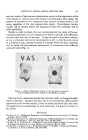
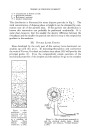
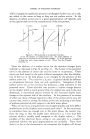
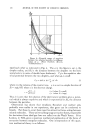
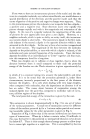
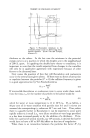
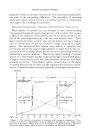
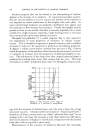
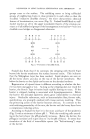
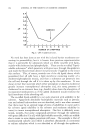
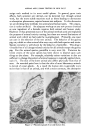
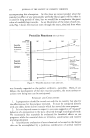
MECHANISM OF PER CUTANEOUS PENETRATION AND ABSORPTION 197 Another example is that of poisonous alkaloids such as strychnine, nico- tine and the alkaloids of opium. The free bases penetrate with great ease while their aqueous salts do not. The same is true for pharmacodynami- cally active substances such as histamine, epinephrine, acetylcholine, etc. Practically important is the relatively easy absorption of the lipid- soluble vitamins and hormones. The controversial question of whether sex hormones are absorbed or not should indeed not be controversial and subject of polemics. If estrogens, in lipid-soluble form, are applied to the intact skin they will be absorbed. This has been proved in animal experi- ments as well as clinically in man many times beyond doubt. Of course, whether demonstrable effects of this absorption will appear depends on the dosage. Admittedly, a certain fraction of the hormone will be bound and in due time metabolized by elements of the skin but the rest will easily get into the blood stream. How completely the epidermal barrier hinders the penetration of water and electrolytes is not yet clarified mainly because in most experiments epidermal and transfollicular absorption have not been separated. Recent work with tritium oxide by Pinson concerning water strongly suggests that water does penetrate the human skin and that it penetrates in form of water vapor. It is known that in the gaseous form any substance may pass the barrier easily, and according to Pinson's experiments water is not an exception. Still, we do not know yet whether the water actually passes through the epidermal barrier or whether it is absorbed by the transfollic- ular route. Experiments with radioactive salts have not yet yielded conclusive re- suits in human skin. The most impressive findings are those of Loefiqer and Thomas with radioactive strontium chloride (Sr89C12) solution through the shaved skin of rats. They found quite considerable absorption. How- ever, here again we do not know the route of absorption, and what is even more important, these authors found that the absorption is four to five times greater through injured than through intact epidermis. Thus it appears that even if the barrier is not an absolute barrier it certainly hinders quite effectively the penetration of electrolytes. TRANSFOLLtCULAR ABSORPTION The pathway through hair follicles, in contrast to the transepidermal route, does not require passage through a barrier but leads through an air- filled canal to the mouth of the sebaceous glands the cell membranes of which are much more penetrable than is the epidermal barrier. From the sebaceous glands materials may penetrate downward into the corium and from there into the blood stream or upward into the epidermis. There the material may reach the barrier from below but will not penetrate through it (Fig. 1). Also the sidewalls of the follicles, the follicular epithelium, are

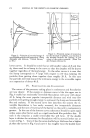
198 JOURNAL OF THE SOCIE•IY OF COSMETIC CHEMISTS less resistant to penetration than is the surface epidermis, and material may break through these sidewalls into the corium (Fig. 1). Such routes of absorption through the pilosebaceous apparatus have been shown to exist for an extremely large number of materials. Just to mention two impor- tant examples, metallic mercury and sulfonamides are absorbed by the follicular route but cannot pass the epidermal barrier.* Because a great number of substances can be absorbed only through the follicles, it has been assumed that if small amounts of water and electrolytes are absorbed this goes via follicles. But direct evidence for this assumption is still lacking. I am confident that all these problems of percutaneous absorption will be solved soon by the use ofradioisotopes and ofradioautograph techniques. Studies on permeability of the isolated epidermal barrier of Szakall also will help to differentiate more clearly the pathways of percutaneous absorption. P}t^cTm^I, APP•,IC^T•oss oF PE}mux^sEous ABso}tPX•OS The easy absorption of lipid-soluble hormones, vitamins and other pharmacologically active agents through the skin has often brought up the old problem as to whether percutaneous application of drugs has any ad- vantage over the peroral or parenteral administration. Percutaneous application as contrasted with systemic administration, certainly enables us to create, at least temporarily, a higher concentration of the drug at the site of the local application in the skin tissue than is possible with any other method. Such locally high concentrations at the site of application has been unequivocally proved in many instances, particularly for hormones. We have shown, for instance, that in the guinea pig unilateral percuta- neous application of estrogens to a nipple will cause unilateral swelling and unilateral hyperpigmentation as long as the dosage remains small. How- ever, larger doses applied unilaterally result in bilateral swelling and hyper- pigmentation due, of course, to absorption into the blood stream. It is quite obvious that the dosage of a hormone via the skin never can be as accurate as by mouth or by injection. The danger that the impatient patient who wants to get rid of her facial wrinkles in a great rush and who will put on an excess amount of hormone cream is much greater and much more difficult to prevent than if the hormone is given systemically. This is probably the reason that many physicians are rather opposed to the use of hormone creams. While a fraction of the hormone will be bound and metabolized by the skin, an undetermined ratio will be absorbed into the blood and will have systemic effects. The inherent danger of overdosage of hormones if given through the skin in a rather uncontrolled fashion is indeed quite serious. * Even lipid-soluble substances may prefer or use exclusively the transfollicular route, e.g., vitamin A (6).
Purchased for the exclusive use of nofirst nolast (unknown)
From: SCC Media Library & Resource Center (library.scconline.org)