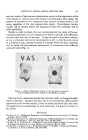
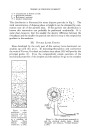
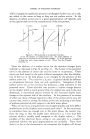
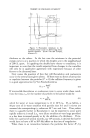
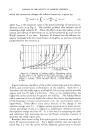
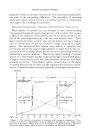
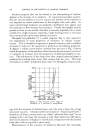
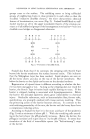
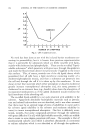
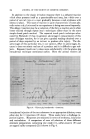
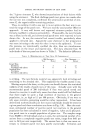
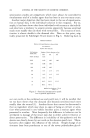
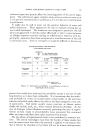
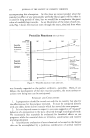
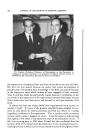
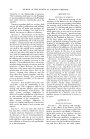
206 JOURNAL OF 'IHE SOCIETY OF COSMETIC CHEMISTS In addition to the classic irritation response there is a delayed reaction which often presents itself as a questionable erythema, but which over a period of several days or a week gradually becomes a real erythema with edema (2 plus). This type of reaction is quite characteristic of some phe- nolic resins and plastics and in our experience is being seen more frequently. This delayed reaction may be a variation of the fatigue reaction and is often better elicited through repeat insu}t techniques rather than by the more simple closed patch method. The repeated insult patch technique advo- cated by Shelanski (7) has its greatest advantage in measurement of this type of fatigue reaction, for it can give a graded reading obtained over a period of days required by an irritant to produce skin injury. The dis- advantages of this particular test, in our opinion, offset its advantages, be- cause it does not mimic real use of a product and it is difficult to get sub- jects. Repeated insult can be done more satisfactorily with the giunea pig intradermal technique mentioned earlier. Here the animal receives an Figure 4.--Guinea pi g intra'•ier'miis--ointm•nt•. intradermal injection of the test substance in an appropriate dilution, every other day for 10 injections (21 days). Three weeks later a challenge in- jection is given. Responses are measured in terms of erythema, induration and vesiculation. A comparison of corn oil solutions of three different ointment preparations containing zinc oxide (X), sulfur-resorcin (Y) and an organic sulfur compound (Z) is shown in Fig. 4.

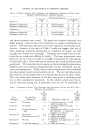
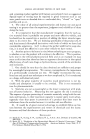
ANIMAL AND HUMAN TESTING IN SKIN CARE 207 Returning to the routine Schwartz-Peck human patch test--its stand- ardization is so well established that if the proper technique is adhered to and a sufficient number of individuals tested, the predictions of irritation and sensitization potentials are good. Neither test is satisfactory to deter- mine the so-called "hardening" reaction, but these have been observed by all of us on both skin and mucus membranes. Perhaps the most striking instance in our experience has been the induced toughening of gum tissue through massage with a dentifrice material that was definitely a primary irritant. On initial use of this preparation in a number of instances an erosion or superficial ulceration of the gums occurred. The inflam- matory reaction was severe and it seemed that further use of dentifrice was inadvisable if not impossible. However, amazingly enough in each in- stance with continued use the gums healed completely and the reaction did not again manifest itself in these subjects. The true sensitivity reactions have been much more difficult to predict than the primary irritations we have discussed previously. One reason for this is that the animal will apparently only respond to the strong sensitizer while man is much more susceptible. The techniques for measuring sensi- tivity reactions are essentially expansions and modifications of those methods used for measuring irritation. The standard method is the afore-men- tioned patch skin test. This is the standard human skin test and when done correctlywill give very comparable results between similar materials. Some- times the standard patch test will indicate that a test material rnay be more irritating than it really is under use conditions. This is par- ticularly true when one is testing soaps. If a group of well-known brands of toilet soaps are tested comparatively, there will be very close agree- ment between brands, but the test will show an inordinately large number of skin reactions to all. This high reaction incidence is due to a mild chemical burn or dehydration due to prolonged contact of the skin with the soap solution. It illustrates why the routine test overgrades at times. Here we have exaggerated readings because the closed patch test is an artificial condition. The "soap reaction" may become so prominent that true differences between test materials may be masked. Incidentally a test on distilled water was run at the same time as the soaps because re- cently in court trial involving a hair dye preparation, the question was asked of one of us to "name one substance in the world to which someone might not be allergic." Distilled water was named and the defense at- torney sited a published case in Detroit where that had been the offender. You see we had a few mild reactions. In the case of the soaps, the test itself was more drastic than use would have been. The reverse, i.e., where the test failed to predict reactions is shown in Table 1. Here the grades of positive response are shown in two groups: (1) erythema with induration (2 plus and over), (2) erythema without induration (1 plus). Three lotions
Purchased for the exclusive use of nofirst nolast (unknown)
From: SCC Media Library & Resource Center (library.scconline.org)