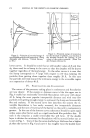
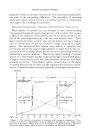
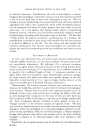
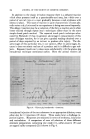
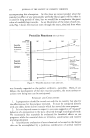
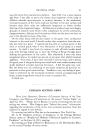
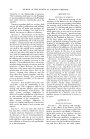
212 JOURNAL OF THE SOCIETY OF COSMETIC CHEMISTS accompanying this absorption. At this time we cannot predict what the cumulative effect of any presumably perfectly bland agent will be when it is used for long periods of time, but we would like to emphasize the great value of carefully kept records. As an illustration of the value of such rec- ords, Fig. 7 shows the reaction rates through the years, obtained from what Penicillin Reactions (Annual Rates) I]O rno•dt s) billions 1947 1948 1949 1950 Oxford units 200 000 Penicillin J J -• "• 177 000 Production • so ooo .•......_...,•.--- -'-" I00 000 U.S. Certd•calion Es•ma'• 50 000 4 ] 000 •000 m: n• • g•th n Urals cases I •3s • Tofal (All Ty•s) RepoSed t 20 Dermahhs Reactions Con tact • as Unspecdted Cass R•por• , Urticaria ß s Serum Sickness •o • Urticaria 0 Serum •ickn*ss ...... Figure 7.--Penicillin reactions types and rates. was formerly regarded as the perfect antibiotic--penicillin. Here, if one follows the development of the skin reaction pattern, the more serious re- actions now being seen can be anticipated. SUMMARY AND CONCLUSIONS 1. A preparation should be tested not only for its toxicity but also for the effectiveness for the purpose intended. It must be compared directly with any older, better-known remedy which has served the same purpose. 2. It is not beyond reason to expect to see some suggestion of "do good" behavior of a preparation in the data obtained through toxicological study. We recommend that materials be evaluated for beneficial effects on use programs while the essential data on irritation, sensitization and toxicity are being obtained. 3. A satisfactory evaluation of most chemicals to be used on the human skin can be accomplished by a judicious combination of animal toxicity

ANIMAL AND HUMAN TESTING IN SKIN CARE 213 and screening studies together with human use and patch tests as suggested. Special types of testing may be required in given instances such as eye tests, patch tests on abraded skin vs. unabraded skin, "closed" or "open" patches and so on. 4. The value of all animal experimentation and human use and patch testing is no greater than the experience, judgment and reliability of those doing the tests. 5. It is imperative that the manufacturer recognizes that for each ac- tive material there is probably one proper and most effective vehicle, and he should not be coerced into a position of adding the latest miracle ingre- dient to his entire line. We are thinking specifically of the products G-11 and fractionated chlorophyll derivatives with both of which we have had considerable experience. G-11 is almost the perfect additive for soap solu- tion, it is much less effective in any other vehicle we have tested. 6. Another point to be borne in mind when embarking on a test program, is whether or not the product will continue to be effective. This is particu- larly true in the ethical pharmaceutical field and as an example we may state at this time that there has been an apparent diminution in the topical effectiveness of such new drugs as hydrocortisone, several of the antibiotics and isoniazide. 7. One should be sure that the data obtained are sufficient and proper for meaningful interpretation. We cannot overemphasize the importance of a professionally conducted use test. We highly recommend the com- bined use and patch test technique as we have employed it, if it is conducted on a large, well-observed panel. 8. With the great majority of cosmetics much penetration is not de- sirable and absorption is usually to be avoided. This is not necessarily true for pharmaceuticals. 9. Statistics are not as meaningful as the direct comparison with prod- ucts of known behavior. Measuring the new against the old is essential. The expense of proper pretesting of cosmetic materials, using both the ani- mals and humans, to their maximum capacity is money spent more advan- tageously than that spent in promotion of a product that later must be withdrawn from the market because it is neither safe nor effective. 10. It would be of great mutual advantage to establish follow-up liai- sons between the experimenters and testers of chemicals and the manu- facturers and final distributors of those products. BIBLIOGRAPHY (1) Traub, E. F., Tusing, T. W., and Spoor, H. J., A.M.A. Arch. Dermatol. & Syphilol., 69, 399 (1954). (2) Spoor, H. J., "Prediction of the Dermatologic Hazard of Chemical Contactants," Med. Asp. of Workmen's Compensation Symposium. American Academy Comp. Med., N.Y. Post Graduate Medical School, May 3, 1954.
Purchased for the exclusive use of nofirst nolast (unknown)
From: SCC Media Library & Resource Center (library.scconline.org)