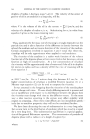
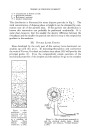
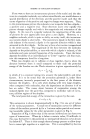
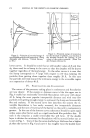
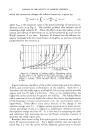
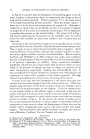
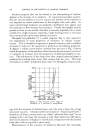
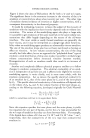
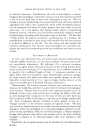
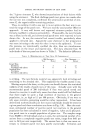
166 JOURNAL OF THE SOCIETY OF COSMETIC CHEMISTS droplets of radius ri having a mass 4/3•-ri3d. The velocity of the center of gravity of oil in an emulsion in a long tube, will be: where F is the volume of the oil in the system = Y•,(4/8)rr•an• and the velocity of a droplet of radius r• is u•. Substituting for u• its value from equation 3 gives as the mass creaming rate: i Thus, qualitatively the mass rate of creaming is strongly dependent on the particle size and is also a function of the difference in density between the oil and the medium and an inverse function of the viscosity of the medium. Certain assumptions involved in equations 3 and 5 mean that these rela- tionships will be only approximate when applied to real emulsions. The viscosity of the emulsion is a rather weak function of the volume fraction (4•) of the disperse phase at low concentration but becomes a strong function at high oil concentration. At a low concentration of oil phase the viscosity will be approximately that of water and if the oil is in droplets 0.1 micron in radius and has a density of 0.8 the rate of creaming will be from equation 3 2-980(10--*)•(0.8 -- 1.0) --5-10 -7 cm./sec. u = 9'0.009 = or 2'10 -8 cm./hr. b'or a 1 micron drop this becomes 0.2 cm.jhr. At higher concentrations of oil phase a modified Einstein equation (1) or a Mooney type equation (2) can be used to compute the viscosity. It was assumed in the foregoing that the viscosity of the outside phase did not change with time. If some slowly diffusing material is present and not at equilibrium with respect to its distribution between the phases then the viscosity may change with time as the diffusion occurs. In the same way a slow reaction occurring in the system may affect stability with respect to creaming. Since these time effects•tvemot instabilities pecu!-• iarly due to emulsion properties they will not be considered further. We have been discussing the rate of sedimentation in a very long tube. Let us now turn to the distribution of emulsion which has stood in a vessel for a very long time. This sedimentation equilibrium is a special applica- tion of the general Boltzmann equation. The concentration of particles of disperse phase with a radius r•-at a height h is given by: ,•, = v, oe-4•rr?(d- d')gh/3kT (6) where

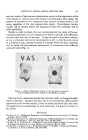
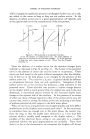
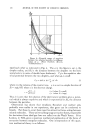
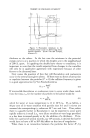
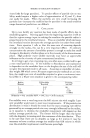
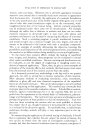
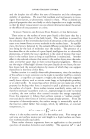
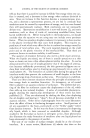
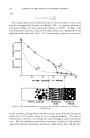
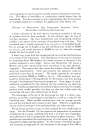
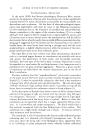
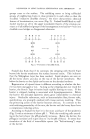
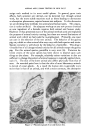
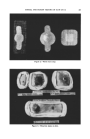
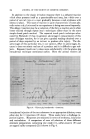
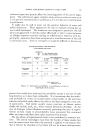
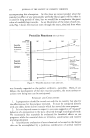
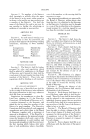
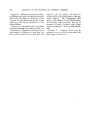
THEORY OF EMULSION STABILITY 167 nc = concentration at bottom of tube g -= gravitation constant k -- Boltzmann's constant T -= absolute temperature This distribution is illustrated for mono disperse particles in Fig. 1. The total concentration of disperse phase at height h can be obtained by sum- mation over all of the particle sizes. If the particle size distribution is known this summation can probably be performed analytically. It is quite clear, however, that the smaller the density difference between the two phases and the smaller the particle size the less steep is the composition gradient in the emulsion. III. DOUBLE LAYER. THEORY Ideas developed by the early part of this century have dominated our analysis up until this point. In discussing flocculation and coalescence the work of Verwey, Overbeek and others since about 1935 will provide the principal guides (3). From the comparatively simple questions of the mechanical properties of the droplets and the medium we go to the complex ß. ß .:.'....'. : ""'" .: "5'":'.".' : o . : ".•: . '." '.:" . • '.r ..' },:'" '. A". '.' ::':'" ß ß .-..•.. ½•.: ...... :': :ø .o • .... ß . Figure 1 .--Dia- grammatic repre- sentation of the dis- tribution of uni- formly sized particles in a gamboge sol (Pertin). (From Wieser, "Colloid Chemistry," p. 202.) Figure 2.--The electrokinetic potential (D and the electrical double layer. (From Alexander and Johnson, "Colloid Science," p. 297.)
Purchased for the exclusive use of nofirst nolast (unknown)
From: SCC Media Library & Resource Center (library.scconline.org)