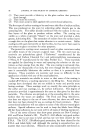
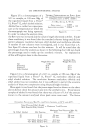
72 JOURNAL OF THE SOCIETY OF COSMETIC CHEMISTS SIZE OF INOCULUM Using 0.1 per cent sorbic acid with 52 per cent G-3720 in Jaag medium adjusted to pH 5.6, varying amounts of a suspension of spores of zfsper- gillus were added. Tubes were shaken and incubated for two weeks. Table 2 shows the plusses noted by visual observation and the weight of dried mycelium alongside. The weight of the mycelium in the tube with the smallest inoculum was taken as unity. All other weights recorded are proportionate to the first. Although there is a significant difference between the top and bottom figures of mycelium weight, they are not of the magnitude expected from the tenfold greater amount of inoculum used. Later tests, repeating the entire experiment, made with 0.2 per cent sorbic acid gave a four plus reading for all. PtSRIT¾ Or No•io•ie It has been suggested that the unreacted fatty acid or free polyol in a nonionic is responsible for the interfering effect previously described. Accordingly, two series of tests were set up to check this possibility. In one set, increasing amounts of free sorbitol 5 to 15 per cent based on the weight of Tween 40, the nonionic used, were introduced into the test medium containing the corresponding nonionic and the preservative. Table 3 shows the effect of the presence of free sorbitol. In the second set, excess oleic acid (the acid most often mentioned as the possible causa- tive agent) was added to the nonionic incorporated in Jaag medium with the preservative. TABLE 3--EvvECT Or EXCESS SORBITOL ON GROWTH OF ASPERGILLUS 5% ++ Poor sporulation 10% ++ Poor sporulation 15% ++ Poor sporulation Control 1 ++++ Poor sporulation Control 2 4- 4- 4-4- Heavy sporulation Control 3 4- 4- 4- Heavy sporulation Control 1--Tween 40 and 10% XS Sorbitol and Jaag medium. Control 2--Tween 40 and Jaag medium. Control 3--Jaag medium. TASLE 4--.[XXG MEDIUM WITH 2 PER CENT NONIONIC AND 0.1 METHYL p-HYDROXYBENZOATE, AND 20/0 NONIONIC Carbowax 1540 4- Oleic Acid 25% Oleic in Tween 80 Tween 40 4- 4- 4- 4- Arlacel 83 Tween 80 4- 4- 4- Myrj 59 + 44 G-3720 4-+++ Span 20 4-+4- PEG 1000 Monolaurate +4-+ OLEIC ACID The effect of excess fatty acid was determined using 2 per cent of fatty acid alone in test medium along with the preservative. Both stearic and oleic acids were previously used in solid Sabouraud medium. Similar concentrations of mineral oil, oleyl alcohol and sodium oleate were used as controls. After months of observation we got no more than trace growth.

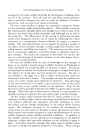
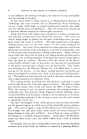
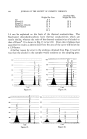
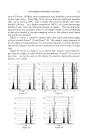
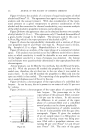
NONIONIC EMULSIFIERS WITH PRESERVATIVES. III 73 Later, using liquid Jaag medium, Arlacel 83, oleic acid alone, a 25 per cent mixture of oleic acid in Tween 80 and Tween 80 alone all in 2 per cent concentration with and without methyl p-hydroxybenzoate, we were unable to find any effect ascribable to excess of free oleic acid or the oleate radical not found with other nonoleate nonionic. Table 4 shows results with the above mentioned materials and 1: 1000 of methyl p-hydroxybenzoate. EFFECT OF INORGANIC MATTER At the outset we used liquid and solid Sabouraud medium adjusted to pH 5.6 after addition of all test materials. Bolle and Mirimanoff (8) however, used a liquid, synthetic, peptone-free Jaag medium described in an earlier paper by us. We then switched to the use of Jaag medium throughout most of the balance of this work. Since Jaag medium con- tains several inorganic salts in addition to sucrose, a series of experiments compared tap and deionized water, to Jaag medium as a potential source of nourishment. It has been repeatedly observed that where distilled or deionized water was used as the control alongside of Jaag medium, growth in distilled water rarely showed more than two plus and more often one plus. No matter how long the test continued this did not increase appreciably. However, when Jaag medium was used, growth continued to three and four plus. As would be expected, traces of inorganic materials and polyols especially the sugars, can increase spoilage, all other factors being equal. EFFECT OF FATTY RADICALS IN NONIONIC MOLECULE The fungistatic properties of fatty acids are well established as existing at a maximum in the 8-12 saturated carbon acids. On the other hand, it has been claimed that oleic acid in particular is stimulating to microbial growth. So much so that oleic acid or sodium oleate and more recently Tween 80 (9) have been used in media for the cultivation of certain mycobacteria. However, Minami (10) has just reported that oleic acid and cleates were bactericidal to tubercle bacilli. There is, therefore, the possibility that the fatty substituent if any, might influence the interference of nonionics with preservatives. A series of tests were made with Carbowax 1540 as a fat-free nonionic along with a diversified group using Jaag medium, pH 5.6, 2 per cent nonionic and 1:1000 of several preservatives. Table 5 shows results with sorbic acid. Other preservatives in double the concentration behaved similarly as shown in Table 6. WATER AS THE LIQUID MEDIUM The effect of a wide variety of nonionics on the growth of dsperg'illus when distilled water brought to pH 5.6, was the medium, was then de-
Purchased for the exclusive use of nofirst nolast (unknown)
From: SCC Media Library & Resource Center (library.scconline.org)